
Our Approach · The Legends · Era V
Era V · 1946 to 2011
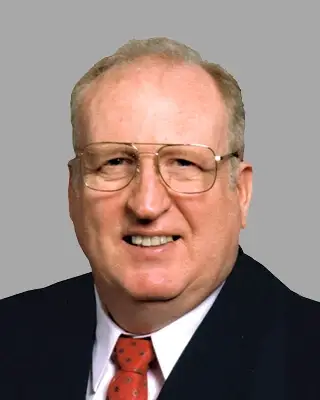
Donald D. Harrison
The Mathematician
Donald D. Harrison (1946 to 2011) was the mathematician who gave chiropractic an equation for a normal spine. He taught college mathematics, became a chiropractor in 1979, and returned to graduate school at 47 for an engineering master's and a doctorate in applied mathematics. He named Chiropractic BioPhysics in December 1980 and modeled the cervical curve as an arc of a circle. The Unified Model of Tone reads his work as the case for structure as an input that never turns off.
Born
May 11, 1946 · Port Angeles, Washington
Died
July 20, 2011 · Wyoming, at 65
Named CBP
December 1980 · physics applied to biology
Degrees
DC 1979, then MSE 1997 and PhD 1998
The order of the degrees
Harrison earned the chiropractic degree first and went back for the engineering fourteen years later
Donald Dean Harrison spent most of the 1970s in front of mathematics classes. He was born on May 11, 1946 in Port Angeles, Washington, the second of four children of Robert and Earlene Harrison. He took a bachelor's degree in mathematics from the University of Washington in 1968 and a master's in mathematics from the University of Texas at El Paso in 1971. A secondary teaching degree from Western Washington University followed in 1973.
The draft interrupted the mathematics and sent him to Vietnam
Harrison was drafted in 1969 and served as an E5 in the United States Army until 1971. Before that he had worked summer relief at the Crown Zellerbach paper mill and a season as a ranger for the Department of the Interior in Olympic National Park. After the war he taught calculus as a graduate teaching assistant at Washington State University and spent a year toward a doctorate. He never finished it. He taught mathematics instead, at Peninsula Community College and Stevens Junior High from 1973 to 1975, and at Mount Hood Community College in Portland from 1976 to 1977.
A deer carried out of the woods sent him to a chiropractor
Harrison hurt his back packing a Washington black-tail deer several miles out of the hills. Standard medical management failed him, and he went to a chiropractor in Port Angeles named Hansen. The recovery convinced him to change professions. He enrolled at Western States Chiropractic College and graduated with the Doctor of Chiropractic degree in 1979.
He practiced for fourteen years before he went back for the engineering
Harrison practiced for fourteen years between the two sets of degrees. He and Dan Murphy owned Bell Plaza Chiropractic in Sunnyvale, California from 1979 to 1985. He sold the office, moved to Evanston, Wyoming, and ran Evanston Chiropractic Center with his wife Sang from 1986 to 1992. The engineering came after all of it.
He returned to graduate school at 47 and took two degrees at once
Harrison entered the University of Alabama in Huntsville in 1993. He received a master's in mechanical engineering in 1997 and a doctorate in applied mathematics in 1998. His family's published account records that he needed special approval from the university to pursue both degrees at the same time. He was 52 when the doctorate was awarded, and by then Chiropractic BioPhysics was eighteen years old.
He published the underlying mathematics sixteen years after founding the method
Harrison arrived in chiropractic as a clinician with an unanswered question about shape, then acquired the mathematics that could answer it. His linear algebra treatment of posture reached the Journal of Manipulative and Physiological Therapeutics in 1996, while he was still a graduate student in Huntsville. Chiropractic BioPhysics was already sixteen years old and in daily use when its founder published its underlying mathematics.
The Pettibon years
Harrison taught Burl Pettibon's technique for three years before he built his own
Around 1976 Harrison, his brother Glenn, Dan Murphy and Randy Collins began attending Pettibon seminars taught by Dan Beeson in Portland, Oregon. The first one Harrison attended met in the basement of Beeson's clinic and drew twelve students. He told Pettibon at his second seminar that the model was better than anything Western States had offered him and that the teaching was poor. Pettibon knew from his own son, who had been in Harrison's class, that this student held two mathematics degrees. He told Harrison to write a better outline and send it in.
Portland attendance reached 120 by the last seminar he taught
Harrison outlined the six-day seminar hour by hour, built overheads from texts and research papers, and made a notebook for each of Pettibon's five instructors. He taught half the Portland seminar in the fall of 1977 and ran those seminars until March 1979. His own record traces attendance climbing through twenty, forty, sixty and eighty to 120 at the last one he taught. From March to June 1979 he worked as the examining doctor at Pettibon's clinic in Tacoma, Washington.
He wrote the texts in his off hours and put another man's name on them
At Tacoma, Harrison began a new radiographic text and new spinal biomechanics texts outside clinic hours. Deanne Johnson, who he married in the late 1970s, had taught him to run MEDLINE searches at the University of Oregon and University of Washington libraries, and she helped him update the biomechanics reviews. Pettibon read the partial manuscripts, then told him to write during working hours and moved his own son into the examining role. Harrison added Pettibon's name to material he said he had written alone, which he later described as a young man looking for a cause to support.
The authorship grievance
Harrison said he wrote the Pettibon texts and that his name was struck from them around 1985
Harrison set the whole account down under his own name in an essay called Origins of CBP, published by the company he founded. Two things ended the association in December 1980. He had discovered mirror image postural adjusting, and he had fallen out with Pettibon over pay owed for a seminar run through Cleveland Chiropractic College in Los Angeles. His account continues past the split. He wrote that his name stood as author on the Pettibon texts sold at seminars in Davenport until about 1985, when it disappeared and only Pettibon's remained.
Harrison named living witnesses, and the editor invited readers to check
The essay names five chiropractors he said still held printings carrying his name: Roger Coleman, Vern Webber, Brian Mittelstaedt, Dwight DeGeorge and Tony Gambale. It attributes the removal to an account given to him by Pettibon's second former wife, who said she was present when a printer was persuaded to strike the name from a copyrighted work. An editor's note at the foot of the essay states that names were included so that anyone who wishes can verify the reported facts.
Every account of the dispute traces back to Harrison himself
Every detail of the dispute comes from Harrison, published on his own organization's website. No answering account from Pettibon has appeared, and printers' records are not public. The surrounding chronology is checkable and holds. The Pettibon System and Chiropractic BioPhysics still film a standing spine and still hold corrective loads far longer than a thrust lasts, which is what a shared origin looks like forty years on.
CBP equals physics applied to biological organisms, and it will be chiropractic.
Donald D. Harrison, on the naming meeting of December 1980, Origins of CBP Part IDecember 1980
Harrison named Chiropractic BioPhysics for physics applied to biology in chiropractic
In December 1980 Harrison met with Deanne, his brother Glenn and Dan Murphy to start a new technique. The initials stood for physics applied to biological organisms in a chiropractic setting, and the method has carried the name for more than forty years. The organization's public account credits Donald Harrison, Deanne Harrison and Dan Murphy with the naming. Harrison's own essay puts his brother Glenn in the room as well, and the family obituary calls Glenn a founding member of the technique.
Mirror image adjusting came first, in March 1980
The clinical discovery preceded the name by nine months. Harrison originated the mirror image setups in March 1980. If a body mass has translated in one direction, the patient is placed in the reverse of that position before any force is applied. In the front view the head, rib cage or pelvis is reflected across the median sagittal plane, and in the side view it is repositioned across the mid frontal plane. Harrison specified twice the negative of the measured translations and rotations, so overcorrection is the design rather than an excess.
Harrison traced his own lineage back to 1930
Harrison traced the imaging line behind his own method to A.A. Wernsing, a 1926 Palmer graduate who originated the nasium view in 1930 and was the first to measure atlas displacement in degrees. Wernsing's work passed to John Grostic, whose first seminar ran in 1946, and from Grostic to Roy Sweat and Cecil Laney. Harrison and Dan Murphy bought an original Wernsing adjusting table in 1981 with its 1938 invoice still attached.
A normal spine, in degrees
The Harrison model states what a normal spine should look like, and the cervical curve is circular
Harrison's first premise is that a normal static spinal configuration exists and can be written down. The model does not describe the bones. It describes one continuous path traced along the backs of the vertebral bodies from C2 to the top of the sacrum, because that is the line a clinician can mark on a lateral radiograph. The underlying mathematics came from outside chiropractic. Manohar Panjabi, Augustus White and Richard Brand proposed a Cartesian coordinate system for describing body part configurations in 1974, and Harrison was the first to apply it to upright human posture.
Four hundred radiographs produced the cervical specification
The founding modeling study analyzed 400 lateral cervical radiographs and appeared in Spine in March 1996, with 252 of the subjects asymptomatic. At a height over length ratio of 86.73 percent the Harrison model predicts an atlas plane line of 23 degrees and a total C2 to C7 angle of 34 degrees. Below that it predicts 7.5 degrees from C2 to C3 and 6.6 degrees at every remaining segment. Those numbers are the specification, and a clinician can hold a film against them.
The thoracic and lumbar curves carry different axis ratios
Thoracic modeling in the Journal of Spinal Disorders in 2002 tested circular and elliptical shapes against 80 asymptomatic subjects. The lumbar work reached the Journal of Orthopaedic Research in 1998 with 50 normal subjects, led by Harrison's doctoral advisor Tadeusz Janik. Fitting that data required an original inverse of an infinite series of elliptical tangent lines. Each region is a portion of an ellipse with its own axis ratio. The cervical curve is the special case in which the two axes are equal, which is what makes it a circular arc.
Posture is described as twelve displacements of three body masses
Harrison treated the head, the rib cage and the pelvis as rigid bodies, each read against the mass below it. Each has six degrees of freedom, three rotations and three translations, which yields twelve possible displacement directions. Each opposing pair is a mirror image, and ideal posture is the condition in which none of the twelve is present. Working through that grid, Harrison found that half of all human postural movements had no published normal data at all. His group went on to publish ranges for several of them, including lateral head translation and thoracic translation.
Measurement and the record
Harrison rebuilt the measurement, then built the largest research record attached to any chiropractic technique
The Harrison posterior tangent method draws lines flush with the posterior margins of the vertebral bodies. The angle between the top and bottom tangents of a region gives its absolute rotation angle. The segmental angles must sum to that total, which hands the clinician an arithmetic check on the marking. A comparison published in Spine in 2000 put the standard error of measurement near 2 degrees against 4.5 to 10 degrees for the Cobb method. Harrison chose the posterior margins because they distort less with osteoarthritic change than the anterior ones.
He audited the profession's use of the word torque
In 1996 Harrison, Christopher Colloca, Stephan Troyanovich and Deed Harrison went looking for every published use of the word torque. They searched MEDLINE, the Index to Chiropractic Literature and two chiropractic databases, then hand searched a college technique library. They concluded that the profession was misusing the term, and that the misuse had spread into college courses, student clinic examinations, and state and national board examinations. They asked for the incorrect usages to be struck from all of those sources.
Reliability came before results
Before asking whether a spine could be changed, Harrison's group asked whether two examiners marking the same film would agree. They published reliability analyses of the line drawing procedures in 1995, 1999 and 2002. He also standardized the stance. Films are taken standing, without shoes, heels at hip width, and nothing found in that posture is corrected before the exposure.
Harrison founded a research foundation in 1982 and a journal in 1991
Harrison and Deanne founded the CBP research foundation in 1982, and it was registered as CBP Non-Profit, Inc. in 1989. He and Sang started the American Journal of Clinical Chiropractic in 1991, out of frustration at how little engineering and biomechanics a chiropractor was taught. He remained acting president of the foundation from 1982 until his death. The foundation's own count now runs past 300 peer-reviewed spine and chiropractic publications, and his obituary credits him personally with more than 80.
He was elected to an orthopedic research society outside his own profession
Harrison was voted into the International Society for the Study of the Lumbar Spine and reviewed manuscripts for the Journal of Manipulative and Physiological Therapeutics. The International Chiropractors Association made him a Fellow in 1990 and named him Chiropractor of the Year in 2006. His textbooks, CBP Technique: The Physics of Spinal Correction and Spinal Biomechanics: A Chiropractic Perspective, both ran to multiple editions.
The last work was two sets of practice guidelines
From 2005 to 2008 Harrison and his son Deed led the teams that produced the ICA Practicing Chiropractors Committee on Radiology Protocols and the ICA Best Practices guidelines. The second gathered more than 1,400 original clinical papers reaching back to the early 1900s. Harrison fell ill in early 2008. He died on July 20, 2011 in Wyoming, aged 65, from complications of type II diabetes. His wife Sang, his son Deed and his daughter Holly were beside him.
Posture and the cord
Harrison published three reviews on what posture does to the spinal cord
Between May and August 1999 the Journal of Manipulative and Physiological Therapeutics carried a three-part review by Harrison, Rene Cailliet, Stephan Troyanovich and Sanghak Harrison on the biomechanics of the central nervous system. Part one covered deformation of the spinal canal, part two covered cord strains from postural loads, and part three covered cord stresses and their neurological effects. The series carries the structural work into the nervous system, and the tone argument below runs on it.
The canal changes by about a millimeter, which explains nothing
Part one reported that every spinal posture deforms the canal and that the changes are small. Extension reduces canal diameter by less than 1.5 millimeters. Flexion increases it by roughly 1 millimeter. Harrison's own conclusion is the useful one. Those changes do not account for patients showing more neurological signs and symptoms in flexion. Something other than the size of the canal is doing the work.
Cord tension is the variable, and slight extension is its low point
Flexion produces the largest canal length changes and therefore the largest deformation of the neural tissue. Flexion of any part of the column can generate axial tension along the whole cord and its roots. Part two concludes that slight extension is the preferred spinal position for reducing mechanical stress and strain in the central nervous system. Alf Breig had argued in 1978 that raised tension rather than compression carries the primary consequence. Harrison brought that argument into the chiropractic literature with a posture prescription attached to it.
Standing with the thorax forward quadruples extensor load at L5 to S1
Harrison's group put a figure on the cost in the European Spine Journal in 2005. Eighteen volunteers with no history of back pain were filmed standing normally and again with the thorax translated forward. In the translated posture the extensor muscle load required to stand still at L5 to S1 rose from 147 newtons to 667 newtons, and compressive load on the L5 to S1 disc nearly doubled. Nobody in the study was lifting anything. That is the price of holding the shape.
Structure as a standing input
Harrison's contribution to tone is that structure is an input that never turns off
Harrison studied what a shape does for every hour a person holds it. The Unified Model of Tone treats tone as the integrated organization of the tissues and the nervous system, and treats any event reaching the body as an input meeting that organization. A posture qualifies as an input on that definition, and it keeps running while the patient sleeps. A thrust is over in milliseconds.
667 newtons of extensor load is a signal as well as a stress
Every one of the newtons in that 2005 measurement passes through tissue that reports on itself. Biotensegrity and mechanotransduction describe how a cell converts mechanical load into chemical instruction, and allostatic load names the running cost of holding a state. Harrison was measuring the mechanical face of a variable those pages describe from the physiological side.
Sustained load over weeks reduces cord tension from the outside
Harrison's own reviews supply the mechanism. Extension traction held 10 to 20 minutes, repeated across 30 to 40 sessions, reaches the mechanical environment of the cord without ever touching it. Time course is what makes that work. An impulse asks the nervous system a question, and a twenty minute hold changes the condition the system is regulating around.
Where the model parts company with Harrison
Harrison held that one ideal alignment exists and that departure from it is the disorder. The Unified Model of Tone holds that tone is the organization and that shape is one projection of it. Two people can share a curve to the degree and hold that curve in entirely different states. Both readings survive together, because the body is a prestressed tension network whose tensional state is how it knows its own shape. Geometry and tension are one variable read two ways. The model does not need Harrison's exclusivity claim to account for what his method does.
His place in the library
How Donald Harrison relates to the rest of the library
Chiropractic BioPhysics carries the method in full, including the tangent lines, the traction setups matched to each measured pattern, and the twelve mirror image positions. The Pettibon System is where Harrison learned to film a whole standing spine and load it for longer than a thrust lasts, and the two methods still read a lateral radiograph the same way. Roy Sweat belongs to the imaging lineage Harrison traced in his own history of the field, which runs from Wernsing's 1930 nasium view through the Grostic seminars. Orthopedics covers the disc loading and connective tissue behavior his modeling studies operate on. The Legends sets Harrison beside the founders whose analytical systems he was measuring against a stated model.
Questions people ask
Common questions about Donald D. Harrison
What did Donald Harrison contribute to the understanding of tone?
Harrison contributed structure as a standing input. His 2005 study showed that translating the thorax forward raises extensor load at L5 to S1 from 147 to 667 newtons, with no lifting involved. His 1999 reviews established that cord tension rather than canal size carries the neurological consequence. The Unified Model of Tone counts a held posture among the inputs reaching the body, and reads sustained traction as a way to lower cord tension from outside it.
Who was Donald D. Harrison?
Donald Dean Harrison was an American chiropractor, mathematician and engineer. He was born in Port Angeles, Washington on May 11, 1946 and died in Wyoming on July 20, 2011. He taught college mathematics through the 1970s, graduated from Western States Chiropractic College in 1979, and named Chiropractic BioPhysics in December 1980. He published more than 80 peer-reviewed papers and was elected to the International Society for the Study of the Lumbar Spine.
Did Harrison hold engineering degrees before he became a chiropractor?
No, and the order is often reported backwards. Harrison held two mathematics degrees before chiropractic, a bachelor's from the University of Washington in 1968 and a master's from the University of Texas at El Paso in 1971. He earned the Doctor of Chiropractic in 1979 and practiced for fourteen years. He entered the University of Alabama in Huntsville in 1993, at 47, and took a master's in mechanical engineering in 1997 and a doctorate in applied mathematics in 1998.
What is the Harrison normal spinal model?
It is a geometric specification of a healthy spine, traced along the backs of the vertebral bodies from C2 to the sacrum. The thoracic and lumbar curves are elliptical, each with its own axis ratio. In the neck the two axes come out equal, so the cervical model is a circular arc. Built from 400 lateral radiographs, it predicts a 34 degree C2 to C7 angle and 6.6 degrees at each segment below C2 to C3.
What happened between Donald Harrison and Burl Pettibon?
Harrison taught the Pettibon seminars in Portland from 1977 to 1979 and worked at Pettibon's Tacoma clinic. He left in December 1980 over pay owed for a Los Angeles seminar, and named Chiropractic BioPhysics the same month. In an essay published under his own name he wrote that he had authored several Pettibon texts, had voluntarily added Pettibon's name to them, and saw his own name removed from the printings around 1985. That account comes from Harrison alone.
When did Donald Harrison die, and who carries the work now?
Complications of type II diabetes ended Harrison's life on July 20, 2011, at his home in Wyoming. He was 65, and his obituary ran in the American Journal of Clinical Chiropractic three weeks later. His son Deed E. Harrison leads CBP Technique and Seminars and CBP NonProfit, which operate from Idaho and list more than 300 peer-reviewed publications. Deed Harrison worked on the PCCRP radiography guidelines alongside his father from 2005 to 2008.
Sources
Sources for this page
- The Obituary of Dr. Donald D. Harrison. American Journal of Clinical Chiropractic, August 8, 2011. Full text. Birth and death dates, family, the deer injury, the degrees and the ICA record.
- Harrison DD. Origins of CBP, Part I. Chiropractic BioPhysics. idealspine.com. Harrison's own account of the Wernsing and Grostic lineage, the Pettibon seminars, the authorship dispute, and the December 1980 naming.
- About the Founder. Chiropractic BioPhysics. idealspine.com. Degree ladder with institutions and years, ICA Fellowship 1990, Chiropractor of the Year 2006.
- Harrison DD, Janik TJ, Troyanovich SJ, Holland B. Comparisons of lordotic cervical spine curvatures to a theoretical ideal model of the static sagittal cervical spine. Spine. 1996;21(6):667-675. PMID 8882687. 400 radiographs, 252 asymptomatic; the 86.73 percent ratio, 23 degree atlas plane line, 34 degree C2 to C7 angle.
- Harrison DD, Janik TJ, Harrison GR, Troyanovich S, Harrison DE, Harrison SO. Chiropractic biophysics technique: a linear algebra approach to posture in chiropractic. J Manipulative Physiol Ther. 1996;19(8):525-535. PMID 8902664. The twelve displacements of three body masses.
- Panjabi MM, White AA, Brand RA. A note on defining body parts configurations. J Biomech. 1974;7(4):385-387. PMID 4411698. The Cartesian coordinate system Harrison applied to upright posture.
- Janik TJ, Harrison DD, Cailliet R, Troyanovich SJ, Harrison DE. Can the sagittal lumbar curvature be closely approximated by an ellipse? J Orthop Res. 1998;16(6):766-770. PMID 9877403. 50 normal subjects; the elliptical tangent mathematics.
- Harrison DE, Janik TJ, Harrison DD, Cailliet R, Harmon S. Can the thoracic kyphosis be modeled with a simple geometric shape? J Spinal Disord. 2002;15(3):213-220. PMID 12131422. 80 asymptomatic subjects; circular against elliptical fits.
- Harrison DE, Harrison DD, Cailliet R, Troyanovich SJ, Janik TJ, Holland B. Cobb method or Harrison posterior tangent method: which to choose for lateral cervical radiographic analysis. Spine. 2000;25(16):2072-2078. PMID 10954638. Standard error near 2 degrees against 4.5 to 10 degrees.
- Harrison DD, Colloca CJ, Troyanovich SJ, Harrison DE. Torque: an appraisal of misuse of terminology in chiropractic literature and technique. J Manipulative Physiol Ther. 1996;19(7):454-462. PMID 8890026. The vocabulary audit and the call to remove the usage from board examinations.
- Harrison DE, Cailliet R, Harrison DD, Troyanovich SJ, Harrison SO. A review of biomechanics of the central nervous system, Part I: spinal canal deformations resulting from changes in posture. J Manipulative Physiol Ther. 1999;22(4):227-234. PMID 10367759. Canal diameter falls under 1.5 mm in extension and rises about 1 mm in flexion.
- Harrison DE, Cailliet R, Harrison DD, Troyanovich SJ, Harrison SO. A review of biomechanics of the central nervous system, Part II: spinal cord strains from postural loads. J Manipulative Physiol Ther. 1999;22(5):322-332. PMID 10395435. Slight extension named as the position of least cord strain.
- Harrison DE, Cailliet R, Harrison DD, Troyanovich SJ, Harrison SO. A review of biomechanics of the central nervous system, Part III: spinal cord stresses from postural loads and their neurologic effects. J Manipulative Physiol Ther. 1999;22(6):399-410. PMID 10478773. Four types of postural loading and their effect on sensory, motor and autonomic function.
- Harrison DE, Colloca CJ, Harrison DD, Janik TJ, Haas JW, Keller TS. Anterior thoracic posture increases thoracolumbar disc loading. Eur Spine J. 2005;14(3):234-242. PMID 15168237. 18 volunteers; extensor load at L5 to S1 rises from 147 N to 667 N.
- Troyanovich SJ, Harrison DE, Harrison DD. Structural rehabilitation of the spine and posture: rationale for treatment beyond the resolution of symptoms. J Manipulative Physiol Ther. 1998;21(1):37-50. PMID 9467100. Mechanical loading and body posture as influences on tissue growth and repair.
- Moustafa IM, Diab AA, Hegazy F, Harrison DE. Demonstration of central conduction time and neuroplastic changes after cervical lordosis rehabilitation in asymptomatic subjects. Sci Rep. 2021;11:15379. PMID 34321539. 80 subjects, 30 sessions over 10 weeks, geometric and evoked potential measures recorded together.
- Harrison DE, Oakley PA. An Introduction to Chiropractic BioPhysics Technique: A Full Spine Rehabilitation Approach to Reducing Spine Deformities. IntechOpen; 2022. DOI 10.5772/intechopen.102686. The three premises, the mirror image dosing rule, and the radiographic positioning protocol.
- About Us. CBP NonProfit, Inc. cbpnonprofit.com. Founded 1982, incorporated 1989, more than 300 peer-reviewed publications.
This page is history and education. It is not medical advice, and nothing here is a promise of outcome. Consult a licensed practitioner about your own condition.