
Our Approach · The Legends · Era II
Era II · 1906 to 2000
Herbert Reaver
The Defendant
Herbert Ross Reaver (1906 to 2000) is recorded as the most jailed chiropractor in the United States. Ohio's Platt-Ellis Law of 1915 defined chiropractic as a limited branch of medicine and put its licensing under the state medical board, and Reaver refused the designation. He was arrested at least twelve times in Cincinnati and convicted twelve times, and he served four jail terms. The longest ran six months. He refused the permit for twenty two years and practiced for more than seventy.
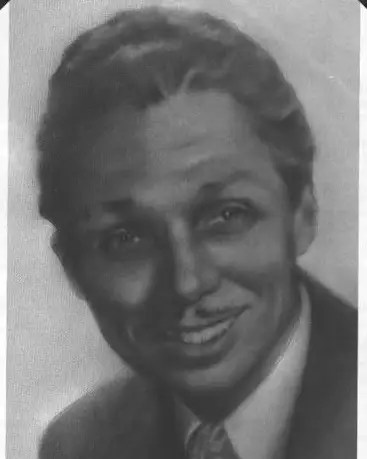
Born
April 30, 1906 · Dayton, Ohio
Died
February 7, 2000 · age 93
Trained
Palmer School of Chiropractic, 1928
Record
13 arrests · 12 convictions · 4 jail terms
Served
Vice president, International Chiropractors Association
Honored
ICA Chiropractor of the Year, 1997
Dayton to Davenport
Herbert Reaver came to chiropractic as a patient and graduated from Palmer in 1928
Herbert Ross Reaver was born on April 30, 1906 in Dayton, Ohio. He was working as a professional musician and living with rheumatoid arthritis severe enough that he often used crutches. He met a group of chiropractic students in Iowa, was adjusted for the arthritis, and enrolled at the Palmer School of Chiropractic in 1927. He graduated in 1928 and went home to Ohio to practice.
The arthritis is the reason he was in the room
Reaver arrived as a patient with a chronic inflammatory condition and crutches. Every account of his career, including the International Chiropractors Association's own, starts there. He had been on the receiving end of the thing he later went to prison for.
He trained at Davenport and never changed his method
Reaver trained at Davenport under the analysis and technique that radiated from B.J. Palmer, who was then at the height of his influence over the profession. He kept that training for seventy years and never added instrumentation to it. He was still practicing in Cincinnati the week he died.
He married Millie and stayed married for nearly seventy years
Reaver's wife Millie survived him after a marriage of nearly seventy years. Their son, Herbert "Chap" Reaver Jr., practiced in Marietta, Georgia, wrote a column for Dynamic Chiropractic from 1984 to 1992, and published two novels. His first, Mote, won an Edgar Allan Poe Award in 1991 for best young adult mystery, and he died in 1993, seven years before his father.
The Ohio statute
Ohio recognized chiropractic in 1915 and placed its licensing under the state medical board
The Platt-Ellis Law passed in Ohio in 1915, took effect in 1916, and defined chiropractic as a limited branch of medicine or surgery. It was a compromise between medical and chiropractic interests. Callender lists chiropractic, naprapathy, spondylotherapy, mechanotherapy and magnetic healing among the methods the law grouped as minor healing arts, all examined by the State Medical Board of medical physicians. A chiropractor who practiced without that board's permit was practicing medicine without a license.
The statute created two definitions that could not be reconciled
Alana Callender, writing in Chiropractic History in 1995, traced six decades of Ohio turmoil to the two definitions inside the 1915 law. Chiropractors held that they did not practice medicine. The statute held that they practiced a limited branch of it. A.G. Lensgraf's 1997 case study of one Ohio practitioner in the years 1927 to 1935 describes licensing law that was ambiguous at best.
Hundreds of Ohio chiropractors chose jail over fines
Callender records that the 1920s in Ohio were marked by the civil disobedience already used successfully in other states, with hundreds of unlicensed chiropractors choosing jail rather than paying. In 1923 B.F. Lear and W.E. Quartier were fined five hundred dollars or 833 days in jail, the maximum for a first offense, and they chose the Trumbull County jail in Warren. That is more than two years.
D.D. Palmer had set the precedent in 1906
The first chiropractor jailed for practicing medicine without a license was the founder. D.D. Palmer served time in the Scott County jail in Iowa in the spring of 1906, in a cell measuring eight feet by eleven feet. Offered the alternative of a fine, he chose the cell, saying he was there for an abundance of principle rather than a lack of principal. Reaver was born that April.
Ohio jailed more chiropractors than any other state
M.L. Kimbrough surveyed the whole national record for Chiropractic History in 1998 and appended a state by state list of chiropractors who served time. Ohio was the harshest jurisdiction in the country and accounted for more than a third of everyone imprisoned. By 1931 the profession estimated roughly 15,000 prosecutions nationally against no more than about 12,000 practicing chiropractors.
Ohio did not get its own chiropractic board until 1975
Sixty years passed between the Platt-Ellis Law and the creation of a chiropractic board in Ohio, which the Ohio Legislative Service Commission dates to 1975. Louisiana had become the fiftieth state to license chiropractic the year before. Reaver was sixty nine years old when the state that jailed him created a board of his own profession.
It was a matter of principle for all of us. We don't practice medicine in any shape or form. To be designated as limited medical practitioners was something intolerable to us. It was just something that any chiropractor with any guts could not accept.
Herbert Ross Reaver, D.C., quoted in Bower N, Hynes R Jr., "Going to Jail for Chiropractic: A Career's Defining Moment," Chiropractic History, 2004;24(2):21-26The arrest record
Herbert Reaver was convicted twelve times in Cincinnati and served four jail terms
Who's Who in Chiropractic recorded the tally during Reaver's own lifetime as thirteen arrests, twelve convictions and four terms in jail, all in Cincinnati. It appears in the second edition of 1980 at page 203, and Joseph Keating reproduced it in his chronology. Dynamic Chiropractic's obituary counts twelve arrests. The two records agree on the twelve convictions and the four sentences.
Eight arrests and eight fines between 1928 and 1943
The charge in every case was practicing medicine without a license, and the fine was twenty five dollars. Reaver paid it eight times between 1928 and 1943 and returned to his practice the same day. Fifteen years of that is a business expense rather than a deterrent, which is exactly how he treated it.
What preceded the ninth arrest in 1943
In the summer of 1943 Reaver wrote to a local school principal objecting to mandatory vaccination. On September 30, 1943 a medical inspector called at his office to warn him that a group of local physicians had signed complaints against him. Asked why he was a repeat target, Reaver said he had stepped on a lot of medical toes and that the local doctors were jealous of his practice.
The ninth arrest was the one he refused to pay for
Paying the fine felt like admitting guilt, Reaver told an audience in 1997, and he said he was fighting for principle. He was arrested a ninth time in the summer of 1943 and declined to pay. He went to jail instead. Three more jail terms followed, and all four fall between 1943 and 1950.
The last sentence was six months
Dynamic Chiropractic dates the six month sentence to 1949 and places it after a twelfth arrest. Keating's chronology, drawing on a 1989 profile in Chiropractic Achievers, records a six month Ohio sentence in 1947 and a last arrest in 1950. The sources differ on which year carried which sentence, and agree on the total of four terms in custody.
A judge closed the file with a warning in 1950
After the last arrest a judge told Reaver he would be sentenced as a habitual offender if he appeared in court again. The Cincinnati Post carried the story of his planned departure for Florida on its front page on June 25, 1950. He left Ohio that year. He had been arrested in the same city, on the same charge, for twenty two years.
Inside
Reaver kept adjusting patients while he was in custody
The jail terms relocated the practice instead of ending it. Reaver continued giving adjustments to people who came to see him during his sentences. Dynamic Chiropractic's obituary records that more than three hundred people came to the jail during one term to mark his birthday.
The nickname came from the profession
Chiropractors called him Jailbird Reaver, and he used the name himself. The title of most jailed chiropractor in America attached to him during his lifetime and has never been seriously contested. Kimbrough's 1998 national survey turned up no one with a longer record.
The profession made a ceremony of the sentences
The 1923 Palmer Lyceum was dedicated to the chiropractors who had served jail time. Mac Searby told that gathering that going to jail parted people from their families. He added that the wreck of their practice was the least of their worries, and that they went back to the cells when the test came a second time. Callender preserved the passage. Reaver went back four times.
He remembered the campaign in specific terms
Speaking on camera in his nineties, Reaver described what practice in Ohio had actually involved. His words were: "We were despised, we were publicly humiliated, investigated, hounded, and they used entrapment on us. Innumerable trials and arrests, and convictions, and for some of us, prison." He added that a professional body that neglects its history tends to repeat it.
Every charge was practicing without a permit
The charge in every one of Reaver's arrests was practicing medicine without a license. He prescribed no drugs and performed no surgery. What he lacked was the permit the State Medical Board issued, and the permit he refused limited which cases he could accept. The prosecutions turned on the definition inside the 1915 statute.
Florida and the return
Reaver practiced in St. Petersburg for twenty two years and then went back to Cincinnati
Reaver and Millie moved to St. Petersburg, Florida in 1950. He stayed twenty two years, building a large practice that took in professional baseball players who came south for spring training. In 1972 he left an established Florida practice and returned to Cincinnati, the city where he had been arrested at least twelve times.
He practiced the same way he had been taught in 1928
Reaver never adopted instrumentation. Speaking to students at Life Chiropractic College West in 1997, he said that the instrumentation of his brain and his hands were all the instruments he needed. He used the analysis and the technique he had learned at Davenport for seven decades.
He was seeing patients the week he died
Reaver saw patients in his Cincinnati office on the Friday before he died. He died on February 7, 2000 at the age of ninety three, after more than seventy years in practice in Ohio and Florida. He had outlived by twenty five years the arrangement that jailed him.
What he wrote for the profession's press
Reaver wrote for The Chiropractor and left one line that the International Chiropractors Association still quotes. He held that the profession must not retreat a single inch from its stand on behalf of health freedom, so that together everyone might enjoy the abundance of health chiropractic can provide. It is a policy sentence rather than a clinical one, which is the fight he spent his career in.
The ICA years
Reaver served as vice president of the International Chiropractors Association under B.J. Palmer
Reaver held the vice presidency of the International Chiropractors Association in the second half of the 1940s, while B.J. Palmer was its president. Who's Who in Chiropractic records the term. The ICA awarded him a fellowship in 1950. He held office in the organization during the same years he was serving jail terms.
The Green Books record his election
B.J. Palmer's Up From Below the Bottom, published in 1950, reprints a letter from Charles Heiss dated May 10, 1949. Heiss refers to a dispute over the chairman's ruling at the time of the election of Vice President Reaver. The passage sits on page 621. Keating's chronology dates Reaver's election as third vice president to 1948, and Who's Who gives the term as running to 1950. The Heiss letter and the chronology corroborate each other.
The ICA named him Chiropractor of the Year in 1997
The ICA Board of Directors selected Reaver unanimously as Chiropractor of the Year at the association's seventy first annual meeting, held May 16 to 18, 1997 in Burlingame, California. He was ninety one years old and in his sixty ninth year of active practice. The board amended the ICA bylaws at the same meeting to create an annual Herbert Ross Reaver Lifetime Achievement Award.
The award still carries his name
The ICA established the award while Reaver was alive to see it, and he died three years later. It is given annually and still carries his name. A profession that names a lifetime achievement award after a criminal record has made a decision about that record.
Two Reavers
Herbert Reaver and Clarence E. Reaver were brothers and are frequently confused
A second Ohio chiropractor named Reaver appears throughout the same period, and the two men are routinely conflated. Clarence E. Reaver graduated from the Palmer School of Chiropractic in 1941, thirteen years after Herbert. He founded and ran the Reaver School of Chiropractic in Dayton, Ohio. A 1999 memorandum from the Council on Chiropractic Education identifies Herbert Reaver Sr. as the brother of the founder, Dr. C.E. Reaver.
Clarence Reaver founded an integrated school in 1945
Clarence Reaver tried to enroll a Black patient named Dorothy Clark at the Palmer School in 1944 and was refused. He opened the Reaver School of Chiropractic in Dayton in 1945 in response, with a first class of one white and two Black students. Bobby Westbrooks documented the episode in Chiropractic History in 1982 and recorded Clarence Reaver's own estimate of 166 graduates, about two thirds of them Black. The school closed in 1951.
B.J. Palmer reprinted the Dayton school's bulletins
Two bulletins issued by the Reaver School of Chiropractic in Dayton in March 1950 appear verbatim in B.J. Palmer's Fight to Climb, published the same year, on pages 318 and 319. Palmer used them to argue against extending the length of chiropractic training. Those bulletins belong to Clarence Reaver's school, not to Herbert's practice.
Clarence Reaver wrote the Fifth Cervical Key
Clarence E. Reaver developed a method of applying toggle recoil to the fifth cervical vertebra and published it as Fifth Cervical Key in 1950. The book was reissued in 1977. That title is often listed alongside the Pierce-Stillwagon work in technique surveys. It has nothing to do with Herbert Reaver.
Clarence Reaver was also arrested, five times
Ohio's licensing law required chiropractors to sit a medically oriented basic science examination. Clarence Reaver refused, and Keating records five arrests between 1947 and 1951, the last carrying a thirty day workhouse sentence and several suspended sentences that would be enforced if he practiced again in Ohio. The legal pressure and the loss of students to a competing Dayton college closed his school in 1951. Two brothers were prosecuted under the same statute in the same decade.
The legal precondition and the tone through-line
Reaver refused a definition, and the definition he refused is the one the model restores
The charge against Reaver was never that he harmed a patient. It was that he practiced without the medical board's permit, and he would not take the permit because it called him a limited medical practitioner. That is a fight about what chiropractic is rather than about what it achieves. The Unified Model of Tone makes the same distinction the same way.
What the model claims an adjustment is
The model states what an adjustment is and declines to state what it cures. An adjustment is an input delivered to a regulated state of the nervous system and the tissues it governs. Reaver made the identity claim in a courtroom and paid for it in custody. Twelve convictions and four sentences bought the right to say what the work is.
The regulated state is the thing being adjusted
Tone is the organized state of the nervous system and the tissues under its control. It shows itself in the variability of a rhythm rather than its average, in the coupling between two rhythms, and in how a system recovers from a challenge. It can be recorded before any clinical outcome is known. That is a physiological claim about a state variable, made without reference to any disease.
The same input produces different results in different bodies
Input quality holds that the active ingredient is correspondence between the input and the point of leverage, and that force is secondary. The same adjustment delivered to two people produces two different results because the two bodies hold different tone. A profession built on that account works on a different variable from the one medicine treats.
The prosecutions were about a competing account of the body
The documented sequence before the 1943 arrest runs from a letter Reaver wrote objecting to mandatory vaccination, to a medical inspector's warning that local physicians had signed complaints, to the arrest. Reaver's own explanation was that he had a good practice and the local doctors were jealous of it. The 1915 statute placed licensure with the State Medical Board. Two accounts of the body were in circulation and one of them held the board.
The right to publish this material was established in court
The autonomic and coupling material here is education about a nervous system, published by a licensed profession. That license took eighty years to secure. Chester Wilk won the antitrust judgment in 1987 with George McAndrews arguing it. Reaver came four decades earlier and went to jail four times.
Reaver among the legends
How Herbert Reaver relates to the rest of the library
Herbert Reaver stands in a line that begins with D.D. Palmer, who served the first sentence in the Scott County jail in 1906, the year Reaver was born. Willard Carver was convicted and jailed in Oklahoma and turned the episode into a licensing act. Carl S. Cleveland Sr. raised money to feed the families of jailed chiropractors from Kansas City. Joseph Janse built the accreditation machinery that made the license defensible. Chester Wilk and George McAndrews finished the legal argument in federal court. The methods the licensed profession now teaches are cataloged across the technique library, and the full hall of legends traces the line whole.
Common questions
Questions about Herbert Reaver and the Ohio prosecutions
Who was Herbert Reaver?
Herbert Ross Reaver (April 30, 1906 to February 7, 2000) was an American chiropractor from Ohio, recorded as the most jailed chiropractor in the United States. He graduated from the Palmer School of Chiropractic in 1928 and was arrested repeatedly in Cincinnati for practicing medicine without a license. He served four jail terms rather than accept a medical board permit. He practiced for more than seventy years in Ohio and Florida.
How many times was Herbert Reaver jailed?
Four times. Who's Who in Chiropractic recorded the full tally during his lifetime as thirteen arrests, twelve convictions and four terms in jail, all in Cincinnati. Dynamic Chiropractic's obituary counts twelve arrests. He paid fines for the first eight arrests between 1928 and 1943, refused to pay after the ninth in the summer of 1943, and served four sentences after that. The longest was six months.
Why was Herbert Reaver arrested if Ohio licensed chiropractic in 1915?
Ohio's Platt-Ellis Law of 1915, effective in 1916, defined chiropractic as a limited branch of medicine or surgery. It required chiropractors to be examined and licensed by the State Medical Board, which was composed of medical physicians. Reaver rejected the designation of limited medical practitioner and would not take the permit, which also restricted which cases he could accept. Practicing without it was charged as practicing medicine without a license.
Was Herbert Reaver related to Clarence E. Reaver?
Yes. They were brothers. A March 25, 1999 memorandum from a Council on Chiropractic Education coordinator, preserved in Joseph Keating's archival chronology, states that Herbert Reaver Sr. was the brother of the founder of the Reaver School of Chiropractic, Dr. C.E. Reaver. Clarence E. Reaver graduated from Palmer in 1941, founded an integrated chiropractic school in Dayton, Ohio in 1945, and wrote Fifth Cervical Key. They are different men.
What happened to Herbert Reaver after he left Ohio?
A judge warned him after his final arrest that he would be sentenced as a habitual offender if he returned to court. The Cincinnati Post reported his planned departure on its front page on June 25, 1950. He moved to St. Petersburg, Florida with his wife Millie and built a large practice that included professional baseball players in spring training. He returned to Cincinnati in 1972 and practiced there until his death in 2000.
What did Herbert Reaver contribute to the understanding of tone?
Reaver contributed the legal precondition. He refused, in court and at cost, the designation of limited medical practitioner, which is a claim about what chiropractic is rather than about what it cures. The Unified Model of Tone makes the same move. It states that an adjustment is an input to a measurable regulated state of the nervous system, and it declines to advance efficacy claims about disease.
Sources
References
- Keating JC. Chronology of Herbert Reaver Sr., D.C., F.I.C.A.. National Institute of Chiropractic Research. Source of the birth date and place, the Palmer dates, the 1943 vaccination letter and medical inspector visit, and the ICA vice presidency. Also the source of the 1950 habitual offender warning and the Who's Who tally of 13 arrests, 12 convictions and 4 jail terms in Cincinnati.
- Dzaman F, et al. Who's Who in Chiropractic. 2nd ed. Littleton, CO: Who's Who in Chiropractic International Publishing Co., 1980, page 203.
- Dynamic Chiropractic Staff. A Moment of Silence for Herbert Reaver, DC. Dynamic Chiropractic, March 2000. Obituary. Source of the arrest sequence, the twenty five dollar fine, the 1997 quotations, the Florida years, and the family record.
- Dynamic Chiropractic Staff. ICA Pays Tribute to Herbert Reaver, DC. Dynamic Chiropractic, 1997. The Chiropractor of the Year award and the Herbert Ross Reaver Lifetime Achievement Award.
- Kent C. Paying the Price: Going to Jail for Chiropractic. Dynamic Chiropractic. Quotes Reaver from Bower N and Hynes R Jr., "Going to Jail for Chiropractic: A Career's Defining Moment," Chiropractic History, 2004;24(2):21-26. Also the Lear and Quartier sentence and the 15,000 prosecutions figure.
- Kimbrough ML. Jailed chiropractors: those who blazed the trail. Chiropr Hist. 1998;18(1):79-100. Ohio as the harshest jurisdiction, with a state by state appendix.
- Callender A. Buckeye chiropractic: turbulence in a limited branch of medicine, 1915-1975. Chiropr Hist. 1995;15(2):78-89. The Platt-Ellis Law and the 1920s civil disobedience in Ohio.
- Lensgraf AG. Ohio legal entanglement: A.W. Lensgraf, D.C.: 1927-1935. Chiropr Hist. 1997;17(2):69-92. The 1915 passage and 1916 enactment of Platt-Ellis.
- Ohio Legislative Service Commission. Redbook: Ohio State Chiropractic Board. "The Ohio State Chiropractic Board was established in 1975."
- Keating JC. Chronology of the Reaver School of Chiropractic. National Institute of Chiropractic Research. Clarence E. Reaver's school, the 1999 Council on Chiropractic Education memorandum naming the two men as brothers, and the five arrests between 1947 and 1951.
- Westbrooks B. The troubled legacy of Harvey Lillard: the black experience in chiropractic. Chiropractic History. 1982;2:46-53.
- Palmer BJ. Fight to Climb. Davenport: Palmer School of Chiropractic, 1950, pages 318 to 319. Two Reaver School of Chiropractic bulletins, Dayton, Ohio, March 1950.
- Palmer BJ. Up From Below the Bottom. Davenport: Palmer School of Chiropractic, 1950, page 621. Charles Heiss letter of May 10, 1949 referring to the election of Vice President Reaver.
- Dorausch M. Chiropractic History Month 2007 with Most Jailed Chiropractor. Planet Chiropractic, September 9, 2007. Transcript of ICA video interviews with Reaver.
- Dorausch M. Herbert Ross Reaver, D.C. Passes Away. Planet Chiropractic, February 7, 2000.
This page is education and history, not medical advice. The arrest and sentencing counts differ between sources and both tallies are given, with each source named in the references. Quotations are reproduced as published.