Our Approach · The Legends · Era II
The Instrument · 1886 to 1932
Dossa D. Evins
The Inventor
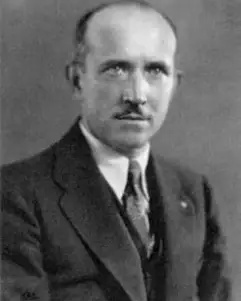
Dossa Dixon Evins (1886 to 1932) was an electrical engineer who enrolled at the Palmer School of Chiropractic in August 1920 and built the neurocalometer, the first instrument the profession used to measure itself. It compared the temperature on the two sides of the spine and reported the difference. Evins's name is on the patents. B.J. Palmer set the lease price that made the 1924 launch notorious. The Unified Model of Tone shares Evins's instinct: a claim about the body has to be readable off an instrument.
Born
Feb 13, 1886 · Blodgett, Missouri
Died
Nov 15, 1932 · pneumonia
Trained
Electrical engineering, University of Arkansas · Palmer School of Chiropractic, 1920 to 1922
Patented
Process of spinal analysis, 1925 · Temperature detector, 1926
Built
The neurocalometer, in field use from June 1924
The inventor, 1886 to 1932
Dossa Evins built the first instrument chiropractic used to check its own work
Dossa Dixon Evins patented a process for comparing the temperature of the two sides of the spine, and an instrument sensitive enough to run it. The Omaha Bee reported in September 1924 that tests by the United States Bureau of Standards found the device registered thermal differences of one hundredth of a degree centigrade. Over a thousand were in field use within four months of the first deliveries in June 1924. Evins built the machine. The lease price that made it notorious was set by the Palmer School.
Evins was born at Blodgett, Missouri, on February 13, 1886, and died on November 15, 1932, of pneumonia, at forty six. He took a degree in electrical engineering at the University of Arkansas. John Nash, writing in Chiropractic History in 1995, records that Evins was a vaudeville entertainer with his wife Billie, an inventor, and a radio operator for the Secret Service during the First World War. He came to chiropractic as a patient.
Evins held a patent before he ever saw a spine
Evins filed his first patent on April 24, 1914 and received it on September 21, 1915. It covers a method of making electrotype embossing dies, and it has nothing to do with the body. The record matters because it establishes what kind of man walked into Davenport six years later. Evins was already a working inventor who could take an idea from a bench to a granted claim. Dye's history records that nobody had seriously attempted a mechanical means of locating spinal heat differences until the early 1920s.
Evins enrolled at the Palmer School in August 1920 and filed a chiropractic patent two months later
Evins entered the Palmer School of Chiropractic in August 1920 and graduated in 1922. On October 23, 1920, ten weeks into his first term, he filed a patent for a motorized attachment that raises and lowers a chiropractic table between horizontal and vertical. It was granted as US 1,504,111 on August 5, 1924. B.J. Palmer later listed an Evins Palmer hi lo among the school's table designs. The first thing Evins did as a chiropractic student was build a machine.
What the neurocalometer measured
The neurocalometer compared the two sides of the spine and reported the difference between them
The neurocalometer Dossa Evins built did not measure a temperature. It measured a difference. Two thermocouple junctions rode down the spine, one on each side of a segment, and a galvanometer needle deflected toward the warmer junction. A balanced segment left the needle at zero. An unbalanced one swung it. Evins stated the claim himself in the patent: his invention consists in comparing the simultaneous temperatures of separated areas along the spine.
The process patent, filed January 1924
US 1,552,284, Process of Spinal Analysis, was filed on January 18, 1924 and granted on September 1, 1925. Evins assigned a one half interest to Frank W. Elliott, the business manager of the Palmer School. The specification is precise about what the process is for. It enables the detection of inflammation or other conditions which cause local increases in temperature, through the detection of the local differences in temperature. Nothing in the claim is about a bone being out of place.
The instrument patent was filed the day after the launch
US 1,610,271, Temperature Detector, was filed on August 25, 1924 and granted on December 14, 1926, again assigned to Frank W. Elliott. The Canadian patent, CA 266,602, is titled Neurocalometer and issued on December 7, 1926. The filing date of the American hardware patent is the day after B.J. Palmer announced the instrument to the profession at the 1924 Lyceum. The device carries a thermopile, a stack of thermocouples in series whose exposed junctions absorb body heat quickly and drive a galvanometer.
It took six months to find the range
B.J. Palmer wrote that Evins spent six months establishing the minimum and maximum of the human abnormal heat produced by subluxation interference before he could design anything (The Great Divide, pp. 58 to 59). Only then could he build an instrument to work inside that range. Palmer listed the variables Evins had to control. The number of thermocouples in each terminal, the length of wire in each, and the metals used. Then the balance between the left and right terminals, and the sensitivity of the galvanometer. The instrument was not electrically powered. It generated its own signal from heat.
My invention relates to a process of spinal analysis, which consists in comparing the simultaneous temperatures of separated areas along the spine.
Dossa D. Evins · US Patent 1,552,284, Process of Spinal Analysis, filed January 18, 1924, granted September 1, 1925How the neurocalometer reached the field
B.J. Palmer saw the neurocalometer in April 1923 and launched it at the Lyceum on August 24, 1924
The Omaha Bee reported on September 14, 1924 that laboratory work on the device began in 1920 and that the invention was brought to B.J. Palmer's attention in April 1923. Palmer dated his own adoption to 1923 in the 1951 research volume, writing that the neurocalometer took the guess out of finding which vertebra was producing pressure (p. 694). The Palmer School put it into daily use on the faculty floor by June 1924, with eight technicians booked solid. On August 24, 1924, at the Palmer School Lyceum in Davenport, Palmer delivered the address he called The Hour Has Struck. By late October more than a thousand instruments were in the field.
The instrument was never sold, only leased
The neurocalometer was manufactured by the Palmer School under exclusive license from Evins, and it was leased on a ten year contract. The price when it first went east was 500 dollars. It rose to 600, then to 750, and the resentment started there. Through midnight on September 14, 1924 the terms were 100 dollars cash and thirteen monthly payments of 50 dollars. From the following morning the price was 2,200 dollars, with terms of 200 dollars cash and 100 dollars a month until 1,000 dollars had been paid, at six percent interest. Palmer wrote in the same period that he was thinking of raising it to 3,000 dollars after January 1.
The contract fixed the minimum fee the patient could be charged
A lessee was contractually required to charge no less than 10 dollars for a neurocalometer reading. The requirement is printed in the Fountain Head News of October 18, 1924. Joseph Keating, who reconstructed the terms for the Journal of the Canadian Chiropractic Association in 1991, notes that 10 dollars in 1924 was conservatively equivalent to about 60 dollars at the time he wrote. The lease also restricted access to Palmer graduates, and the school required a two day technique course before it would deliver a unit.
Evins was inside the enforcement
On August 2, 1924 the Fountain Head News printed a letter sent over Evins's name, on behalf of the Palmer School, warning the J.W. Healey X-Ray Company that patent applications would shortly issue and that actions would follow against the company and its purchasers. Palmer told the field that Evins had seven patent applications pending covering designs, devices and processes, in this country and sixteen others. Evins was not a bystander to the commercial program. He was its named inventor and its licensor. The price schedule was not his to set.
The controversy was the lease
The 1924 split turned on the pricing and the claims, not on whether the instrument worked
August Dye, writing the profession's first history in 1939, put the cause plainly. There was much condemnation of B.J. Palmer because of the manner of the introduction, the leasing system, and the frequent raising of the lease rate (Dye, 1939, p. 210). Joseph Keating's later assessment separates the two things the same way. The instrument was presumably reliable as a thermometer, and it was Palmer's claims for its validity as a method of detecting subluxation that the profession would not accept.
What the enrollment figures actually show
Federal funding for the vocational training of veterans after the First World War pushed the number of chiropractic schools past eighty in the first half of the 1920s. The Palmer School reached an enrollment of more than 3,000 students. When the veterans' benefits expired, most of those schools disappeared and the survivors contracted hard. Keating records that the Palmer student body fell by as much as ninety percent by the end of the decade. The neurocalometer launch sits inside that collapse. It is not the whole explanation for it.
The price came down to 150 dollars
Dye records the end of the story on the next page. Because of the disturbance created by the methods of distribution, B.J. Palmer had to acquire all rights to distribution himself, and by 1939 the instrument leased for 150 dollars with a monthly rental of five dollars for servicing and repairs (Dye, 1939, p. 211). The same machine that had cost 2,200 dollars in September 1924 cost 150 dollars fifteen years later. Nothing about the hardware had changed to justify the difference.
What Evins is blamed for and what he did
The 1924 episode is remembered as the neurocalometer debacle, and the instrument's name carries it. The documents distribute the responsibility differently. Evins invented the process, built the hardware, filed the patents and licensed the manufacture. The lease structure, the ten year term, the September deadline, the escalating price, the exclusivity to Palmer graduates and the mandatory patient fee were announced in B.J. Palmer's own newspaper over his own name. Nash titled his 1995 study of Evins with the point: he was in the eye of the storm.
He came. He delivered. He passed away while his work was in progress and before it had arrived.
B.J. Palmer, dedicating the 2,070 page 1934 volume to Dossa D. Evins · The Subluxation Specific, The Adjustment Specific, p. 8The other machines
Evins patented an x-ray method, a table mechanism and a musical instrument as well
Five United States patents and two Canadian ones stand in Evins's name, and two of the American ones cover the neurocalometer. US 1,592,348, a method of and apparatus for producing x rays, was filed on May 23, 1925 and granted on July 13, 1926. The Canadian patent CA 327,172, for a musical instrument, published on November 1, 1932, two weeks before he died. Evins played the English cornet on the vaudeville stage, and the 1932 patent shows he was still designing musical instruments at the end.
The table
Evins worked on the mechanical adjusting table through the whole period. Dye records that Evins worked with a Palmer graduate named Stiles on the Stiles hi lo as it moved from compressed air to springs and then to an electric lift by motor (Dye, 1939, p. 180). B.J. Palmer listed an Evins Palmer hi lo among the steps that led to knee chest posture. That table lineage still runs under the H.I.O. knee chest procedure.
The radio
Evins put his wartime radio work to use at the Palmer School's broadcasting operation. Otto Schiernbeck built the recording equipment for B.J. Palmer's 1935 research clinic. The 1951 volume describes him as having a long association with Dossa Evins and his neurocalometer, along with expert knowledge of radio and electricity (p. 269). The instrument line that ended in the electroencephaloneuromentimpograph of the 1940s runs back through Evins's bench.
What the instrument was actually for
The neurocalometer's real function was the retest, not the diagnosis
The claim that mattered was not that the neurocalometer found the subluxation. It was that the same reading could be taken again immediately after the adjustment. B.J. Palmer wrote in the Fountain Head News of November 22, 1924 that the profession had assumed that if the bone cracked or moved, the pressure was released. The instrument showed otherwise. Thousands of segments had been adjusted for weeks and months with no change in the reading. The machine's most uncomfortable function was checking chiropractors.
Knowing when not to adjust
Palmer restated the point in a letter to M.W. Garfunkel on March 24, 1941. A chiropractor has no way of knowing when or when not to give an adjustment, he wrote, or whether there is or is not interference, unless he has an instrument and uses it correctly. The 1951 research volume puts it the same way. The neurocalometer establishes competently when interference is present and when it is not. It proves whether an adjustment was one, or just another wrong punch somewhere in the back (p. 694). Lyle Sherman ran that discipline inside the research clinic and turned restraint into a clinical act.
Evins ran the first sham control in chiropractic
In the early 1920s a manufacturer in Omaha invited B.J. Palmer to endorse a radionic machine for a commission on every unit sold. Palmer insisted on bringing Frank Elliott and Evins with him. At about four in the afternoon Evins stepped behind the console and kicked the power plug out of the wall. The operator went on producing positive and negative findings for two hours on a dead machine. Told at six o'clock, he said it would work as well without current as with it (Chiropractic Clinical Controlled Research, 1951, pp. 214 to 216).
What the Omaha test established
The Omaha demonstration is the earliest deliberate blinding of an instrument in chiropractic that the literature records, and an engineer ran it. Evins did not argue with the manufacturer about theory. He removed the variable and watched what happened to the readings. That is the whole method: if the output does not change when the input is removed, the output was never a measurement. He then built his own instrument so the same test could be run on it: read the spine, deliver the input, read it again.
Tone in Dossa Evins's work
Dossa Evins's contribution to tone is the demand that the variable be readable off an instrument
Dossa Evins built a difference detector. The neurocalometer never reported an absolute value, and it was never meant to. It reported the relationship between two sides of one segment, read continuously down a column, before an input and again after it. That is the shape of every tone measurement this library uses. The Unified Model of Tone holds that tone is a real state variable rather than a way of speaking. It is real because it can be recorded before the clinical outcome is known.
Tone shows up in relationships, not in averages
Tone is legible wherever a rhythm can be measured for more than its average. It shows in the variability of a signal rather than its mean, in the coupling between two rhythms rather than either alone, and in how a system answers a challenge. Heart rate variability is the clearest modern case. The mean heart rate says little, and the structure of the variation reports the state of autonomic regulation. Evins built the same kind of reading in 1924 at one hundredth of a degree centigrade, out of two thermocouples and a galvanometer.
The pattern, and why it was the real finding
By 1951 the Palmer clinic had accumulated 203,824 graphs from a shielded and grounded booth. What those graphs produced was not a location. It was a pattern for each person, developed over roughly three weeks with no adjustment given, which held true to itself and did not change until an input was delivered. A stable individual signature that persists until it is disturbed is a description of a set point, and the rate at which the new pattern replaced the old one is time course. Evins built the instrument that made the pattern visible.
Where the model parts from the neurocalometer
The neurocalometer was read as though it located one place, and its promotion promised that a zero across every segment meant a normal spine. This model holds that a body ordinarily carries several points of critical tension at once, and that the reach of each one shifts with the system's state from week to week. It also holds that no single instrument is the variable. Thermal asymmetry, cortical excitability, autonomic regulation and tissue compliance are readings of one underlying state, and the claim that they share one underlying factor, with compensation deciding how far each one moves, is the model's real test. What survives from Evins without revision is the requirement: read it, deliver the input, read it again.
The dated record
Eight dated facts about Dossa Evins, with the source for each
April 24, 1914. Evins filed his first patent, a method of making electrotype embossing dies, granted as US 1,154,179 on September 21, 1915. He was an engineer with a granted claim six years before he entered chiropractic.
August 1920. Evins enrolled at the Palmer School of Chiropractic. He graduated in 1922 (Nash, Chiropractic History, 1995). The Omaha Bee reported in September 1924 that laboratory work on the neurocalometer began in 1920.
October 23, 1920. Evins filed the patent for a motorized chiropractic table attachment, granted as US 1,504,111 on August 5, 1924. It moves the table between horizontal and vertical under foot pedal control.
April 1923. The invention was brought to B.J. Palmer's attention, according to the Omaha Bee of September 14, 1924. Palmer dated his own introduction of the neurocalometer to 1923 in the 1951 research volume (p. 694).
January 18, 1924. Evins filed Process of Spinal Analysis, granted as US 1,552,284 on September 1, 1925, with a one half interest assigned to Frank W. Elliott. This is the patent that defines what the instrument does.
August 24, 1924. B.J. Palmer delivered The Hour Has Struck at the Palmer School Lyceum in Davenport. Evins filed the hardware patent, US 1,610,271, the next day. It was granted on December 14, 1926.
October 18, 1924. The Fountain Head News reported more than 1,000 neurocalometers in actual use within four months of the first deliveries. The same period carries the rule that a lessee must charge a patient no less than 10 dollars per reading.
November 15, 1932. Evins died of pneumonia at forty six. Two years later B.J. Palmer dedicated The Subluxation Specific, The Adjustment Specific, 2,070 pages, to him, writing that so long as the neurocalometer exists the name of Dossa D. Evins will be a household thanks.
The library web
Where Dossa Evins's line runs in this library
Dossa Evins connects the people who built chiropractic instruments to the measurements this library still uses.
B.J. Palmer adopted the neurocalometer in 1923, set its price, and built a research clinic around instrumented readings. Lyle Sherman ran the pattern analysis inside that clinic and used it to decide when not to adjust. D.D. Palmer supplied the variable the instrument was pointed at when he wrote that chiropractic is founded on tone.
Toftness and Pierce Stillwagon both carry the instrumented line forward, the first with a radiation detector and the second with thermography built into a protocol. Tone is the variable, heart rate variability is the modern reading of the same kind, set point and time course name what the clinic's graphs were showing, and input quality is what the retest measures. The Unified Model of Tone carries the whole argument with the measurements attached.
Questions people ask
Common questions about Dossa Evins
What did Dossa Evins contribute to the understanding of tone?
He made it readable off an instrument. The neurocalometer compared the temperature of the two sides of a spinal segment and reported the difference, which meant the profession was measuring a relationship rather than a location. It could be read again after an adjustment. The Unified Model of Tone holds that tone is a real variable because it can be recorded before the outcome is known, and Evins built the first chiropractic device that tried to do it.
What was the neurocalometer and how did it work?
A handheld spinal analysis instrument built around a thermopile. Paired thermocouple junctions rode down either side of the spine, and a galvanometer needle deflected toward the warmer side. A balanced segment read zero. The United States Bureau of Standards reported that it registered thermal differences of one hundredth of a degree centigrade. It was not electrically powered. It generated its own signal from the heat it absorbed.
Did Dossa Evins patent the neurocalometer?
Yes, twice. US 1,552,284, Process of Spinal Analysis, was filed on January 18, 1924 and granted on September 1, 1925. US 1,610,271, Temperature Detector, was filed on August 25, 1924 and granted on December 14, 1926. The Canadian patent CA 266,602, titled Neurocalometer, issued on December 7, 1926. Evins assigned interests to Frank W. Elliott, the Palmer School business manager. He also held patents for a chiropractic table attachment and an x-ray apparatus.
Why was the neurocalometer controversial in 1924?
Because of how it was sold. It was never available for purchase, only on a ten year lease. The price went from 500 dollars to 600, then 750, and after midnight on September 14, 1924 it stood at 2,200 dollars. Lessees had to be Palmer graduates and were required by contract to charge patients at least 10 dollars per reading. August Dye's 1939 history names the leasing system and the repeated rate increases as the cause of the uproar.
Did the neurocalometer destroy enrollment at the Palmer School?
The decline is real and the cause is mixed. The Palmer School reached more than 3,000 students in the early 1920s on federal vocational training benefits for veterans of the First World War. When those benefits expired, most American chiropractic schools closed and the survivors contracted. Joseph Keating records that Palmer's student body fell by as much as ninety percent by the end of the decade. The 1924 launch sits inside that collapse rather than causing all of it.
What else did Dossa Evins build?
A motorized chiropractic table mechanism, patented in 1924, which fed the hi lo table line that B.J. Palmer called the Evins Palmer hi lo. A method and apparatus for producing x rays, granted in 1926. A musical instrument, published as a Canadian patent two weeks before his death in 1932. He also worked on radio for the Palmer School's broadcasting operation, drawing on his wartime service as a Secret Service radio operator.
Sources
Sources for this page
- Evins DD. Process of Spinal Analysis. US Patent 1,552,284. Filed January 18, 1924, granted September 1, 1925. One half interest assigned to Frank W. Elliott. patents.google.com
- Evins DD. Temperature Detector. US Patent 1,610,271. Filed August 25, 1924, granted December 14, 1926. Assigned to Frank W. Elliott. Describes the thermopile and galvanometer construction. patents.google.com
- Evins DD. Neurocalometer. Canadian Patent 266,602, issued December 7, 1926. Assigned to Frank W. Elliott.
- Evins DD. Method of Making Electrotype Embossing Dies. US Patent 1,154,179, filed April 24, 1914, granted September 21, 1915. Attachment for Chiropractic Table. US Patent 1,504,111, filed October 23, 1920, granted August 5, 1924. Method of and Apparatus for Producing X Rays. US Patent 1,592,348, filed May 23, 1925, granted July 13, 1926. Musical Instrument. Canadian Patent 327,172, published November 1, 1932.
- Nash J. In the eye of the storm: Dossa Dixon Evins and the neurocalometer debacle. Chiropractic History. 1995 Jun;15(1):23 to 26. PMID 11613387. Source for the vaudeville career with his wife Billie, the Secret Service radio work, and the 1920 enrollment and 1922 graduation. pubmed.ncbi.nlm.nih.gov
- Keating JC. Introducing the neurocalometer: a view from the Fountain Head. Journal of the Canadian Chiropractic Association. 1991 Sep;35(3):165 to 178. PMCID PMC2484664. Reconstructs the origins of the device, the leasing terms and their expense, the competing instruments and the profession's response. pmc.ncbi.nlm.nih.gov
- Keating JC. Chronology of the Neurocalometer. Phoenix AZ: National Institute of Chiropractic Research. Reproduces the Fountain Head News record of 1924 in full. Includes the price sequence, the September 14 deadline, the 10 dollar minimum patient charge, the August 2 infringement letter over Evins's name, and the Omaha Bee report. chiro.org
- Keating JC. Neurocalometer Notes. National Institute of Chiropractic Research. Source for the B.J. Palmer letter to M.W. Garfunkel of March 24, 1941 on knowing when and when not to adjust.
- Keating JC. Chiropractic History: a Primer. Association for the History of Chiropractic. Source for the 1924 Lyceum launch and the Palmer enrollment of more than 3,000 on veterans' benefits. Also the collapse of as much as ninety percent by the end of the decade, and the assessment separating the instrument's reliability from the claims made for it.
- Keating JC. The influence of World War I upon the chiropractic profession. Journal of Chiropractic Humanities. 1994;4:36 to 55. The veterans' benefits expansion behind the enrollment figures.
- Dye AA. The Evolution of Chiropractic. Philadelphia: the author; 1939. Pages cited. 180, the hi lo table collaboration. 209, Evins as an electrical engineering student at the Palmer School from 1920 and the thermopile principle. 210, Model No. 1, the leasing system and the rising rate as the cause of the uproar. 211, the private venture of Evins, Elliott and Palmer, and the 150 dollar lease with a five dollar monthly rental by 1939.
- Palmer BJ. The Subluxation Specific, The Adjustment Specific. Volume XVIII. Davenport IA: Palmer School of Chiropractic; 1934. Dedication, pp. 8 to 9. The 2,070 page volume is dedicated to Dossa D. Evins.
- Palmer BJ. Chiropractic Clinical Controlled Research. Volume XXV. Davenport IA: Palmer School of Chiropractic; 1951. Pages cited. 13 to 15, the neurotempometer, the shielded booth and the 203,824 graphs. 214 to 216, the Omaha demonstration. 269, Otto Schiernbeck's long association with Evins. 694, the 1923 introduction and the 1910 spinograph date.
- Palmer BJ. Fight to Climb. Davenport IA: Palmer School of Chiropractic; 1950. Evins as the inventor of a thermopile heat detector hooked to a galvanometer, and the account of what the instrument located before and after an adjustment.
- Palmer BJ. The Great Divide. Davenport IA: Palmer College of Chiropractic. Pages 58 to 59. The six months Evins spent establishing the range of abnormal heat, and the construction variables of the instrument.
This page is education and history, not medical advice. Patent numbers, filing dates and grant dates are taken from the published patent documents. Prices are the figures printed in the Fountain Head News in 1924 and in August Dye's 1939 history, in the dollars of those years.