
Our Approach · The Legends · Era I
The First Schism · 1887 to 1936
Joy Loban
The Dissenter
Joy Maxwell Loban (1887 to 1936) taught chiropractic philosophy at the Palmer School, then served the Universal Chiropractic College as dean and later president from 1910 until 1927. In 1908 Loban printed the strongest version of the mechanical account of nerve interference, and D.D. Palmer answered it in print. That exchange opened the profession's oldest argument: whether an adjustment clears a blockage or changes a graded quantity. The Unified Model of Tone answers that it changes a quantity, and names the quantity tone.
Born
1887
Died
July 15, 1936 · Burbank, California
Taught
Philosophy and analysis, Palmer School of Chiropractic, 1909 to 1910
Led
Universal Chiropractic College, Davenport and Pittsburgh, 1910 to 1927
Wrote
Technic and Practice of Chiropractic, four editions, 1912 to 1928
The dissenter, 1908 to 1936
Joy Loban opened the argument over what a chiropractic adjustment is for
Joy Loban printed the profession's most mechanical account of nerve interference in 1908, and D.D. Palmer printed a four page correction of it in 1910. Loban held that a nerve can be interfered with in one way and at one place. Palmer held that a displaced bone excites or depletes a nerve rather than stopping it. That disagreement is the oldest live question in chiropractic. It decides what an adjustment is supposed to accomplish.
Joy Maxwell Loban lived from 1887 to 1936. He taught philosophy and analysis at the Palmer School of Chiropractic. He served the Universal Chiropractic College as dean and then president for seventeen years, wrote a technique text that went through four editions, and was appointed administrator of D.D. Palmer's estate. He is usually remembered for the quarrel. The documented record shows a teacher and a school builder whose account of the nervous system moved a long way between 1908 and 1915.
Loban was in practice by March 1908 and teaching at the Palmer School by January 1909
Rolf E. Peters traced Loban's early movements through the issues of The Chiropractor. Loban was practicing at Keota, Iowa, in March 1908. By May he was at 2730 Holmes Street in Kansas City, and by September at 1813 East Seventh Street. The January 1909 issue lists him on the Palmer School faculty. August Dye's 1939 history records that B.J. Palmer found Loban among the senior students and judged him proper material to take over the lectures on the philosophy of chiropractic (Dye, 1939, p. 70). Loban was in his early twenties when he took the lectern.
Loban made spinal analysis a counted procedure
Hugh B. Logan enrolled at Loban's college as a freshman and wrote the tribute that served as Loban's obituary in December 1936. Logan credited Loban with initiating the practice of counting vertebrae, and called it a radical departure from the older habit of judging sectional spinal distortions only. Logan also credited him with pushing diagnosis into the chiropractic curriculum as a required subject. Counting the segments turns palpation into a procedure a second examiner can repeat. That is where input quality enters chiropractic, and this library treats input quality as a foundation of tone.
The walkout of April 1910
Joy Loban left the Palmer School two months before the walkout that created his college
Loban resigned his Palmer School faculty position on February 15, 1910. He had resigned as assistant secretary of the Universal Chiropractors Association a week earlier, on February 8, telling the association he was leaving for field practice. The March 1910 directory lists him in practice at 501 Commercial Bank Building in Waterloo, Iowa. The student walkout came in April. The students who walked out founded the Universal Chiropractic College and hired Loban as their dean.
The order of events runs opposite to the story usually told. Loban did not rise during a lecture and lead fifty students down the Brady Street hill. He was in Waterloo running an office when the walkout happened, and the new school brought him back to Davenport.
No source has ever been produced for the spinograph story
Rolf E. Peters put the question to the editor of Chiropractic History on April 11, 1999. The published claim was that Loban resigned as chairman of the Palmer School philosophy department and as assistant editor of The Chiropractor so that he could lead the rebellion that produced the rival institution. Peters noted that neither Joseph Keating nor any other writer had ever referenced the claim to a source. Simon Senzon reached the same conclusion in a 2019 review in the Journal of Chiropractic Humanities, writing that the x-ray explanation has been reported and that no credible proof supports it.
What a member of the class of 1910 remembered
Mary Ann Chance interviewed Sadie Chamberlin in 1992. Chamberlin was a member of the Palmer School class of 1910 and was in the room. She recalled that one day in April B.J. Palmer made fun of something in the Bible and made a crude remark about women. She did not like it, a number of other students did not like it, and they walked out and formed a new school. Peters published the interview in 1999 and drew the inference from it. The revolt may have turned on B.J. Palmer's disregard for the sensitivities of his students rather than on the spinograph.
The x-ray was in the building, and it was expensive
B.J. Palmer installed spinographic equipment at the Palmer School around January 1910. The March 1910 issue of The Chiropractor promoted lectures and demonstrations on the machine for the September convention of the Universal Chiropractors Association. The same notice told readers the outfit was expensive and that no chiropractor was obliged to own one. Cost and control were live issues in Davenport that spring. Every account puts the walkout in April 1910 and the x-ray in the school at the same moment. What the documents establish is that Loban had already gone.
The Universal Chiropractic College
The Universal Chiropractic College ran for 34 years and trained graduates whose work outlasted the school
The Universal Chiropractic College was incorporated in Iowa in 1910 and opened at 528 to 530 Brady Street in Davenport, a few blocks down the hill from the Palmer School. It closed in 1944. Russell Gibbons, who wrote the school's history for Chiropractic History in 1995, summed it up as a brief chapter with a deep and rich legacy.
An inspector visited the Davenport campus on November 25, 1914 and recorded the numbers. Fifty four students in the first year, forty three in the second, thirty eight in the third. A twelve month residence course at 250 dollars, with an optional eighteen month course at the same price. The school owned its building, a former library, bought for 26,000 dollars. A second inspection followed on November 24, 1915. That report recorded a twelve month resident course enforced, abundant clinical material, fair equipment, and a faculty of a higher order of intelligence. It called Universal the only college inspected in which every statement made was verified by subsequent investigation.
Loban moved the school to Pittsburgh and ran it until 1927
The Fountain Head News reported on March 25, 1916 that Loban was leaving Davenport to become dean of the Pittsburgh College of Chiropractic. A letter of September 11, 1916 carries his signature as dean. It proposed that Pittsburgh absorb the Universal college, move its students east at the school's expense, and continue under the Universal name. The merger completed in 1918. B.J. Palmer wrote to Tom Morris on November 30, 1918 that the Universal school had closed its doors bankrupt. The Davenport corporation had failed. The name, the diplomas and the students continued in Pennsylvania. Loban was president of the Pittsburgh school by 1921 and severed his connection with it in 1927.
Two graduates carried the school's work further than the school went
Hugh B. Logan graduated from the Universal Chiropractic College in Davenport in 1915. He went on to build Logan Basic Technique, which holds a sustained contact at the sacrotuberous ligament at gram level force and lets the postural chain above it reorganize. Fred W. Illi graduated from the Pittsburgh campus in 1927 and became one of the first chiropractors to do laboratory anatomical research on the sacroiliac joint. Loban's college produced the profession's earliest deliberately low force system and one of its earliest research anatomists.
By 1924 Loban was publishing x-ray research from his own laboratory
B.J. Palmer wrote in the Fountain Head News on November 22, 1924 that the field had split over the x-ray thirteen years earlier. Loban had been bitterly opposed then and had written much against it. Thirteen years later, Palmer wrote, Loban wrote for spinography, taught it, used it and advocated it. The Universal Chiropractic College Bulletin of 1924 confirms the second half. Loban edited the announcement of an erect spinograph developed in the college laboratory. An erect film records the spine under gravitational load, which is the condition the column actually works in. Whatever the 1910 quarrel turned on, the machine ended up in Loban's own building.
By this central theme advanced by the earliest Chiropractors and since used by all as a basis for all we have, we stand or fall.
Joy M. Loban, on subluxation as the profession's common ground · Chiropractic reasoning, International Chiropractic Journal, 1911, 1(1)The 1908 paragraph and the 1910 answer
D.D. Palmer devoted four pages of his 1910 book to correcting Joy Loban's account of nerve interference
The section is headed JOY M. LOBAN, PH. C. and runs from page 725 to page 728 of The Chiropractor's Adjuster. Palmer named the article, quoted the paragraph he objected to, said it contained six errors, and printed his own replacement sentence. He also called the article able and well expressed, and wrote that Loban was of the right make up to do the thinking. This is the founder of chiropractic arguing mechanism with one of his son's instructors, in print, at book length.
Loban's claim: one mechanism, one place
Loban's article ran under the headline The Completeness of Chiropractic Philosophy in The Chiropractor in 1908, volume 4, issues 7 and 8, pages 30 to 35. Palmer quoted the load bearing paragraph from page 34. Loban named three mechanisms and no others. Any agency outside of man can interfere with a nerve by cutting, by crushing, or by constricting it. The constriction has to break the continuity of the nerve's molecules and render it unable to transmit vibration. Loban then narrowed the site. Only one place can be found along the path of a nerve at which such a pressure may exist, and that place is the exit of the nerve from the spinal column. Four pages earlier he had written that chiropractic philosophy is structurally complete.
Palmer's answer: exciting or depleting, never blocking
Palmer's reply is a claim about quantity. Any displaced bone may press against a sensitive nerve, he wrote, thereby exciting or depleting its conveying capacity, and the pressure only modifies the transmitting force (p. 727). He rejected the assumption that disease is a shortfall. The most of diseases are because of too much vibration, creating too much action (p. 726). He then rewrote Loban's sentence outright: the only agents which can modify the transmission of impulses are cutting, crushing, impingement, auto suggestion and poisons (p. 727). Three of those five are not mechanical at all.
The disagreement decides what an adjustment is for
On Loban's 1908 account interference is present or it is absent. An adjustment is then the removal of an obstruction, and the result is a switch. On Palmer's account the nerve transmits the whole time and the only question is how much. An adjustment then returns a quantity to its working range. Palmer named the quantity in the same volume, writing that chiropractic is founded on tone and defining disease as tissue held too tense or too slack. Simon Senzon's 2019 review documents the same division running through every chiropractic school between 1908 and 1915.
This pressure does not break the continuity of its molecules and render it unable to transmit vibration or impulses; it only modifies the transmitting force.
D.D. Palmer, answering Joy Loban · The Chiropractor's Adjuster, 1910, p. 727The estate and the damage suit
Joy Loban was appointed administrator of D.D. Palmer's estate and filed a damage suit against B.J. Palmer in July 1914
Letters of administration for the estate of D.D. Palmer were issued to Joy Loban in the Scott County district court on July 2, 1914. Loban filed the damage suit the same day. Mary Palmer, D.D. Palmer's widow, had instructed the attorney to file it. Sol L. Long of Alton, Illinois, general counsel to the International Chiropractic Association, represented the plaintiff. F.W. Elliott wired B.J. Palmer at his Los Angeles hotel that afternoon to tell him.
What the petition claimed and what the answer said
The petition ran in two counts. The first asked 20,000 dollars in actual damages and 20,000 dollars in exemplary damages. The second asked 12,000 dollars for injury suffered during D.D. Palmer's lifetime. The original notice named 52,000 dollars. The Davenport papers reported the figure as 50,000 dollars in July and as 32,000 dollars in December. The petition alleged that D.D. Palmer was struck by an automobile driven by B.J. Palmer on Brady Street during a chiropractic parade in August 1913, and that he died of those injuries in Los Angeles on October 20, 1913. The answer, filed at the September 1914 term, denied every allegation and stated that D.D. Palmer had died of typhoid fever.
How the matter ended
A criminal complaint on the same facts went before the Scott County grand jury and no indictment was returned. On the last occasion the jurors filed a report criticizing the instigators of the action. Loban filed notice of dismissal of the civil suit on December 28, 1914, and the case was dismissed without prejudice. No court ruled on the allegation. The recorded cause of death was typhoid. The parade itself, including the eyewitness account B.J. Palmer printed in his own book, is set out on the B.J. Palmer page. All of it is reproduced from the documents B.J. Palmer collected in The Bigness of the Fellow Within, pages 748 to 754.
The books and the last years
Loban's technique text ran four editions across sixteen years and three cities
Technic and Practice of Chiropractic first appeared in Davenport in 1912 under the Universal Chiropractic College imprint. The second edition, revised and enlarged, came from the same college in 1915. The third came from the Loban Publishing Company in Pittsburgh in 1918, and the fourth from the Bunn-Loban Publishing Company in Denver in 1928. Loban published A Textbook of Neurology, arranged for the classroom and for ready reference by the practitioner, in 1929. Logan judged the neurology text better than anything of its kind in the chiropractic literature of 1936.
What Loban's model said by 1915
The 1915 edition argues something different from the 1908 paragraph. Loban wrote that vital energy travels the nervous system as a third form of energy, distinct from stimulation and from inhibition. He held that irritation anywhere in the nervous system reaches the interconnected whole of it, and that stimulation or inhibition of one part may show up in a distant part. He held that the subluxation is always found alongside a disease process, with germs, toxins and exposure as secondary causes. He proposed experiments to test the claim, from animal studies to refinements of adjusting technique. A graded, system wide account had replaced the switch.
Adaptability is the word Loban is remembered for
James R. Drain quoted Loban in Man Tomorrow in 1949 (p. 81). Loban described the body as a mechanism that falls out of gear under the ordinary falls and sprains of a lifetime, then closed with the line that outlived him. It is this failure of Nature to make man adaptable to every untoward circumstance which renders him susceptible to disease. Loban was naming a capacity rather than a blockage. How much a system can absorb before it distorts is the quantity this library measures under the name tone.
Denver, then California
Loban severed his connection with the Universal Chiropractic College in 1927, and the school passed to its alumni and moved to Forbes Street in Pittsburgh. Loban was in Denver by July 1928, where he demonstrated Universal technique of adjusting at the American Chiropractic Association convention held at Yellowstone. His wife Ethel published a mystery novel with Doubleday's Crime Club in April 1930 from Glendale, California. Joy Loban died at Burbank, California, on July 15, 1936, at forty nine. Hugh Logan wrote in his tribute that the death followed an accident whose effects Loban had carried for years.
Tone in Joy Loban's work
Joy Loban's contribution to tone is the question he forced into the open
Loban is the reason the profession had to decide what an adjustment changes. He stated the mechanical case at full strength in 1908, under a headline claiming the philosophy was already complete, and the founder answered him in print two years later. That answer is the position this model holds. A nerve under pressure is not switched off. Its conveying capacity is excited or depleted, and the input only modifies the transmitting force.
The Unified Model of Tone restates that sentence in current terms. The subluxation is a persistent distortion of tone, a region whose regulation no longer updates against what the rest of the body reports. Nothing is blocked. Nothing needs to be broken and nothing an image measures needs to be abnormal, because what has failed is a relationship rather than a part. The reading is graded, and it runs in both directions.
Too much and too little are the same finding
Palmer's answer to Loban carries a two directional criterion. Some agents excite molecular action in excess. Others produce sedation and an under amount of it. Both are failures of the same regulation, read from opposite sides. This model calls the value being held a set point and the sensitivity of the response gain. A segment that fires to smaller inputs and produces larger outputs has a gain problem. A segment that has stopped answering has the same problem with the sign reversed. One obstruction model cannot describe both.
Loban's own 1915 model is closer to tone than his 1908 one
By the second edition Loban was arguing that irritation anywhere in the nervous system reaches the interconnected whole, and that a change in one part can appear in a distant part. That is coupling, which this model treats as a foundation of tone rather than a curiosity. Loban moved from a single point of obstruction to a system that carries influence across itself, and he did it in seven years. The account he arrived at is the one the profession kept teaching.
Where the model parts from Joy Loban
Loban wrote in 1908 that chiropractic philosophy is structurally complete. This model holds the opposite about itself. Tone is defined so that it can be measured before the clinical outcome is known, and its strongest claim is a testable one. Cortical excitability, autonomic regulation, map organization and tissue compliance are readings of one underlying variable. When those measures are recorded in the same people and load on one common factor, the claim is established. A philosophy that is structurally complete predicts nothing. What survives from Loban without revision is the examination discipline: count the segments, write down what was found, and let a second examiner check it.
The dated record
Eight dated facts about Joy Loban, with the source for each
March 1908. Loban was in practice at Keota, Iowa, and moved to Kansas City by May. The dates come from Rolf E. Peters, who reconstructed them from The Chiropractor for his 1999 letter to the editor of Chiropractic History.
January 1909. The Chiropractor lists Loban on the Palmer School faculty. Dye's history says B.J. Palmer picked him out of the senior class to take over the philosophy lectures (Dye, 1939, p. 70).
February 15, 1910. Loban left the Palmer School faculty for private practice at 501 Commercial Bank Building in Waterloo, Iowa. He had resigned as assistant secretary of the Universal Chiropractors Association on February 8.
August 31, 1910. A Universal Chiropractic College diploma issued in Davenport carries Loban's signature alongside C.E. Moyers as president and J.R. Baldwin as secretary. The school was operating within four months of the walkout.
July 2, 1914. Letters of administration for D.D. Palmer's estate were issued to Loban, who filed a damage claim against B.J. Palmer the same day. He dismissed it on December 28, 1914 (Palmer BJ, The Bigness of the Fellow Within, pp. 748 to 754).
September 11, 1916. Loban, signing as dean of the Pittsburgh College of Chiropractic, circulated the proposal that Pittsburgh take over the Universal college and keep its name. The merger completed in 1918.
1924. Loban edited the Universal Chiropractic College Bulletin announcement of an erect spinograph built in the college laboratory, fourteen years after the x-ray had been named as the cause of his break with the Palmer School.
July 15, 1936. Loban died at Burbank, California, at forty nine. Hugh B. Logan printed the tribute in the first number of the Logan Basic Technique Bulletin that December. It is the obituary of record.
The library web
Where Joy Loban's line runs in this library
Joy Loban sits at the junction of the founder's argument, the second chiropractic school, and the analysis discipline that came out of it.
D.D. Palmer answered Loban's 1908 paragraph and named tone in the same volume. B.J. Palmer promoted Loban, lost him, and carried the quarrel for a decade. Hugh Logan studied under Loban at the Universal college and wrote his obituary. Willard Carver and Solon Langworthy ran the other early schools that made the profession larger than one building.
Tone carries the definition Palmer reached while he was correcting Loban. Set point and gain state the two directional criterion in measurable terms. Coupling is what Loban himself described by 1915. Input quality is the discipline he introduced when he made students count vertebrae. Logan Basic Technique came out of his classroom, and the Unified Model of Tone carries the whole argument with the measurements attached.
Questions people ask
Common questions about Joy Loban
What did Joy Loban contribute to the understanding of tone?
He forced the profession to decide what an adjustment changes. Loban's 1908 article argued that a nerve can be interfered with in exactly one way and at exactly one place, which makes the adjustment the removal of an obstruction. D.D. Palmer answered in 1910 that a displaced bone excites or depletes a nerve and only modifies the transmitting force. Palmer's graded answer became the foundation of tone, and the Unified Model of Tone formalizes it.
Did Joy Loban lead the 1910 walkout from the Palmer School?
The records say he had already gone. Loban resigned from the Palmer School faculty on February 15, 1910 and set up practice in Waterloo, Iowa. The student walkout came in April. The students who left founded the Universal Chiropractic College and hired Loban as their dean. Rolf E. Peters showed in 1999 that no writer has ever sourced the claim that Loban resigned so that he could lead the rebellion.
Did Joy Loban leave the Palmer School over the x-ray?
No source has been produced for it. Simon Senzon's 2019 review in the Journal of Chiropractic Humanities records the x-ray account and states that no credible proof supports it. A member of the Palmer class of 1910 recalled instead that B.J. Palmer made a crude remark about women during a lecture and students walked out. B.J. Palmer had installed spinographic equipment around January 1910, so the two events did coincide.
What was the Universal Chiropractic College?
The second chiropractic school in Davenport, incorporated in Iowa in 1910 and opened at 528 to 530 Brady Street. An inspector in 1914 counted 135 students across three years, a twelve month residence course, and a former library building the school owned outright. The Davenport corporation went bankrupt in 1918 and merged into the Pittsburgh College of Chiropractic under the Universal name. The school closed in 1944.
What was Joy Loban's role in the suit against B.J. Palmer?
Loban was appointed administrator of D.D. Palmer's estate on July 2, 1914 and filed a damage claim against B.J. Palmer the same day at the widow's instruction. The petition alleged that a car driven by B.J. Palmer struck D.D. Palmer during a Davenport parade in August 1913. The answer denied it and stated typhoid as the cause of death. A grand jury returned no indictment, and Loban dismissed the civil suit on December 28, 1914.
What did Joy Loban write?
Technic and Practice of Chiropractic ran four editions between 1912 and 1928. The first two came from the Universal Chiropractic College in Davenport, the third from the Loban Publishing Company in Pittsburgh, and the fourth from the Bunn-Loban Publishing Company in Denver. He also wrote A Textbook of Neurology in 1929, and the 1908 article The Completeness of Chiropractic Philosophy that D.D. Palmer answered at length in The Chiropractor's Adjuster.
Sources
Sources for this page
- Palmer DD. The Science, Art and Philosophy of Chiropractic (The Chiropractor's Adjuster). Portland OR: Portland Printing House; 1910. Pages cited. 215, the constriction argument against Loban. 507, Loban's printed tribute to B.J. Palmer. 725 to 728, the section headed JOY M. LOBAN, PH. C., containing the quoted 1908 paragraph, the six errors, the exciting or depleting reply and Palmer's replacement sentence.
- Loban JM. The completeness of chiropractic philosophy. The Chiropractor. 1908;4(7 and 8):30 to 35. The article D.D. Palmer answered. Quoted here as Palmer reproduced it.
- Loban JM. Chiropractic reasoning. International Chiropractic Journal. 1911;1(1):10 to 12. Source of the common ground statement.
- Loban JM. Technic and Practice of Chiropractic. Davenport IA: Universal Chiropractic College; 1912. Second edition revised and enlarged, same publisher, 1915. Third edition revised, Pittsburgh: Loban Publishing Company, 1918. Fourth edition, Denver: Bunn-Loban Publishing Company, 1928.
- Loban JM. A Textbook of Neurology: Arranged for the Classroom and for Ready Reference by the Practitioner. Bunn-Loban Publishing Company; 1929.
- Senzon SA. The chiropractic vertebral subluxation part 3: complexity and identity from 1908 to 1915. Journal of Chiropractic Humanities. 2018;25:36 to 51. PMID 31019419. Summarizes Loban's 1915 model, and states that the x-ray account of his break with the Palmer School has no credible proof behind it. pubmed.ncbi.nlm.nih.gov
- Peters RE. Letter to the editor. Chiropractic History. April 11, 1999. Establishes Loban's 1908 practice locations, his January 1909 addition to the Palmer School faculty, his February 8 and February 15, 1910 resignations, and the Sadie Chamberlin interview conducted by Mary Ann Chance in 1992. Reproduced in full in Keating's chronology below.
- Keating JC. Chronology of the Universal Chiropractic College. Phoenix AZ: National Institute of Chiropractic Research. Source for the 1910 to 1944 institutional record and the 1914 and 1915 inspection reports. Also the 1916 Pittsburgh proposal, the November 30, 1918 bankruptcy letter, the 1924 Fountain Head News item on Loban and spinography, and the 1927 severance. chiro.org
- Gibbons RW. Joy Loban and Andrew P. Davis: itinerant healers and schoolmen, 1910 to 1923. Chiropractic History. 1991;11(1):23 to 27. PMID 11612547. pubmed.ncbi.nlm.nih.gov
- Gibbons RW. Universal College, 1910 to 1944: only a third of chiropractic, but with a deep and rich legacy. Chiropractic History. 1995;15(1):10 to 11.
- Logan HB. A tribute. Logan Basic Technique Bulletin. 1936 Dec;1(1):7. The obituary of record. Gives the July 15, 1936 death at Burbank, California, the age of forty nine, the counting of vertebrae, the push for diagnosis in the curriculum, and the assessment of Loban's neurology text.
- Dye AA. The Evolution of Chiropractic. Philadelphia: the author; 1939. Pages 70 to 71. B.J. Palmer's selection of Loban from the senior class and his move into the field.
- Palmer BJ. The Bigness of the Fellow Within. Davenport IA: Palmer School of Chiropractic; 1949. Pages 748 to 754. Reproduces the July 2, 1914 telegram, the petition and the answer, the Davenport newspaper reports of July 2 and December 28, 1914, and the grand jury outcome.
- Gaucher-Peslherbe PL. The making of a European chiropractor: Fred Illi and the Universal College, 1925 to 1927. Chiropractic History. 1996;16(1):24 to 28. Illi's 1927 graduation from the Pittsburgh campus.
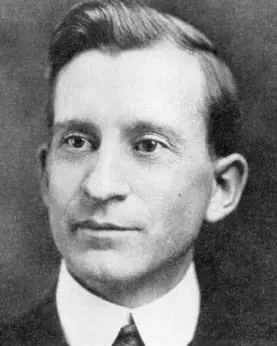
- Portrait: Joy M. Loban, D.C., from the Fourteenth Annual Catalog of the Universal Chiropractic College, pp. 6-7 (WSCC Library Archives), reproduced in Keating JC. Chronology of the Universal Chiropractic College.
This page is education and history, not medical advice. Quotations from Joy Loban's 1908 article are transcribed as D.D. Palmer reproduced them in The Chiropractor's Adjuster, with his printed page numbers given. Dollar figures are the amounts printed in the cited documents.