
Our Approach · The Legends · Era II
Era II · 1881 to 1944
Hugh B. Logan
The Gentlest Hand
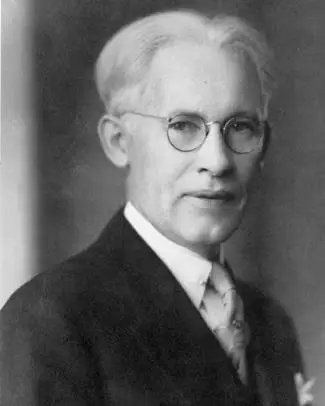
Hugh B. Logan (1881 to 1944) was the American chiropractor who moved the correction to the base of the spine. He graduated from Universal Chiropractic College in 1915, left a working practice in 1923 to study the sacrum, and built Logan Basic Technique around one sustained thumb contact on the sacrotuberous ligament measured in ounces. He founded the Logan Basic College of Chiropractic in St. Louis in 1935. The Unified Model of Tone reads that contact as correspondence rather than force.
Born
1881
Died
May 31, 1944 · St. Louis, Missouri
Founded
Logan Basic College of Chiropractic · September 1, 1935
Built
Logan Basic Technique · the sacrotuberous apex contact
Kansas to Los Angeles
Hugh B. Logan graduated in 1915 and gave up a working practice in 1923 to study one bone
Hugh Benedict Logan was born in 1881 and graduated from the Universal Chiropractic College in Davenport, Iowa in 1915. He practiced for a few years in Atchison, Kansas before moving to Los Angeles. In 1923 he left practice to study sacral subluxation full time. That decision cost him the settled middle of a career, and it produced a chiropractic technique built entirely around the bottom of the spine.
Universal was a Palmer breakaway school, which left Logan free to look below the atlas
Universal Chiropractic College was founded in Davenport in 1910 by faculty who had seceded from the Palmer School, and Logan later named its dean Joy Loban as his friend and teacher. The lineage mattered. A Palmer graduate of that decade was trained to work the upper cervical spine and to leave the rest alone. Logan carried no such rule out of school, and he spent twelve years building an analysis around the sacrum instead.
Logan practiced in Los Angeles through the 1920s while the method took shape
Logan was a visible figure in California chiropractic before Basic Technique had a name. The Los Angeles College of Chiropractic magazine recorded him lecturing to its student body on January 20, 1925. In 1928 he published an article in The California Chiropractor and advertised the practice of Logan and Logan from Suite 621 of the Loew's State Building on South Broadway, working alongside his son Vinton F. Logan, who had earned his own degree from Universal in 1926.
Logan taught Aquarian Age work with John Hurley before taking Basic Technique out on his own
T.F. Ratledge, who ran a Los Angeles chiropractic school of his own, recorded the sequence in a 1934 letter. Logan "did Aquarian Age teaching in association with Dr. Hurley for a while and then took up this work on his own responsibility, teaching as I understand it, what he himself developed." John Hurley and Helen Sanders published Aquarian Age Healing in 1932. Logan was teaching Basic Technique in field classes by then, and the two lines separated permanently.
The sacral base
Logan called the sacrum the mechanical centrum of the body and built everything on that claim
Logan held that the sacrum carries the heaviest muscles and ligaments in the frame and receives the whole weight of the column above it. A sacrum that drops forward and down on one side tilts the base, and every segment above has to lean against that tilt to keep the head level. On that reading the curves, rotations, and muscular strain a doctor finds through the lumbar and thoracic spine are one problem read at thirty heights. Logan Basic corrects the base and lets the column find its own level.
The word basic named the base of the spine
Logan presented the method publicly in 1931 under the name Universal Health Basic Technique, and the profession shortened it to Logan Basic within a few years. A certificate issued in Lincoln, Nebraska on June 7, 1935 still carries the full name and both Logan signatures. The word basic named the base. Logan was describing which end of the spine his analysis started from.
The apex contact is a sustained thumb pressure of a few ounces
The contact sits on the anterior surface of the sacrotuberous ligament where it meets the sacrum, roughly three inches below the sacroiliac joints. Cooperstein and Gleberzon put the sustained force at 2 to 10 ounces, which practitioners calibrate against the pressure a person would accept on a closed eye. Nothing is thrust and no joint is taken to a barrier. The doctor holds while the second hand climbs the spine and waits at each level for the muscle to release.
Logan held that a strained muscle restores its own attachments given slight assistance
The second half of Logan's claim sets the force. He held that a muscle held in strain by a distorted framework is already capable of restoring its own attachments, and needs only slight help to do it. The slightest force applied at either attachment draws those attachments toward each other and drops the strain. The muscle performs the correction and the thumb only assists. That is why the method works in ounces rather than in hundreds of newtons.
The mechanical centrum of the body.
Hugh B. Logan, on the sacrum, Textbook of Logan Basic Methods, 1950The Revocation
California revoked Hugh B. Logan's license in January 1929
On January 17, 1929, Bert Humason, an investigator for the California Board of Chiropractic Examiners, filed a complaint against Logan. The charge was that he had obtained a Nevada license for the sole purpose of claiming a California license by reciprocity, a route that bypassed the state's own examination. The Board opened its hearing at ten o'clock that same morning, at Forrester's Building on South Hope Street in Los Angeles.
The Findings of Fact ran to eight numbered paragraphs and closed with a thirty day stay
Seven days later the Board issued its Findings of Fact and Order. Logan had sought the Nevada license "to avoid the necessity of meeting the general requirements of the Chiropractic Act of the State of California," the Order found. It found further that he "never regularly secured his license to practice Chiropractic from the Board of Chiropractic Examiners of the State of Nevada," and it revoked his certificate. The Board granted a thirty day stay of execution. He was one of three revoked in the same executive session, alongside Edwin Fortin and Harry Eckard.
The board that took the license was itself under attack
California chiropractic in those years ran on a licensing war between rival associations. In 1931 seven practitioners wrote to the Board describing a campaign to strip reciprocity licenses from graduates of the Palmer School. A report circulated the same year that the Board intended to revoke half of all licenses issued before August 1926. The stated grounds were a technicality in how forty five minute class periods had been counted toward the required 2,400 hours. Humason himself lost a libel suit in early 1931 against a group of chiropractors that included Logan.
T.F. Ratledge, who ran a rival school, called the revocation an act of reprisal
The fairest assessment on the record came from a man with no reason to flatter Logan. Universal Chiropractic College wrote to T.F. Ratledge in May 1934 asking what he knew about their graduate. Ratledge answered that he held no personal brief for Logan one way or the other. He called him impetuous and aggressive and "the center usually of some turmoil," and credited him with "some very splendid work in California for which the chiropractors in this state should be grateful."
Logan did not rebuild in California
Ratledge closed the reference with a verdict on the Board rather than on Logan. The revocation "was purely an act of reprisal against him because they could not suppress him, which they wrongfully attempted to do," he wrote. He added that "the fact of his losing his license in California should cast no reflection upon him." Logan did not attempt to rebuild in the state. He took the method on the road instead, and six years after the revocation he opened a school in Missouri.
His California license was revoked by a former board which in my opinion was purely an act of reprisal against him because they could not suppress him, which they wrongfully attempted to do. The fact of his losing his license in California should cast no reflection upon him.
T.F. Ratledge, letter to Universal Chiropractic College, May 29, 1934Basic Technicians
By August 1934 the doctors Logan had taught were meeting as an organization of their own
Logan spent the decade after the revocation on the road. Warren Sausser recorded taking Logan's Basic Technique course in November 1932, which is the earliest firsthand account of the class in the chronology of his career. The International Chiropractic Research Foundation formed around Basic Technique users at about the same time. Its first annual convention ran at the William Penn Hotel in Pittsburgh on August 3 to 5, 1934, and more than 150 Basic Technicians attended.
Logan taught the method himself and his students agreed not to teach it on
Basic Technique was not published before it was taught. Users signed an agreement not to divulge the teaching to other chiropractors, so a doctor who wanted the method had to take the class from Logan. The arrangement is documented in a February 1934 letter from Arthur T. Holmes, chief counsel of the National Chiropractic Association. B.J. Palmer's Chiropractic Health Bureau announced it would not defend Basic Technique users in court. The National Chiropractic Association announced that it would.
By 1935 Logan had taught more than 2,000 practitioners
Logan traveled the country running field classes, and the Logan University archive records more than 2,000 practitioners taught by 1935. That number was reached before he had a building, a faculty, or a catalog. The Basic Technicians were a national body of practicing doctors held together by one course, and they supplied the students, the money, and the political will for everything that followed.
Standing analysis
Logan's upright examination produced the full spine radiograph
Logan required the spine to be examined standing, because a distortion that runs from a tilted base only shows itself under load. Warren Sausser followed the requirement into the darkroom. In the July 1933 issue of the National Chiropractic Association's journal he reported the first successful 14 by 36 inch full spine film, and he named the reason plainly.
Sausser credited Logan's course with forcing the change
"The writer in November 1932 had the opportunity of taking Dr. Hugh B. Logan's Basic Technique work," Sausser wrote. "This work requires examination of the spine in an upright position. The X-Ray verification of this procedure requires the up-right work also." The eight inch film could not hold a curvature and the two exposure procedure could not be compared across visits. Sausser needed one film wide enough to show the whole pelvis and long enough to reach the atlas.
The first plate showed the atlas down to four inches of femur
The first 14 by 36 inch exposure carried everything from the atlas down to and including four inches of the femur, with the entire degree of curvature visible in an extreme rotatory scoliosis. Full spine radiography spread from there, and Young's 2014 genealogy traces the technique systems that adopted radiography for subluxation analysis. Logan did not build the plate. His insistence that the column be read standing, as one chain from the base upward, is what made the plate necessary.
St. Louis, 1935
The Logan Basic College opened on September 1, 1935 with a first class of seven
The school came out of the Basic Technicians rather than out of Logan's own pocket. At the International Chiropractic Research Foundation convention in Syracuse in early July 1935, the members voted to found what Logan described as the first professionally owned and operated chiropractic school. He agreed to give the project his full effort for five years. Tuition was set at $1,000. A temporary site was taken at 4490 Lindell Boulevard in the Central West End of St. Louis.
Seven students enrolled in a converted residence on Lindell Boulevard
The college enrolled its first class, seven young men and women, on the first of September 1935. The building was a converted house. Five more students joined in February 1936, a larger group arrived that September, and by December 1936 the college had outgrown the property. Logan bought a seventeen acre wooded tract outside Normandy, and the school moved there.
Vinton Logan closed his own practice in 1934 to plan the school
Vinton F. Logan gave up private practice and teaching in Los Angeles in 1934 to work with his father on Basic Technique field classes and on the plan for the college. He served as dean from 1935 and as president from his father's death in 1944 until his own in 1961. The Logan school was a two generation project from the year before it opened.
Logan pushed a four year course and an office assistant program
Logan advocated a four year chiropractic curriculum at a time when the California requirement was 2,400 hours, and he claimed the first office assistant's course in the profession. He also insisted on the standing full spine radiograph as a program requirement. The college was chartered in Missouri as a non profit educational institution in 1936 and revised in 1938.
After 1944
Logan led the college until his death on May 31, 1944, and it still carries his name
Hugh B. Logan died in St. Louis on May 31, 1944, nine years after opening the school. His son succeeded him as president. Logan's own manuscript was edited by Vinton F. Logan and Fern M. Murray and published as the Textbook of Logan Basic Methods in 1950, six years after his death. It remains the primary written source for the system of body mechanics he taught in person for two decades.
Two other colleges merged into Logan, and the campus moved to Chesterfield
Carver College of Chiropractic, founded in 1906 by Willard Carver, merged into the school in 1958. Missouri Chiropractic College followed in 1964, and the name became Logan College of Chiropractic. In 1972 the college bought the former Maryknoll Seminary in Chesterfield, Missouri, a 112 acre wooded hilltop that is still the campus. The Council on Chiropractic Education granted full accreditation in 1978, and the institution became Logan University in 2013.
Logan Basic is still taught in the core of the program Logan founded
Logan University teaches Logan Basic in the core of its chiropractic degree alongside Diversified and Activator, and certifies it through a 50 hour course delivered across four weekends. The National Board of Chiropractic Examiners recorded 26.0 percent of United States chiropractors using the method in 2003. A 2022 survey found it in the core curriculum at 6 of 29 chiropractic institutions worldwide.
Three later methods run through Logan's classroom
W.C. Lee and Arlan Fuhr practiced Basic Technique, and the pressure test and leg length check that became Activator Method grew from their need for a check they could run before and after the contact. Irving Toftness studied with Logan in 1933 and kept the sacral contact beside B.J. Palmer's upper cervical toggle, which is the first deliberate combination of two chiropractic techniques on record. Larry Webster graduated from Logan in 1959 and built the prenatal method that carries his name.
Correspondence over force
What Hugh B. Logan contributed to the understanding of tone
Hugh B. Logan established that a contact of a few ounces at the right place changes a whole postural chain. The Unified Model of Tone states the general rule that Logan Basic is a case of. The active ingredient in any input is correspondence to the point where the body's tension is organized, and not force at the site that hurts. Logan spent twelve years finding one such point and the rest of his life proving how little force it takes.
A ligament is a reporting organ, and Logan chose to contact one
The body is held in shape by a continuous tension network rather than by stacked compression, and that network is the body's own record of where its parts are. Ligament stabilizes joints at end range and reports position through Ruffini and Pacinian endings. The sacrotuberous ligament sits under about 118 newtons of preload in situ. A force of 2 to 10 ounces cannot move a sacrum against that, and it was never meant to. It changes what the ligament is reporting about its own tension (input quality).
The point Logan chose is a junction where the back and the leg meet
The anatomy under the contact was worked out decades later by investigators with no interest in the technique. Willard and Vleeming established in 2012 that every layer of the thoracolumbar fascia fuses at the base of the lumbar spine into one composite anchored to the sacrotuberous ligament. Bierry's imaging study found the same ligament continuous with the hamstring tendon in all 33 controls. Van Wingerden measured force transfer from biceps femoris into the ligament at ratios of 0.08 to 0.36. Logan picked a junction.
The sacrum is the caudal end of the dural tube, and its outer anchors are the thickest in the spine
The dura anchors at the foramen magnum, dorsally to the posterior arches of the atlas and axis, and at the sacrum, and it is fixed along its whole length by the meningovertebral ligaments. Those outer anchors get stronger going down. Shi and colleagues dissected 30 embalmed cadavers and found the dorsal meningovertebral ligaments present at L5 and S1 in 97 percent of specimens, thickest at those two levels, running up to 40.24 millimeters. Logan's contact sits at the caudal terminus of that membrane.
Below the conus the claim is about dural and root tension rather than cord tension
The model states the sacral end precisely, because the anatomy changes there. The dentate ligaments that suspend the cord inside its sleeve end at the conus, most often between the twelfth thoracic and first lumbar roots, and there are none in the lumbar spine or the sacrum. A direct test found that pulling the filum terminale moved the filum without moving the conus. What remains down there binds roots. Bands run from the dura to the dorsal roots of the cauda equina in all 56 cadavers examined, averaging 18 per body. The sacral claim is a claim about root and dural tension.
Logan spent time where other methods spend force
Holding a contact for 45 seconds is a different act from thrusting through a barrier in 150 milliseconds, and duration does work that force cannot. Robert Schleip described a pathway in which sustained deep pressure on fascial tissue activates the parasympathetic anterior hypothalamus and produces global neuromuscular relaxation. A sustained contact holds the pressure long enough for that pathway to open. Published pediatric protocols run 15 to 45 seconds for a routine newborn contact and up to 2 minutes for an ill infant (time course).
Logan named a real leverage point, and the model holds that there is rarely only one
Logan stated without qualification that subluxations above the sacrum are perpetuated by an unlevel base. The model holds that a body ordinarily carries several points of critical tension at once, each with a different capacity to reorganize the whole, and that the capacity shifts from one week to the next. Both positions stand, and the second explains the first. Logan's sacrum, the atlas that H.I.O. works, and a single restricted segment under Diversified can all be genuine places to reach the same nervous system (constraint).
What the model predicts
Three claims in Logan Basic sit ahead of the measurement, and the model states them as predictions
Logan Basic reached its positions from the table rather than from a laboratory, so parts of it are still untested. The model takes those parts over and states them as its own predictions, each with the instrument that would settle it. Logan College registered two sham controlled trials of the apex contact in 2008, one with 45 participants measuring surface electromyography of the erector spinae and one with 75 measuring bilateral weight distribution.
A matched contact should move people toward the middle from both directions
The model predicts that a well matched input moves a system that starts high and a system that starts low toward the same middle. The spread across a group narrows instead of shifting one way. Surface electromyography and bilateral weight distribution are both continuous measures with a defined middle, and both were already run against a sham. The contrast is measurable with equipment the profession owns (tone).
The specified side should outperform an unspecified one
The registered protocols carry their own control. The sham is a light force on the inferior surface of the same ligament, directed straight superiorly. The model predicts that a contact side recorded in advance of the outcome does more than a contact placed without the analysis. Specificity as correspondence stands or falls on that comparison, and Logan's five weighted signs are what would be under test.
The innervation of the sacrotuberous ligament has never been mapped
This is the prediction the model most wants tested. Nobody has characterized what nerve endings the sacrotuberous ligament carries, even though a 2019 systematic review measured its mean length at 6.4 to 9.4 centimeters and the rest of its morphology in detail. The model predicts a dense supply of the mechanoreceptor classes that report position and load, in proportion to the mechanical junction the ligament occupies. A sparse or purely nociceptive supply would leave the reporting organ reading without its anatomy.
The library web
How Hugh B. Logan relates to the rest of the library
Each neighbor below carries a piece of the same argument.
Logan Basic is the method itself, with the five cardinal signs, the half inch contact specification, and the 2 to 10 ounce force.
The Unified Model of Tone supplies the account of why ounces held on a ligament can change a whole column.
Irving Toftness studied with Logan in 1933 and kept the sacral contact beside an upper cervical toggle, which made him the first deliberate combiner of two techniques.
Toftness Technique is what that combination became, and it reaches a comparable force scale through an instrument rather than a thumb.
Webster Technique shares the prenatal territory and the pelvic tension reasoning, including the sacrotuberous work Logan's perineal contact anticipates.
D.D. Palmer named tone as the variable in 1910, and Logan is the first figure to build a whole technique around changing it with grams.
Pregnancy and pediatrics cover the populations for which a contact measured in ounces is the correct amplitude rather than a compromise.
Coupling covers why a change at the base of the spine is measurable at the occiput, which is the claim Logan's second hand was testing on every patient.
Questions people ask
Common questions about Hugh B. Logan
What did Hugh B. Logan contribute to the understanding of tone?
Logan established that a sustained contact of 2 to 10 ounces at the base of the spine can reorganize the whole column above it. That is the clearest early demonstration that correspondence outranks force. The Unified Model of Tone states the general rule: the active ingredient in any input is how well it matches the point where the body's tension is organized, and not how hard it lands. Logan found one such point and spent twelve years proving how little force it needs.
Who was Hugh B. Logan?
Hugh Benedict Logan was an American chiropractor, born in 1881 and died on May 31, 1944, who developed Logan Basic Technique and founded the college that is now Logan University. He graduated from Universal Chiropractic College in 1915, practiced in Kansas and then Los Angeles, and left practice in 1923 to study the sacrum. He taught more than 2,000 practitioners by 1935 and opened his school in St. Louis on September 1 of that year.
Why did California revoke Hugh B. Logan's license?
The California Board of Chiropractic Examiners revoked his certificate on January 24, 1929, seven days after investigator Bert Humason filed a complaint. The Board found that Logan had obtained a Nevada license solely to claim a California license by reciprocity and so avoid the state's own requirements. He was one of three revoked in that session. T.F. Ratledge, who ran a rival school and held no brief for Logan, wrote that the revocation was an act of reprisal and should cast no reflection on him.
What is Logan Basic Technique?
Logan Basic is a low force chiropractic method that adjusts the whole spine from one sustained thumb contact at the base of the sacrum. The doctor rests a thumb on the anterior surface of the sacrotuberous ligament, applies roughly 2 to 10 ounces of pressure directed posteriorly and laterally, and holds it until the ligament releases. The other hand climbs the spine and waits at each level for the muscle to let go. Nothing is thrust and no joint is taken to a barrier.
Why is it called Basic Technique?
The word basic names the base of the spine. Logan held that the sacrum is the foundation the rest of the column stands on, so an analysis that starts anywhere else is working above the problem. He presented the method publicly in 1931 as Universal Health Basic Technique, and the profession shortened the name to Logan Basic within a few years. Doctors who took his course were known through the 1930s as Basic Technicians.
Is Logan Basic Technique still taught?
Yes. Logan University in Chesterfield, Missouri teaches it in the core of its chiropractic degree and certifies it through a 50 hour course across four weekends. A 2022 survey of 29 chiropractic institutions worldwide found it in the core curriculum at 6 of them. The National Board of Chiropractic Examiners recorded 26.0 percent of United States chiropractors using the method in 2003. It remains a common choice for infants, for pregnancy, and for frail patients.
Sources
Sources for this page
- Keating JC Jr. Chronology of Hugh B. Logan and the Logan Basic College of Chiropractic. National Institute of Chiropractic Research. Full chronology. Source for the 1929 Findings of Fact and Order, the Ratledge letter of May 29, 1934, the 1931 letters to the California Board, the 1934 Holmes letter, and the founding documents of the college.
- Findings of Fact and Order, State Board of Chiropractic Examiners of the State of California, in the matter of Hugh Benedict Logan, January 24, 1929. Hearing opened January 17, 1929. Reproduced in full in the Keating chronology from the Ratledge papers, Stockton Foundation for Chiropractic Research.
- Ratledge TF. Letter to Universal Chiropractic College, Pittsburgh, May 29, 1934. Ratledge papers, Stockton Foundation for Chiropractic Research. The impetuous and aggressive assessment, the turmoil line, and the reprisal verdict.
- Logan University Digital Archive. Logan Basic Technique. Exhibit. The 1915 graduation from Universal Chiropractic College, the 1923 departure from practice, and more than 2,000 practitioners taught by 1935.
- Sausser WL. New Spinographic Technique: the Full Length X-ray Plate is a Success. The Chiropractic Journal (National Chiropractic Association) 1933 July;1(7):25. Sausser credits Logan's Basic Technique course of November 1932 with forcing the move to the 14 by 36 inch film.
- Logan HB. Textbook of Logan Basic Methods. St. Louis: Logan and Murray; 1950. From the original manuscript of Hugh B. Logan, edited by Vinton F. Logan and Fern M. Murray. Library of Congress LCCN 98000594.
- Logan Basic College of Chiropractic. Catalog, 1952 to 1953, pp. 6, 8. First class of seven men and women enrolled the first of September 1935 at 4490 Lindell Boulevard; chartered in Missouri as a non profit institution in 1936.
- Young KJ. Evaluation of publicly available documents to trace chiropractic technique systems that advocate radiography for subluxation analysis: a proposed genealogy. J Chiropr Humanit. 2014;21:1-24. PMC4245702. Peer reviewed genealogy of the technique systems and of full spine radiography.
- Willard FH, Vleeming A, Schuenke MD, Danneels L, Schleip R. The thoracolumbar fascia: anatomy, function and clinical considerations. J Anat. 2012;221(6):507-536. PMC3512278. Every fascial layer fuses at the lumbar base into a composite anchored to the sacrotuberous ligament.
- Bierry G, Simeone FJ, Borg-Stein JP, Clavert P, Palmer WE. Sacrotuberous ligament: relationship to normal, torn, and retracted hamstring tendons on MR images. Radiology. 2014;271(1):162-71. PMID 24475819. Continuity with the hamstring tendon in all 33 controls, in vivo.
- Aldabe D, Hammer N, Flack NAMS, Woodley SJ. A systematic review of the morphology and function of the sacrotuberous ligament. Clin Anat. 2019;32(3):396-407. PMID 30592090. Mean length 6.4 to 9.4 cm; innervation not characterized.
- Shi B, Li X, Li H, Ding Z. The morphology and clinical significance of the dorsal meningovertebra ligaments in the lumbosacral epidural space. Spine. 2012;37(18):E1093-8. PMID 22565391. 30 embalmed cadavers; 97 percent occurrence at L5 to S1; thickest at L5 and S1; lengths from 5.16 to 40.24 mm.
- Kershner DE, Binhammer RT. Lumbar intrathecal ligaments. Clin Anat. 2002;15(2):82-7. PMID 11877784. Dura to dorsal root bands in all 56 cadavers, averaging 18 per body.
- Patel M, Vetter M, Simonds E, et al. Mechanical relationship of filum terminale externum and filum terminale internum: is it possible to detether the spinal cord extradurally? Childs Nerv Syst. 2018;34(9):1767-1770. PMID 29797063. Traction on the filum moved the filum without moving the conus.
- van Wingerden JP, Vleeming A, Snijders CJ, Stoeckart R. A functional-anatomical approach to the spine-pelvis mechanism. Eur Spine J. 1993;2(3):140-4. PMID 20058466. Force transfer from biceps femoris into the sacrotuberous ligament at ratios of 0.08 to 0.36.
- Steinke H, Kurz S, Fischer B, Schuberth S, Hobusch C, Heyde CE. The sacrotuberous ligament is preloaded in situ. J Mech Behav Biomed Mater. 2022;134:105368. PMID 35930947. In situ preload of about 118 newtons.
- National Board of Chiropractic Examiners. Job Analysis of Chiropractic 2005, chapter 10, table 10.12. Full chapter. Logan Basic use at 30.6 percent in 1991, 28.7 percent in 1998, and 26.0 percent in 2003.
- Dubuc E, Page I, Boucher PB, Brousseau D, Robidoux S, Blanchette MA. Chiropractic techniques and treatment modalities included in academic programs: a survey of chiropractic educational institutions. J Chiropr Educ. 2022;36(2):84-92. PMC9536225. Logan Basic in the core curriculum at 6 of 29 responding institutions.
- Cooperstein R, Gleberzon BJ. Technique Systems in Chiropractic. Edinburgh: Churchill Livingstone; 2004:173-180. The 2 to 10 ounce sustained force and the mid 1920s development window.
- ClinicalTrials.gov NCT00728572 and NCT00740688. Logan College of Chiropractic, 2008. Sham controlled trials of the apex contact, 45 participants with surface electromyography and 75 with bilateral weight distribution.
This page is history and education. It is not medical advice, and nothing here is a promise of outcome. Consult a licensed practitioner about your own condition.
