
Our Approach · The Legends · Era V
Era V · 1951 to 2024
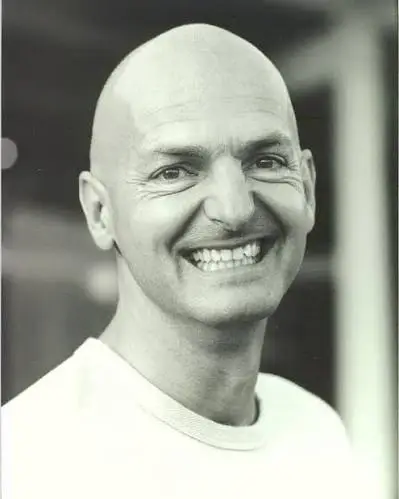
Arno Burnier
The Artist
Arno Burnier (1951 to 2024) was the Paris-born chiropractor who taught the profession to adjust into ease. He crossed the Atlantic in 1973 for a chiropractic college that had opened that January. He practiced twenty years in Yardley, Pennsylvania, then built MLS, short for Mastery, Love and Service. MLS leaves a joint its slack instead of loading it to the barrier, then drives the thrust along a curve matched to that joint. The Unified Model of Tone reads that as the cleanest input a nervous system can receive.
Born
1951 · Paris, France
Died
July 21, 2024 · Durango, Colorado, at 73
Built
MLS · Mastery, Love and Service
Practiced
Yardley, Pennsylvania · about twenty years
Paris to Spartanburg
Burnier reached chiropractic through a motorcycle crash on a French racetrack
A crash on a racetrack left Burnier, then a medical student in Paris, with chronic migraine and no sensation down the right side of his body. Arnaud Jacque Burnier was born in the city in 1951 and went into medicine first. He spent two years at Rene Descartes medical university and a year in a hospital cancer service, where the unit ran experimental treatment for ear, nose, throat and jaw disease. He raced motorcycles as an amateur on the side.
France held about 90 chiropractors for 55 million people in 1973
About 90 chiropractors served 55 million people in France in 1973, by Burnier's own count, and he had never heard of the profession. A family acquaintance suggested that a helmet-first slide into an embankment might have injured his spine, and that the American-trained chiropractors in Paris specialized in the nerve and the spine. Twenty or thirty people sat in the waiting room when he arrived. It emptied inside half an hour.
The sentence that changed his profession
Burnier arrived with a medical student's vocabulary and used all of it. He recounted the answer many times afterward in almost identical words. There was nothing the chiropractor could do about what was wrong with him, the man said. What he could do was address what was right in him. You cannot fight darkness. You turn on the light. You cannot fight disease. You turn on life.
He left for South Carolina that fall and graduated in 1977
Burnier reached Spartanburg, South Carolina in the fall of 1973 to enter Sherman College, which Thomas Gelardi had founded that January. He was among the college's earliest students and graduated in 1977. The school was nine months old when he enrolled.
Yardley
Burnier practiced twenty years in a Pennsylvania family office before he taught anyone
Referrals reached Burnier's Yardley office from California and Florida in an era with no social media, carried by patients talking to relatives. He worked there for about two decades, seeing infants, children and whole families. The practice, rather than any ambition to teach, produced MLS. Patients who moved away kept calling to say that the care they found elsewhere was not the same, and asking him to train the profession.
His teachers came straight out of the B.J. Palmer research clinic
Burnier took chiropractic philosophy from Reggie Gold nearly every morning for three or four years. At Sherman he studied under Lyle W. Sherman, assistant director of B.J. Palmer's research clinic in Davenport, and under Gelardi himself. Sherman read stereoscopic radiographs and taught him to picture what sat between two segments before delivering a thrust. Burnier named James Gefus and Sid Williams among his influences as well, and described the whole chain as one step removed from B.J. Palmer.
He gave up the practice in 1997 to teach full time
Burnier handed on the Yardley practice in 1997 and never took another patient list. He taught, mentored and spoke for the next twenty-one years, and kept mentoring after that. Recognition had come earlier: Outstanding Young Men of America in 1983, and a 1993 listing by Self magazine among the country's best doctors of chiropractic. He kept endorsing a short list of colleges by name and kept saying that a chiropractic curriculum alone does not make a proficient adjuster.
Taking his own hands apart
Burnier built MLS by reverse engineering an ability he could not explain
Burnier said his own constitution was unusually sensitive, and that being adjusted by other chiropractors felt like force applied against him rather than for him. He had learned to adjust largely by watching, and he did it well without being able to say how. Turning that into something teachable took years of breaking the movement into separate ingredients and steps. MLS is that decomposition, written down.
MLS stands for Mastery, Love and Service
The three words name what the method asks of the practitioner. Mastery means the adjustment is broken into its parts and drilled outside clinic hours, at the volume a professional musician, athlete or martial artist would accept. Love means the practitioner's attention and connection count as part of the procedure. Service means the practitioner's own state is prepared before the person arrives. Burnier trained the drive as an athletic capacity and did push-ups every morning to keep fast-twitch recruitment available in his triceps. The standard came from a film. He had watched footage of B.J. Palmer drilling students at Palmer College, and what stayed with him was a whole room moving in unison, training the movement rather than discussing it.
The method dates to 1983 or 1984, and he said so himself
Burnier began teaching adjusting seminars in 1983 and dated the method itself to 1984, and both years circulate because he used both. Asked directly on a recorded interview, he answered that he started MLS seminars in 1983 or 1984 and could not remember exactly which. MLS Seminars gives 1984 as the founding year. The teaching format came from a practical problem: his philosophy talks drew small rooms and his adjusting seminars filled, so he taught the philosophy inside the adjusting seminar.
Into ease
Burnier reversed the setup the rest of the profession is taught
Standard high velocity technique removes a joint's slack before the thrust arrives. In the neck that means laterally flexing and rotating the head over the contact until the joint sits at its barrier, which the manuals call pre-stress. MLS does the opposite and calls its setup position physiological peace. The neck stays close to neutral and the body stays settled, so the segment still holds its slack when the thrust lands. Burnier's stated reason was mechanical. A spine already loaded to its limit has nowhere to put the force.
Ease describes the position of the spine, and force is set separately
MLS separates two variables that most techniques bundle together. The position is one, and the drive is the other. The thrust supplies whatever force that segment requires, which on a locked upper cervical joint can be fast and deep. Recorded cervical manipulation runs 90 to 130 milliseconds with peak forces from 41 to 407 newtons across twelve studies, and MLS works across that range.
The dural attachments are part of the stated target
MLS instructors call the target the tonal-meningeal system and teach the dural attachments as part of the technique's anatomy. Alf Breig established in 1978 that the spinal cord is a tensioned structure, and that raised tension rather than compression carries the primary neurophysiological consequence. Groen and colleagues documented the innervation of the spinal dura in 1988. Burnier drew the practical consequence: a setup that tensions the membranes has already changed the mechanical environment of the cord before any thrust arrives. Keeping the segment slack keeps that environment unchanged. The top of the neck is the most direct mechanical access to that membrane. Hack and colleagues described a connective tissue bridge in 1995, running from the rectus capitis posterior minor to the dura at the first two vertebrae. Zheng and colleagues found the same bridge in every mammal they examined in 2017.
No straight lines
Burnier taught that nothing in the body moves in a straight line
A joint anchored in more than one place travels an arc and never a slide. MLS therefore teaches the correction as a curve matched to the joint receiving it, and organizes the curriculum as arcs, vectors of drive, and a five-part vectoring system covering L1 through L5. MLS faculty recount Burnier opening seminar rooms by telling them there is no such thing as a line of drive, because all of it is arcs.
The cervical arc changes at every level because the facets do
Pal, Routal and Saggu measured 30 adult vertebral columns and found superior facet orientation flipping from posteromedial to posterolateral somewhere between C4 and T1, most commonly at C6. A neck therefore presents seven different joint planes rather than one repeated seven times, and MLS builds a different arc for each. With the person supine, the contact sits on the inside of the index finger at the lamina-pedicle junction. The thrust carries three components at once: posterior to anterior, inferior to superior, and lateral to medial. They combine into one curve.
The thoracic arcs reverse across the spine's own length
With the person prone, MLS drives the upper thoracics superior to inferior combined with posterior to anterior. The middle thoracics run mostly straight posterior to anterior. The lower thoracics reverse the upper, running inferior to superior with posterior to anterior. The middle of the thoracic spine is the neutral case and the two ends mirror each other. The lumbar and sacral arcs follow the facet angle at each segment for the same reason.
He read the arc off the skin of the neck
Burnier taught that the arc is legible before the hands settle. MLS instructors read it in the creases of the neck, and teach that the two sides report differently because a person has been moving asymmetrically since before birth. A house vector applied everywhere would defeat the premise. The curve comes from how the specific joint under the hand prefers to move, which is why MLS treats the arc as something read off the body rather than recalled from memory.
He adjusted the segment with the widest window of invitation
Three or four distortions are usually present at once, and MLS goes to the one that is most available rather than the one that is largest. The reads are ordinary and physical: the breath, the eyes, a slight change in the face, the way the tissue yields under the hand. After a single input MLS teaches an immediate recheck, on the claim that clearing the invited segment releases the others without further contact.
Four practitioner faults close the window
Burnier named the four faults plainly: heavy mental activity, attachment to the outcome, projection, and taking the person's response personally. He taught visualization as the step before contact, crediting Lyle Sherman for it, and required a clear picture of the joint under the hand before any thrust.
He also refused to teach subluxation as staged degeneration, on the grounds that grading a spine into phases hands the patient a disease to eradicate. The imaging record supports the refusal. Brinjikji and colleagues pooled 33 studies covering 3,110 people with no symptoms at all, and found disk degeneration in 37 percent of 20-year-olds and 96 percent of 80-year-olds.
To play with passion requires discipline.
Arno Burnier, MLS Chiropractic Training, mlschiro.comThe Cafe of Life
Burnier built a practice model and a six-day camp around the same conviction
Burnier created the Cafe of Life as a vitalistic model of practice, and it spread far past his own office. He treated the work as a vocation rather than a business, and told students who came to it that way that they would never work a day in their lives. He called it the endless vacation.
The teaching ran on the same conviction. Burnier held Master Piece Training Camp for about fourteen years as a six-day intensive, staffed alongside Sue Brown, Jay Komarek and Lou Corleto. He joined humanitarian trips into the favelas of Fortaleza with Corleto, where the team started at half past six in the morning and sometimes adjusted until midnight. His book, The Cafe of Life and The Mosquito Principle, ran to 407 pages and appeared in 2023.
Sue Brown and Donald Epstein were influences he named himself
Burnier named Sue Brown and Donald Epstein among his influences, and said repeatedly that Epstein had been to chiropractic what Einstein was to physics. The chronology runs one way. Burnier dated MLS to 1984 and Brown graduated from Palmer in 1987, so the method was finished before she entered the profession. Current MLS faculty still read subluxation as potential energy stored in the system, and credit that formulation to Brown.
The last seminar and the last day
Burnier taught his final seminar in Paris in the fall of 2018 and handed the work to senior staff in Europe and North America. He died on July 21, 2024 in Durango, Colorado, aged 73. He had been married to his wife Jane for thirty-five years. Sherman College now carries his analysis as a nine-hour continuing education course under his own name, Spinal Biodynamics and Visualization, so the college he arrived at in 1973 still teaches him.
The line that ran on
Burnier's ease rule now runs inside methods that carry other names
Wade Port leads MLS Seminars, studied under Burnier from 2003, and has taught chiropractors for more than two decades. The curriculum runs in three steps. MLS ONE Catalyst is a fourteen-hour foundational weekend carrying the same arc curriculum Burnier taught. MLS TWO Ignite adds upper cervical specificity and toggle work. Kaleb Scroggin co-created MLS PEDS SPARK, which extends the method to pediatric and perinatal care.
Syntropy took the soft-hands phrase and the four elements
Syntropy names Burnier as one of its four recurring teachers. He gave founders Aaron Morris and Patrick McMahon the phrase they still use for soft hands. He also gave them the four-element scheme of water, earth, fire and wind that he taught as a way of reading body types. McMahon found the scheme evocative and imprecise, and rebuilt it as a two by two grid. Syntropy calls that grid the Tissue Matrix and uses it to set compression depth and contact breadth before a hand lands.
Kairos Training Culture names him among its mentors
Brett Jones sought Burnier out as a first-quarter student and recorded an interview with him before founding Kairos Training Culture with Lance von Stade. KTC credits Burnier with introducing the concept of ease within the adjustment and refining precision through clarity rather than force. It names Sue Brown, Marvin Talsky, Jay Komarek and B.J. Palmer on the same list. KTC runs its own analysis under its own brand, and no franchise or licensing relationship with MLS exists.
Ease as an input
Burnier held that an input into ease carries the cleanest signal a nervous system can receive
The Unified Model of Tone holds that specificity is correspondence between the structure of an input and the pattern the body is holding. Force beyond what the system needs to receive the message degrades the message, and force short of it fails to deliver the message at all. Burnier reached both positions by hand across more than forty years of practice and teaching. He got there from the receiving end, having found being adjusted at full tension intolerable in his own body.
An arc matched to a facet is correspondence in its most literal form
MLS shapes the thrust like the structure it enters, from the near-horizontal atlas to the steep C7 to the reversing arcs of the thoracic spine. Pickar's 2002 review established that a manipulative thrust is registered as sensory inflow, stimulating muscle spindle and Golgi tendon organ afferents. An input shaped like the joint it enters therefore arrives as a signal the system can read. A straight line drive into a curved articulation arrives partly as noise. Input quality is the part of tone that decides which of the two the body gets.
A defended segment reports differently than a settled one
Longus colli carries one of the highest muscle spindle densities in the body. Boyd-Clark and colleagues examined C5 to C7 tissue from 16 people aged 4 to 77 and found those spindles clustered anterolaterally, away from the vertebral body. Loading that region to its barrier before the thrust changes what every one of those receptors is reporting at the moment the input lands. Burnier's setup leaves the report undisturbed, so the thrust arrives at a system that is describing its resting state rather than a braced one. Proprioception is what makes the difference measurable.
Nothing in nature moves in a straight line, and that is a claim about information
Movement is how a nervous system generates the information it uses to map the body, and a joint driven along its own glide gives that map a coherent report. A drive that cuts across the glide asks the same receptors to describe a path the joint cannot take. Burnier built a method that layers over upper cervical, knee chest, side posture, full spine or Network work. The Unified Model of Tone predicts that such a method should exist, because no single site holds the whole system.
His place in the library
How Arno Burnier relates to the rest of the library
MLS carries the method in full, including the arcs by region, the side posture setup and the analysis Burnier taught as Spinal BioDynamics. Diversified is the direct contrast, since it takes the joint to its barrier in every plane and is the setup MLS was built to reverse. Bio-Geometric Integration supplies the reading of subluxation that current MLS faculty use, since Sue Brown's account of stored potential energy is the one they name. Network Chiropractic is the other method built on meningeal tension, and Burnier credited Donald Epstein with showing him how to clear the neuro-spinal system. Tone is the variable all of them are working on.
Questions people ask
Common questions about Arno Burnier
What did Arno Burnier contribute to the understanding of tone?
Burnier contributed the ease rule and the arc. He held that force delivered into a spine already at its limit spends itself on tissue with no capacity left, so the setup leaves the segment slack. He held that a joint anchored in several places travels a curve, so the thrust follows that curve. The Unified Model of Tone reads both as correspondence: an input shaped like the structure it enters, delivered to a system that is not already defending itself.
What does MLS stand for?
MLS stands for Mastery, Love and Service. Arno Burnier chose three words that describe what the method asks of the doctor rather than what it does to the spine. Mastery is the training obligation, drilled outside clinic hours. Love makes the practitioner's attention and connection part of the procedure. Service puts the practitioner's own preparation before the patient's arrival. The letters have never stood for anything anatomical.
Who was Arno Burnier?
Arnaud Jacque Burnier was a French-born doctor of chiropractic who studied medicine at Rene Descartes university in Paris. A motorcycle racing crash left him with migraine and right-sided sensory loss, and the chiropractor who took the case sent him to Sherman College in South Carolina. He graduated in 1977, built MLS adjusting and the Cafe of Life practice model, and taught chiropractors across Europe and North America until 2018.
When did Arno Burnier create MLS?
Both years are in circulation because Burnier used both, and asked directly in a recorded interview he could not remember which was right. MLS Seminars gives 1984. The method was already working in his Yardley practice well before either date, since he built it for himself over years and only later broke it into teachable steps. The seminars are what carry a founding year, and those began in 1983.
Is MLS a low force chiropractic technique?
No. MLS separates the setup from the thrust and only the setup is gentle. Leaving the joint its slack is what makes the work comfortable to receive. The thrust then supplies whatever drive that segment calls for, and instructors are explicit that a locked upper cervical joint can take a fast, deep force. Ease in MLS names where the spine sits when the thrust lands, never how hard the practitioner delivers it.
What methods came out of MLS?
Syntropy and Kairos Training Culture both name Burnier among their teachers. Syntropy rebuilt his four-element body-type scheme into the grid it calls the Tissue Matrix, and Kairos credits him with introducing ease within the adjustment. Both relationships are acknowledged mentorship rather than formal branches, and each culture runs its own analysis under its own brand. MLS Seminars continues separately under Wade Port, who trained under Burnier directly.
Sources
Sources for this page
- Arnaud "Arno" Jacque Burnier obituary, Durango, Colorado. Echovita. Death on July 21, 2024 at the age of 73, arrangements through Williams Funeral Home, Durango.
- MLS Chiropractic Training. mlschiro.com. The 1984 founding year, physiological peace before the thrust, arcs and vectors of drive, the five-part vectoring system, the curriculum, the faculty, and the quoted line on passion and discipline.
- Continuing education: Spinal Biodynamics and Visualization, instructor Dr. Arno Burnier, 9 credit hours. Sherman College of Chiropractic.
- The story behind Sherman College. Sherman College of Chiropractic. Thomas A. Gelardi founded the college in 1973 and named it for Lyle Sherman of the B.J. Palmer Chiropractic Research Clinic.
- Arno Burnier, speaker biography. Mile High Chiro. Sherman graduation in 1977, the Yardley practice, Outstanding Young Men of America 1983, the 1993 Self magazine listing, MLS Adjusting Seminar, Master Piece Seminars and the Cafe of Life.
- Burnier A. The Cafe of Life and The Mosquito Principle. 2023. Goodreads record. 407 pages, published March 2023.
- Burnier A, recorded interview on his background and the origin of his practice. Video. Paris, Rene Descartes, the hospital cancer service, the racing crash, the figure of about 90 chiropractors for 55 million people in 1973, and the Paris chiropractor's answer.
- Pal GP, Routal RV, Saggu SK. The orientation of the articular facets of the zygapophyseal joints at the cervical and upper thoracic region. J Anat. 2001;198(4):431-441. PMID 11327205. 30 adult vertebral columns; facet orientation flips between C4 and T1, most commonly at C6.
- Gorrell LM, Nyiro L, Pasquier M, et al. Spinal manipulation characteristics: a scoping literature review of force-time characteristics. Chiropr Man Therap. 2023;31(1):36. PMID 37705030. Cervical thrust durations of 90 to 130 milliseconds and peak forces of 41 to 407 newtons across 12 studies.
- Pickar JG. Neurophysiological effects of spinal manipulation. Spine J. 2002;2(5):357-371. PMID 14589467. Muscle spindle and Golgi tendon organ afferents are stimulated by a manipulative thrust.
- Boyd-Clark LC, Briggs CA, Galea MP. Muscle spindle distribution, morphology, and density in longus colli and multifidus muscles of the cervical spine. Spine. 2002;27(7):694-701. PMID 11923661. C5 to C7 tissue from 16 people aged 4 to 77; high spindle density in longus colli.
- Hack GD, Koritzer RT, Robinson WL, Hallgren RC, Greenman PE. Anatomic relation between the rectus capitis posterior minor muscle and the dura mater. Spine. 1995;20(23):2484-2486. PMID 8610241. A connective tissue bridge running between the suboccipital muscle and the dura at the first two vertebrae.
- Zheng N, Yuan XY, Chi YY, et al. The universal existence of myodural bridge in mammals. Sci Rep. 2017;7:8248. PMID 28811472. The same bridge found in every mammal examined.
- Groen GJ, Baljet B, Drukker J. The innervation of the spinal dura mater: anatomy and clinical implications. Acta Neurochir (Wien). 1988;92(1-4):39-46. PMID 3407473.
- Brinjikji W, Luetmer PH, Comstock B, et al. Systematic literature review of imaging features of spinal degeneration in asymptomatic populations. AJNR Am J Neuroradiol. 2015;36(4):811-816. PMID 25430861. 33 studies, 3,110 asymptomatic people; disk degeneration in 37 percent at 20 and 96 percent at 80.
- Breig A. Adverse Mechanical Tension in the Central Nervous System. Almqvist and Wiksell; 1978. The cord as a tensioned structure, and raised tension rather than compression as the primary neurophysiological consequence.
- About. Kairos Training Culture. Founders Brett Jones and Lance von Stade, and the acknowledgment of Burnier for introducing ease within the adjustment and refining precision through clarity rather than force.
This page is history and education. It is not medical advice, and nothing here is a promise of outcome. Consult a licensed practitioner about your own condition.