
Our Approach · The Legends · Era II
The Institution Builders · 1894 to 1956
Leo Spears
The Humanitarian
Leo L. Spears (1894 to 1956) built the largest inpatient facility in chiropractic history on fifteen acres east of Denver. The first unit opened with 236 beds on May 1, 1943, and a second added 364 more in 1949. Spears took patients into residence for weeks and fought to the Colorado Supreme Court for the right to house them. The Unified Model of Tone treats the whole person as the unit of care, which is the argument his hospital made.
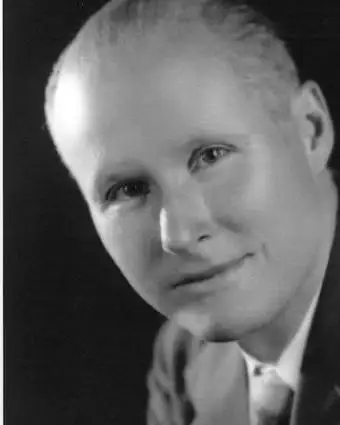
Born
February 7, 1894 · Wakulla County, Florida
Died
May 16, 1956 · Denver, Colorado
Built
Spears Chiropractic Hospital, Denver, 1943 and 1949
Capacity
600 beds across two units
Won
Colorado Supreme Court, July 1, 1950
The hospital, 1940 to 1949
Leo Spears built the largest inpatient facility the chiropractic profession has ever had
Leo L. Spears bought a fifteen acre tract of ranch land east of Denver at a tax sale in 1940 and began building. The first unit opened on May 1, 1943 with 236 beds, dedicated to Willard Carver. A second and larger building opened in 1949 with 364 beds, dedicated to D.D. Palmer. The two together held 600 beds.
Joseph Keating, writing in 2007, called it undoubtedly the largest inpatient facility in the profession's history. Nothing in chiropractic before or since has approached that scale. The buildings stood until the hospital closed in March 1984, and they were demolished in 1993.
What 600 beds meant in practice
A bed is a commitment of a different order from an appointment. Spears took patients into residence for weeks, fed them, nursed them, and read their progress over that span. The institution ran laboratory and X-ray services and employed licensed chiropractors, laboratory and X-ray technicians, physiotherapists, nurses and dieticians, as its own 1952 federal pleadings set out. Patients came from across the United States and from other countries.
The free care
The corporation was chartered as Spears Free Clinic and Hospital for Poor Children, and the free care was not a slogan. Published estimates put the value of free services given over the institution's life above five million dollars. That figure is an estimate rather than an audited total, and it appears in the profession's own retrospective accounts rather than in a financial filing.
Denver, 1921 to 1940
Spears opened on the Fourth of July, 1921, and spent two decades building toward a hospital
Leo Spears graduated from the Palmer School of Chiropractic in 1921 and opened his first office in downtown Denver on Independence Day of that year. He was in practice for nineteen years before he broke ground east of the city. The intention came early, and the record shows him pursuing it well before he owned the land.
Lobbying Congress in 1924
Spears was arguing for chiropractic inside hospitals within three years of graduating. Fountain Head News for July 19, 1924 carries a letter from Billy Brownell of the District of Columbia branch of the Universal Chiropractors Association, noting the work of Leo L. Spears and Jim Greggerson to lobby Congress for chiropractic care of hospitalized veterans. The entry is preserved in Keating's chronology of B.J. Palmer.
The charitable corporation and the 1938 tax case
By 1938 the nonprofit corporation Spears Free Clinic and Hospital for Poor Children owned two apartment houses in Denver plus an adjacent vacant lot. The lot was held for a hospital to be built as soon as finances allowed. The corporation sued for a charitable tax exemption and lost, because it rented the buildings out rather than occupying them. The Colorado Supreme Court affirmed the dismissal on October 24, 1938.
What the 1938 record shows about the plan
The 1938 opinion is the earliest court document that states Spears' intention in plain terms. The vacant lot was described as held for the purpose of constructing a hospital. Rental income from the two apartment houses went entirely to the corporate purposes. Spears was funding a hospital out of Denver real estate five years before the first ward opened.
The license fight, 1943 to 1950
Colorado licensed Spears on terms that forbade him to call the building a hospital
The state board of health issued Spears a temporary provisional license on September 27, 1943, five months after the first unit opened. The permit carried five conditions. No maternity cases. No surgery. No drugs or medicines. No contagious or infectious cases. And the name hospital shall not be used in describing or designating the institution.
On November 19, 1946 the board revoked that license after a hearing. The charges were that surgery had been performed, that drugs and medicine had been administered, that contagious and infectious diseases had been admitted and treated, and that the word hospital had been used. Spears took the revocation to court in January 1947 and lost in the trial court in December 1948.
The size of the record
This was not a small proceeding. The record of the evidence before the state board of health ran 1,623 folios, and the briefs filed on review totaled 432 pages. Oral argument was heard on May 22, 1950, seven years after the first ward opened. Spears carried the fight for the entire life of the first building before it was resolved.
What the Colorado Supreme Court actually held
On July 1, 1950 the Colorado Supreme Court reversed. The court held that the practice of chiropractic is recognized and authorized by law, and must be accepted as a lawful occupation in the public interest. It may not be arbitrarily limited or discriminated against. The five conditions were void because they were not statutory requirements and not rules of the board, and because they applied to Spears alone.
The narrow ground, stated exactly
The court did not find that the charged conduct had not happened. It wrote that even if the evidence established the truth of all four charges, no ground for valid revocation was shown, because the violation of void conditions cannot justify revocation. The judgment ordered a permanent license issued as of September 27, 1943. Popular retellings date that license to May 1, 1943, and the court's own order says September 27.
its advocates may lawfully erect and operate buildings and facilities for the treatment, according to its tenets, of patients seeking its aid
Mr. Justice Stone, Colorado Supreme Court · Spears Free Clinic and Hospital for Poor Children v. State Board of Health, 122 Colo. 147, 220 P.2d 872, July 1, 1950The antitrust suit, 1952
Spears sued the Denver Medical Society under the Sherman Act twenty-four years before Chester Wilk did
Spears brought a federal antitrust action against the Medical Society of the City and County of Denver, members of the Colorado State Board of Health, and society trustees. The complaint alleged that the defendants combined and conspired to prevent the licensing and operation of the institution, and to allocate the entire practice of the healing arts in Colorado to the medical profession. The claim was brought under sections 1 and 2 of the Sherman Act.
Why the Tenth Circuit dismissed it
The Court of Appeals affirmed dismissal on May 10, 1952 on a commerce ground rather than on the merits of the conspiracy. The practice of the healing arts in Colorado, the court held, is wholly local in character, and the alleged conspiracy aimed at purely local activities. That patients came from other states and countries was called a fortuitous and incidental effect, too remote to bring the case inside the federal statute.
The same theory won in 1987
Spears lost the jurisdictional question, not the underlying argument. Chester Wilk and four co-plaintiffs filed the same species of Sherman Act claim in 1976, George McAndrews tried it, and a federal court entered a permanent injunction against the American Medical Association in 1987. Spears made the attempt in 1952 with the same reasoning and a weaker record on interstate commerce.
What Spears was fighting for
The legal question in both the 1950 and the 1952 cases was institutional rather than clinical. Spears wanted the right of a chiropractic institution to admit patients, keep them overnight, and be called what it was. Herbert Reaver went to jail for the right to practice at all. Spears fought one level up, for the right to build.
What the record holds against the hospital
Spears lost the cases that tested how the hospital was run
The same court system that vindicated Spears in 1950 ruled against the institution in three other matters, and the record of those rulings belongs here too. He is a contested figure inside the profession as well as outside it, and the documents are public.
Maier, 1953
A patient named Susia A. Bowers entered Spears Sanitarium on May 28, 1946, was removed to another hospital on June 3, had surgery, and died on June 7. The physician who signed her death certificate wrote across the bottom that she died from criminal neglect at Spears Sanitarium, and repeated the statement to a Denver newspaper in December 1949. Spears sued for libel. One count was time barred and the jury found for the physician.
The conspiracy suits, 1957
Spears brought two civil conspiracy actions against the Denver Better Business Bureau, the Denver Medical Society, the Denver Post and others, seeking five million dollars in actual and five million in exemplary damages in each. The pleadings ran more than 400 folios and the trial transcript more than 4,300. The Colorado Supreme Court affirmed dismissal on June 10, 1957, a year after Spears died.
The trial court's second finding
The dismissal rested on two grounds. The first was that no conspiracy had been proved. The second is the harder one. The trial judge found that the business of the plaintiff corporation is being, and has been in the past, conducted in a manner contrary to the laws of Colorado. The record also refers to a Denver grand jury investigation of healing arts practices.
The objection from inside chiropractic
B.J. Palmer published a detailed objection to the Spears hospital in 1950 and refused to lend it his name
The sharpest published criticism of Spears came from the profession, not from medicine. B.J. Palmer devoted several pages of Fight to Climb in 1950 to the institution, quoting Spears' own newsletters at length. Spears advertised and used some forty listed methods of treating disease alongside adjustments, Palmer wrote, and sold traction tables and colon irrigators to other chiropractors (pp. 416, 440 to 442).
The course list Palmer reprinted
Palmer reprinted the subject list from Spears News issues 8, 9 and 10, dated October 1949 and January 1950. It included skull reshaping for children, a fasting system, nerve goading, colon irrigations, catheterization, stomach lavage and gavage, eye pressure technique, and a special cancer technique. Palmer's objection was that almost none of it was chiropractic, and that calling it chiropractic misrepresented both fields (Fight to Climb, 1950, pp. 439 to 442).
The name Palmer would not give
Spears named one wing of the hospital for D.D. Palmer and repeatedly asked B.J. Palmer for permission to name the second for him. Palmer refused every time and printed the refusal (1950, pp. 438 to 439). He also recorded that the International Chiropractors Association had declined Spears membership, on the ground that the medical and surgical risk was too great to insure (p. 443).
What Palmer conceded in the same pages
Palmer's account is not a dismissal. In the middle of the criticism he wrote that he admired Spears' fighting qualities and decried his judgment, and he stated flatly that a chiropractor has the right to run a chiropractic hospital (1950, p. 443). The disagreement was about what the building contained. Both men wanted the profession to have inpatient institutions, and only one of them built one.
We admire his fighting qualities and decry his poor judgment
B.J. Palmer, on Leo Spears · Fight to Climb, 1950, p. 443Tone in Spears' work
Spears' contribution to tone is the whole-person case
Spears admitted patients rather than scheduling them, and that decision carries a claim about what is being treated. A clinic that takes a person into residence for weeks is not treating a complaint. It is acting on the state of a whole organism over time, with everything that reaches the person counted as part of the care. The 600 beds east of Denver were an argument about the unit of care. The Unified Model of Tone makes the same argument with the variable named.
Tone is the organizing state of the nervous system, and it is a property of the whole body rather than of a region. Illness is tone that has drifted or distorted outside the range in which the system can still adapt. Health is tone held inside that range, which is what preserves the ability to meet the next demand. A symptom is one reading of that state, and it is never the unit of care.
A hospital stay is a change in load before it is anything else
Admitting a person removes the daily demand that person was failing to meet. Work stops, meals arrive, sleep becomes possible, and the household falls away. Those are inputs. Load is what a system is being asked to carry, and cutting it changes tone whether or not a hand ever touches the spine. Any residential program acts on load first, and Spears built his institution around residence from the day it opened in 1943.
Weeks of residence is an admission about time course
A body that has held a distorted pattern for years does not reorganize in an afternoon. Time course is the interval over which a system responds to an input and returns toward baseline, and it lengthens as the pattern gets older. Spears' answer to a chronic case was residence measured in weeks. A building with 600 beds is a statement about time course.
Why the severe cases produce the widest spread of outcomes
The population Spears admitted is exactly the population in which the same input produces the most different results. An input does not create an outcome on its own. An input meeting a particular state creates an outcome, and a system with almost no reserve responds to a given input very differently from one with reserve intact. This is why no outcome claim can be read off a hospital that selected for the hardest cases in the country.
Where the Unified Model of Tone parts from Spears
The forty methods are the point of departure. The model holds that the active ingredient is correspondence to what the system is actually holding, not the number of things done to it. Adding inputs is not the same as matching one, and input quality outranks volume of intervention. Spears was right that the person is the unit of care. The model claims that the way to reach a whole person is one well matched input, not forty.
The dated record
Ten dated facts about Leo Spears, with the source for each
1894 to 1940
1894. Leo Leaston Spears was born on February 7 in Wakulla County, Florida, per his Find a Grave memorial. Retrospective accounts in the profession name the community as Ivan.
1921. Spears graduated from the Palmer School of Chiropractic and opened a downtown Denver office on July 4.
1924. Fountain Head News for July 19 records Spears lobbying Congress for chiropractic care of hospitalized veterans, alongside Jim Greggerson.
1938. The Colorado Supreme Court denied his charitable corporation a property tax exemption on October 24, in a case that documents the vacant Denver lot he was holding for a hospital.
1940 to 1950
1940. Spears bought fifteen acres of ranch land east of Denver at a tax sale and began construction.
1943. The first unit opened on May 1 with 236 beds, dedicated to Willard Carver. The state board of health issued a temporary provisional license on September 27, forbidding the use of the word hospital.
1949. The second unit opened with 364 beds, dedicated to D.D. Palmer, bringing the institution to 600 beds.
1950. On July 1 the Colorado Supreme Court voided the revocation of his license and ordered a permanent one issued as of September 27, 1943.
1952 to 1993
1952. The Tenth Circuit affirmed dismissal of his Sherman Act suit against the Denver Medical Society on May 10, holding the healing arts in Colorado to be wholly local.
1956. Spears died on May 16 in Denver at the age of 62, and is buried at Fairmount Cemetery there. His nephews Dan and Howard Spears, both chiropractors, took over the hospital. It closed in March 1984 and was demolished in 1993.
The library web
Where Spears' line runs in this library
D.D. Palmer named tone as the basic principle, and Spears dedicated his 364 bed building to him in 1949. Willard Carver argued that distortion propagates through the whole frame, and the first Spears unit carried his name. B.J. Palmer published the most detailed objection to the hospital and still defended the right to build one.
Herbert Reaver went to jail for practicing, which is the ground Spears was standing on. Chester Wilk and George McAndrews won in 1987 the antitrust argument Spears lost in 1952.
Tone names the whole-organism variable a hospital stay acts on. Load explains what residence removes, and time course explains why the stay was measured in weeks. The Legends collects the people who built the profession, and the Unified Model of Tone carries the whole argument with the measurements attached.
Questions people ask
Common questions about Leo Spears
What did Leo Spears contribute to the understanding of tone?
The whole-person case. Spears admitted patients for weeks rather than treating complaints for minutes, and he built for cases an office visit could not hold. That is a statement that the unit of care is the system and not the symptom. The Unified Model of Tone makes the same claim and names the variable, holding that tone is a property of the whole organism and that a symptom is one reading of it.
How big was the Spears Chiropractic Hospital?
600 beds across two buildings on fifteen acres east of Denver. The first unit opened on May 1, 1943 with 236 beds and was dedicated to Willard Carver. The second opened in 1949 with 364 beds and was dedicated to D.D. Palmer. Joseph Keating described it in 2007 as the largest inpatient facility in the chiropractic profession's history. The hospital closed in March 1984 and was demolished in 1993.
What did the Colorado Supreme Court decide in 1950?
It voided the revocation of the hospital's license. The court held that chiropractic is a lawful occupation that may not be arbitrarily limited, and that its advocates may lawfully erect and operate buildings for the treatment of patients seeking its aid. The five conditions on the 1943 permit were void because they were neither statutory requirements nor board rules and applied to Spears alone. A permanent license was ordered issued as of September 27, 1943.
Did Leo Spears win his antitrust case against organized medicine?
No. The Tenth Circuit affirmed dismissal on May 10, 1952. It held that the practice of the healing arts in Colorado is wholly local, and that patients traveling from other states was an incidental effect rather than interstate commerce. The court decided the jurisdictional question and never reached the conspiracy allegations. Chester Wilk filed the same kind of Sherman Act claim in 1976 and won a permanent injunction against the American Medical Association in 1987.
Why is Leo Spears a contested figure in chiropractic?
Because of what the hospital did beyond adjusting. B.J. Palmer devoted several pages of Fight to Climb in 1950 to a list of roughly forty methods Spears advertised in his own newsletters. Fasting, colon irrigations and skull reshaping were among them. Palmer argued that almost none of it was chiropractic. The ICA declined Spears membership. In 1957 a Colorado trial court found the corporation's business had been conducted contrary to state law.
What happened to Spears Hospital after Leo Spears died?
Spears died on May 16, 1956, and his nephews Dan and Howard Spears, both chiropractors, took over the direction of the institution. The conspiracy suits he had filed were dismissed in 1957. The hospital operated for another twenty-eight years and closed in March 1984. A developer bought the property and the buildings were demolished in 1993. Nothing at that scale has been built in the profession since.
Sources
Sources for this page
- Spears Free Clinic and Hospital for Poor Children v. State Board of Health, 122 Colo. 147, 220 P.2d 872 (July 1, 1950). Source for the September 27, 1943 provisional license and its five conditions. Also the November 19, 1946 revocation, the 1,623 folio record and the 432 pages of briefs. Also the holding and the order to issue a permanent license as of September 27, 1943. CourtListener
- Spears Free Clinic and Hospital for Poor Children v. Cleere, 197 F.2d 125 (10th Cir., May 10, 1952). Source for the Sherman Act allegations, the hospital's described staff and patient catchment, and the wholly local holding. CourtListener
- Spears' Free Clinic and Hospital for Poor Children v. Wilson, 103 Colo. 182, 84 P.2d 66 (October 24, 1938). Source for the charitable corporation, the two apartment houses, the vacant lot held for a hospital, and the denial of tax exemption. CourtListener
- Spears Free Clinic and Hospital for Poor Children v. Maier, 128 Colo. 263, 261 P.2d 489 (September 21, 1953). Source for the Bowers case, the death certificate notation, and the outcome of the libel action. CourtListener
- Spears Free Clinic and Hospital v. Denver Area Better Business Bureau, 135 Colo. 464, 312 P.2d 110 (June 10, 1957). Source for the two civil conspiracy actions, the damages sought, the size of the record, and the trial court's two grounds for dismissal. CourtListener
- Rehm WS. Price of dissension: the private wars of Dr. Leo L Spears, 1921-1956. Chiropractic History. 1995;15(1):30-37. PubMed 11613388
- Rehm WS. Prairie Thunder: Dr. Leo Spears and His Hospital. 2001. The book length treatment of the hospital by the same historian.
- Palmer BJ. Fight to Climb. Volume XXIV. Davenport, IA: Palmer College of Chiropractic; 1950. Pages cited. 416, the forty listed methods. 438 to 439, the D.D. Palmer wing and the refusal of the Palmer name. 439 to 442, the Spears News course lists and the traction table and colon irrigator. 443, the ICA membership refusal and the admiration of Spears' fighting qualities.
- Keating JC. Early Mile-High Chiropractic. Dynamic Chiropractic. November 2007. Source for the 1894 to 1956 dates, the 1921 Palmer graduation, the litigious record and the largest inpatient facility characterization. dynamicchiropractic.com
- Spears Chiropractic Hospital to be Demolished. Dynamic Chiropractic. July 1993. Source for the 1940 tax sale purchase and the May 1, 1943 opening with 236 beds. Also the 1949 second unit with 364 beds and the March 1984 closure. Also the 1993 demolition, the nephews Dan and Howard Spears, and the five million dollar free care estimate. dynamicchiropractic.com
- Keating JC. B.J. Palmer: A Chronology. National Institute of Chiropractic Research. Entry for Fountain Head News, July 19, 1924, page 5, recording Spears and Greggerson lobbying Congress for chiropractic care of hospitalized veterans. chiro.org
- Find a Grave. Dr Leo Leaston Spears, memorial 89654645. Birth February 7, 1894 in Wakulla County, Florida. Death May 16, 1956 in Denver, Colorado. Burial at Fairmount Cemetery, Denver. findagrave.com
This page is education and history, not medical advice. The litigation on this page is quoted from the published opinions of the Colorado Supreme Court and the United States Court of Appeals for the Tenth Circuit, with citations given. The methods listed in Spears' own publications are reported as historical record and are not endorsed here.