
Our Approach · The Legends · Era II
Era II · The Codifier
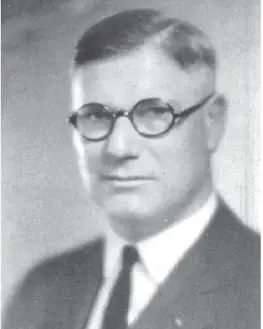
Ralph W. Stephenson
The Codifier
Ralph W. Stephenson published two books in 1927 that set the shape of chiropractic teaching for a century. The Chiropractic Text Book compressed the profession's reasoning into thirty-three numbered principles running from one major premise to the adjustment. The Art of Chiropractic did the same for technique. His pathology chapters gave tone a two-directional notation, T plus for excess and T minus for deficiency, the criterion the Unified Model of Tone still uses.
Graduated
Palmer School of Chiropractic, 1921
Wrote
Chiropractic Text Book, 1927
Wrote
The Art of Chiropractic, 1927
Codified
The 33 Principles
Taught
Palmer School of Chiropractic
The 33 Principles, 1927
Stephenson turned a spoken philosophy into a numbered deductive chain
Stephenson's contribution was structure. B.J. Palmer had spent two decades pouring the philosophy of chiropractic into lectures, pamphlets and the Green Books, and the reasoning was scattered across thousands of pages. Stephenson gathered it into thirty-three principles, numbered and named, and arranged them so that each follows from the ones before it. The list runs from a single major premise to the adjustment, and students still learn it by number.
Where the chain starts
Principle No. 1 is titled The Major Premise. It reads: A Universal Intelligence is in all matter and continually gives to it all its properties and actions, thus maintaining it in existence. Principle No. 2, The Chiropractic Meaning of Life, follows directly: The expression of this intelligence through matter is the Chiropractic meaning of life. Nothing in the first two principles mentions a spine, a bone or a patient. Stephenson starts with a claim about matter and works downward.
The early principles build the terms one at a time. No. 4 names the triune of life as intelligence, force and matter. No. 5 states that full life requires all three at full strength. No. 6 states that no process happens without time. No. 12 makes the claim the rest of the system depends on, that there can be interference with the transmission of universal forces.
Where the chain lands
The last four principles carry the clinical argument. No. 30, The Causes of Dis-ease, reads: Interference with the transmission of Innate forces causes incoordination of dis-ease. No. 31 places that interference in the spinal column. No. 32, The Principle of Coordination, defines coordination as the principle of harmonious action of all the parts of an organism, in fulfilling their offices and purposes. No. 33 states the law of demand and supply inside the body.
Principle No. 32 is the one worth reading twice. Stephenson ends the chain on harmonious action across all parts of an organism, which is an organizational claim rather than a mechanical one. The Unified Model of Tone calls the same property tone, and treats it as the coupling of a system rather than the position of any single part.
Of ALL the books written and compiled on Chiropractic Philosophy, this is by far the best, not excepting my own.
B.J. Palmer, in his letter of approval printed in Stephenson's Chiropractic Text BookTone as a signed quantity
Stephenson gave tone a two-directional notation in a 1927 textbook
The strongest tone contribution in Stephenson's book sits in the pathology chapters, not the philosophy. He classifies every abnormal function by its direction of departure from normal, and he gives each direction a symbol. Tonicity is written T. Excess is T plus and deficiency is T minus, and the same signed pair runs through motor, sensory, calorific, elimination and nutrition functions.
What the notation says on the page
On pages 218 to 220 Stephenson works through the paralysis families with the notation live. Under the motor paralysis family he lists M+, due to T+, excess tonicity, as in contractures and M-, due to T-, lack of tonicity, as in prolapses. Under the contracture family, excess tonicity again, this time attributed to excess adrenalin. Under the prolapsis family, M-, indirect, due to T-, lack of tonicity in motor tissue, with weak ligaments in a prolapsed uterus given as the connective tissue case.
Read the list and the structure is unmistakable. The same underlying variable, tonicity, produces contractures at one end and prolapses at the other, in muscle and in ligament alike. Stephenson is not cataloguing two diseases. He is cataloguing one variable failing in two directions across different tissues.
Why the sign matters to the model
D.D. Palmer had stated the criterion in words in 1910, writing that disease is the result of too much or not enough functionating. Stephenson turned it into notation a student could apply case by case. A signed variable is a testable variable, because it forces the question of which direction a given patient has departed in, and it makes the answer recordable.
That is the shape the Unified Model of Tone uses now. Restoration is measured as movement toward the middle from both edges at once, which only makes sense if the variable carries a sign. The tone pillar sets out the criterion and the primary record behind it.
Two books, one year
Stephenson wrote the profession's philosophy text and its technique text in 1927
Stephenson published Chiropractic Text Book and The Art of Chiropractic in the same year, 1927, both under the Palmer School of Chiropractic imprint. The first handles the reasoning, the second the delivery. He illustrated the textbook himself.
The book that outlived its author's edition
The Art of Chiropractic was revised in 1947 by W. Heath Quigley and other members of the Palmer School technic department, and reissued under the 1927 and 1947 copyrights. The revisers cut a great deal of the original material to bring the technique up to date. They kept Stephenson's preface, foreword and introduction deliberately, writing that those portions were retained so they may stand as a testimonial to Dr. Stephenson's excellent works.
The Chiropractic Text Book stayed in print in its own right. The copy in the Green Books library is the 1948 Palmer School edition carrying the original 1927 copyright, twenty-one years after publication and still the teaching text.
Written for the classroom
Stephenson designed the textbook as a course rather than a treatise. It is divided into sections by semester, with freshman, junior and senior material separated, plus sections on etiology and thesis writing. Review questions close each group of articles. The thirty-three principles are introduced in the freshman section by name only, and the reasoning behind each is taken up again in the senior section.
That structure is why the numbering survived. A student who learns the principles as a numbered list in the first semester can be handed the same numbers three semesters later and reason from them.
Transmission from source to periphery
Stephenson framed his own work as transmission rather than invention
Stephenson refused the role of innovator and said so in his preface. He described his function in the language of the system he was codifying. I merely serve as Transmission from Source to Periphery. The phrase is a chiropractic term for the passage of an impulse along a nerve. Stephenson applied it to himself as an author.
He named his teachers in the same passage. He credited B.J. Palmer as the source, and wrote that the fundamental principles as given by that teacher are not to be tampered with by me or any one else. He credited Dr. John H. Craven for more intimate instruction in the philosophy, and recorded that he quoted freely from D.D. Palmer, from Mabel Palmer and from Craven.
What B.J. Palmer said about the result
B.J. Palmer's letter of approval is printed in the front of the textbook and reads as a full endorsement. He wrote that of all the books written and compiled on chiropractic philosophy, Stephenson's was by far the best, not excepting my own. He identified exactly what Stephenson had done, crediting him with compiling the many principles scattered through his own writing into a systematic, organized manner, building them up from simple to the higher forms.
Palmer went further and named the gap the book filled. He wrote that there had always been a void in chiropractic literature, that no single work existed to hand an inquiring layman, and that Stephenson's book was now that work. Coming from a man who guarded his authority over the profession closely, it is the strongest endorsement in the Green Books.
The record
Six dated facts about Ralph W. Stephenson, with the source for each
1921. Stephenson graduated from the Palmer School of Chiropractic. He described his reason for going in the textbook preface: to gain knowledge of chiropractic he came to the Fountain Head, by which he meant B.J. Palmer rather than the institution.
1927. Chiropractic Text Book published, copyright the Palmer School of Chiropractic, illustrations by the author. It contains the thirty-three principles as a numbered and named list, and the signed pathology notation on pages 218 to 220.
1927. The Art of Chiropractic published in the same year, the technique companion to the philosophy text. Two textbooks for one profession, both by the same author, both in one year.
Undated, in the front matter. B.J. Palmer's letter of approval calls the book the best written on chiropractic philosophy, his own included, and credits Stephenson with organising principles that were scattered through Palmer's own writing.
1947. The Art of Chiropractic revised by W. Heath Quigley and the Palmer School technic department, with Stephenson's original preface, foreword and introduction retained as a testimonial to his work.
1948. Chiropractic Text Book reprinted by the Palmer School under its original 1927 copyright, twenty-one years after first publication.
Stephenson's contribution to the model
Stephenson made the tone criterion usable by giving it a sign
Stephenson's contribution to this model is notation. D.D. Palmer named tone and defined disease as departure from it in either direction, and that claim sat in prose across a thousand pages. Stephenson wrote it as T plus and T minus and applied it to case after case, which turned a philosophical criterion into something a clinician could record.
The signed notation makes the bidirectional test possible
A signed variable forces a direction. Faced with a contracture and a prolapse, the clinician using Stephenson's notation has to say which way the tissue has departed, and the two answers are different entries. A signed variable also makes the middle explicit, because plus and minus are defined against a normal value that has to be named. And a signed variable can be aggregated, which is what makes the bidirectional test possible at all.
Where the model extends him
Stephenson placed all interference in the spinal column, in Principle No. 31, because that was the mechanism available to him. The model does not need that restriction. Tone is shaped by the quality of input arriving from every tissue, carried by rhythmic activity, and integrated by the autonomic nervous system. What survives intact is his Principle No. 32, coordination as harmonious action across all parts of an organism, which is tone under another name.
Questions people ask
Common questions about Ralph W. Stephenson
What is Ralph Stephenson known for?
Stephenson codified the thirty-three principles of chiropractic. In his Chiropractic Text Book of 1927 he gathered the philosophy that B.J. Palmer had spread across lectures, pamphlets and books, and arranged it as a numbered deductive chain running from one major premise to the adjustment. He published a second book the same year, The Art of Chiropractic, covering technique. B.J. Palmer's letter of approval, printed in the front of the textbook, calls it the best book written on chiropractic philosophy.
What are the 33 Principles of Chiropractic?
They are a numbered and named list, set out by Ralph Stephenson in 1927, in which each principle follows from the ones before it. Principle No. 1, the Major Premise, states that a Universal Intelligence is in all matter and continually gives it all its properties and actions. The chain builds through intelligence, force, matter, time and transmission, then lands on the causes of dis-ease at No. 30, subluxations at No. 31, coordination at No. 32, and demand and supply at No. 33.
What did Ralph Stephenson contribute to the understanding of tone?
He gave tone a two-directional notation. In the pathology chapters of the 1927 textbook, tonicity is written T, excess is T plus and deficiency is T minus. Stephenson applies the signed pair case by case: excess tonicity as in contractures, lack of tonicity as in prolapses. D.D. Palmer had stated that criterion in words in 1910. Stephenson turned it into something a clinician could record, which is what the Unified Model of Tone requires.
Did B.J. Palmer approve of Stephenson's book?
Yes, and in unusually strong terms. His letter of approval is printed in the front of the Chiropractic Text Book. He wrote that of all the books written and compiled on chiropractic philosophy, Stephenson's was by far the best, not excepting his own. He credited Stephenson with compiling the many principles scattered through his own writing into a systematic, organized form, and said the book filled a void that had always existed in chiropractic literature.
What is The Art of Chiropractic?
It is Stephenson's technique book, published in 1927, the same year as his philosophy textbook. Where the Chiropractic Text Book handles the reasoning, The Art of Chiropractic handles the delivery of the adjustment. W. Heath Quigley and the Palmer School technic department revised it in 1947, cutting much of the original material to bring the technique up to date. They kept Stephenson's preface, foreword and introduction as a testimonial to his work.
How did Stephenson describe his own role?
As transmission rather than invention. In his preface he wrote that he merely served as transmission from source to periphery. The phrase is a chiropractic term for the passage of an impulse along a nerve, applied here to an author. He named B.J. Palmer as the source, said the fundamental principles were not to be tampered with by him or anyone else, and credited John H. Craven and Mabel Palmer among his teachers and sources.
Why do students still learn the 33 Principles by number?
Because Stephenson built the textbook as a course rather than a treatise. It is divided by semester, and the principles are introduced in the freshman section by name and number, then taken up again in detail in the senior section. Numbering a philosophy makes it referable. A student who learns the list early can be handed the same numbers three semesters later and reason from them without relearning the vocabulary.
How does the Unified Model of Tone relate to Stephenson's work?
The model keeps his signed criterion and his last structural principle. Tone carries a direction, so restoration is measured as movement toward the middle from both edges at once, which is Stephenson's T plus and T minus made quantitative. His Principle No. 32 defines coordination as harmonious action across all parts of an organism, which is what the model calls tone. What the model drops is his restriction of all interference to the spinal column.
Sources
Sources for this page
- Stephenson RW. Chiropractic Text Book. The Palmer School of Chiropractic; copyright 1927, 1948 edition, illustrations by the author. Cited as follows. The introduction, for the thirty-three principles numbered and named. The front matter, for B.J. Palmer's letter of approval. The preface, for the transmission line and the credits to John H. Craven and Mabel Palmer. Pages 218 to 220, for the signed pathology notation including T plus and T minus.
- Stephenson RW. The Art of Chiropractic. The Palmer School of Chiropractic; copyright 1927 and 1947. Revised edition by W. Heath Quigley, D.C., Ph.C., and other members of the Palmer School faculty technic department. Cited: the 1947 preface, for the scope of the revision and for the decision to retain Stephenson's original front matter.
Where this page sits in the library
Stephenson stands between the founder's prose and the profession's teaching
D.D. Palmer named tone and defined disease as departure from it in either direction. B.J. Palmer supplied the philosophy Stephenson organised, and endorsed the result in writing. Mabel Palmer is among the sources Stephenson quotes in the textbook.
The tone pillar carries the primary record for the bidirectional criterion Stephenson wrote as T plus and T minus. Coupling is the current name for what his Principle No. 32 calls coordination. The Legends collects the people who carried the work forward.
The Unified Model of Tone carries the full argument, with the measurements attached.
This page is education and history, not medical advice. Quotations from Ralph W. Stephenson and B.J. Palmer are transcribed from the Palmer School editions of Stephenson's two 1927 books.