
Our Approach · The Legends · Era II
Era II · 1899 to 1992
Major Bertrand DeJarnette
The Synthesist
Major Bertrand DeJarnette (1899 to 1992) was the Nebraska osteopath and chiropractor who named Sacro Occipital Technic in 1929 and revised it for fifty-five years. DeJarnette treated the sacrum and the occiput as two ends of one dural sleeve, corrected with padded wedges instead of thrusts, and sorted every patient into one of three categories. The Unified Model of Tone reads those categories as chiropractic's first classification of whole-body regulatory patterns.
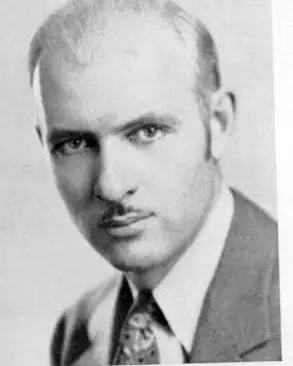
Born
December 23, 1899 · Greenridge, Missouri
Died
May 31, 1992 · Nebraska City, Nebraska
Named SOT
1929 · Sacro Occipital Technic
Taught
Fifty-five years · 1929 to 1984
Nebraska City, 1928
DeJarnette found one pain reporting at both ends of the spine
Sacro Occipital Technique began with a single case DeJarnette wrote into his notebook in April 1928. A man arrived with a painful left ilium and left leg. DeJarnette spent that year testing vasomotor responses along the spine, and he found an area over the third left sacral foramen that reacted violently to his contact. The leg and pelvis pain vanished. In the same moment it reappeared in the man's left occipital bone.
What DeJarnette found at the back of the skull
DeJarnette felt along the occiput and found a tender fiber there. He described it as the size of a cigar and as painful as a fractured hip. He pressed it hard and recorded that the head pain cleared. Ten days later the patient returned with a splitting headache, and cold applied to the same left sacral area settled it again. DeJarnette saw the man about 27 times across three years. He wrote that he could still reach the pain from the sacrum.
The 1929 experiment that split the spine at the ninth thoracic segment
DeJarnette found two control points in 1929 and named his method after them. Early that year he read a short German book on spinal cord tracts by an author he recorded only as Bing. Through 1929 DeJarnette used electrical stimulation to drive muscle responses and follow where they traveled. He concluded that impulses entering the cord below the ninth thoracic segment involved the hypogastric plexuses and the sacrum. Impulses entering above it went straight upward. Pain arising below that line answered to sacral position. Pain arising above it answered to the position of the occipital condyles on the atlas.
The name, the spelling, and the society
DeJarnette called the method Sacro Occipital Technic and insisted on the final c. He founded the Sacro Occipital Research Society in the same year. He then revised the system for fifty-five years, settling it into final form in his 1979 cranial manual and his 1984 SOT manual. Ned Heese dated the research years from 1924 to 1984 in his 1991 history of the work. The working detail of the finished system sits on the Sacro Occipital Technique page.
Engineer, osteopath, chiropractor
DeJarnette held three trainings before he had a method of his own
DeJarnette was born on December 23, 1899, in Greenridge, Missouri. He grew up in Havelock, Nebraska. Major was his given name and not a military rank. In high school he took a four-year scholarship as an apprentice in experimental engineering. DeJarnette thought in forces, levers and loads before he thought in tissues, and the habit never left the technique he later built.
The Detroit years and the explosion
DeJarnette moved to Detroit in 1918 to work in the automobile industry. An industrial explosion left him severely disabled and ended that career. For treatment he traveled to the Dearborn College of Osteopathy in Elgin, Illinois, where students were treated at no charge. DeJarnette enrolled as a student so that the care would continue.
The osteopathic degree in 1922, and William Garner Sutherland
DeJarnette graduated as an osteopath in 1922. Joseph Keating's chronology of his life records him as a friend of William Garner Sutherland, the osteopath who founded cranial work. That contact is the source of the cranial half of Sacro Occipital Technique. DeJarnette later rebuilt Sutherland's cranial concept as chiropractic craniopathy and taught it inside his own system.
The chiropractic degree in 1924, and the Nebraska City office
DeJarnette's back was still bad after the osteopathic degree. In Lincoln, Nebraska, a chiropractic student talked him into chiropractic care, and DeJarnette wrote that six months of it put him right. He enrolled at the Nebraska College of Chiropractic in Lincoln and graduated in 1924, in a class of twelve that included two women. DeJarnette opened his office in Nebraska City on June 18, 1925, at 722 and a half Central Avenue. He practiced at that address for the rest of his life.
DeJarnette blocks
DeJarnette's blocks give the body a support it cannot supply for itself
The padded wedge is DeJarnette's most widely adopted invention, and the idea behind it is support rather than force. The story taught inside Sacro Occipital Technique is of a boy trapped in a well who could not grasp the rope lowered to him. A plank wedged beneath him gave him something to stand on. From that footing the boy could reach the rope and climb out. A body under sustained load does the same. With support at the pelvis it can reorganize against a gravitational load it could not answer unaided.
What a wedge actually delivers
Two padded wedges, known throughout the profession as DeJarnette blocks, go under the pelvis at angles the category dictates, most often about 45 degrees. No thrust is delivered. The patient's own body weight and respiration work against a fixed wedge until the indicators change. Category one blocking runs roughly five to ten minutes while the doctor works the occipital fibers. Category two blocking often ends inside 30 to 60 seconds, once the arm-fossa test re-strengthens. Category three blocking runs 10 to 15 minutes. The doctor waits.
The measurement that arrived sixty years after the wedge
Sturesson, Selvik and Udén measured the sacroiliac joint with roentgen stereophotogrammetry in 25 patients in 1989. They recorded mean rotation of 2.5 degrees and mean translation of 0.7 millimeters, with no difference between symptomatic and asymptomatic joints (PMID 2922636). A wedge cannot push a sacrum anywhere it could not already go. A wedge holds a position long enough for the nervous system to accept it. DeJarnette reached that conclusion from the table decades before the instrument existed to measure it. The body answers to the quality of the input rather than to its size.
Three categories
The three categories were chiropractic's first whole-body classification of subluxation patterns
Chiropractic in 1930 listed bones. DeJarnette named three patterns instead, gave each one an anatomy and a mode of failure, then let the pattern decide where a correction went and how long it stayed. The order is the contribution, because the category is settled before any single bone is discussed. DeJarnette put the three into final form in his 1979 and 1984 manuals, fifty years after naming the method.
Category one names a dural and fluid failure
DeJarnette located category one in the anterior synovial aspect of the sacroiliac joint, which he called the sacral boot mechanism. A subluxation there strains the spinal and cranial dura and impedes cerebrospinal fluid circulation through the whole system. The distortion then shows at the occiput, the atlas and the sacrum together. Category one patients present with restricted breathing and autonomic complaints rather than clean one-sided back pain.
Category two names a weight-bearing failure
DeJarnette placed category two in the posterior ligamentous weight-bearing part of the sacroiliac joint. The joint has gone unstable, and the sacrum has lost its working relationship with its matching ilium. Symptoms worsen with standing and loading, because what has failed is the ability to hold the body up against gravity. The sacroiliac joint page carries the anatomy this split divides, front from back.
Category three names a disc failure
The disc is involved by the time a patient reaches category three, and the nerve root is compressed or stretched. DeJarnette called it complete failure of compensation. This is the hot low back that will not tolerate loading, and it draws the most conservative hand in the system. A category three makes an existing category one or two worse.
Where DeJarnette's classifying habit came from
DeJarnette named Willard Carver as the one man he studied and admired during his early research years. Carver described the whole body in classified distortions rather than in single bones, and DeJarnette took that habit and gave it three named patterns with tests attached to each. Stephen Senzon's history of subluxation theory places DeJarnette inside chiropractic's first research era, from 1928 to 1949. His company there is B.J. Palmer, Hugh Logan, Richard Van Rumpt and Henri Gillet (PMID 31019421).
1941
DeJarnette manufactured a lumbar strain and it reported at the atlas in all sixteen subjects
DeJarnette set out in 1941 to produce fifth lumbar subluxations instead of correcting them, because he wanted to know what one actually looked like. The experiment ran close to two years and cost him over 200 screening examinations. Eleven of the sixteen subjects rotated on film, five suffered acute low back failure, and one finding held across every single one. A strain manufactured at the bottom of the spine reported at the top of it.
How DeJarnette screened the volunteers
DeJarnette examined over 200 people to find subjects free of lumbosacral symptoms. He wanted people aged 18 to 50 who could touch the floor with straight knees and bend backward without back or leg pain. Eighteen qualified and knew they were part of an experiment. DeJarnette photographed each spine on three consecutive days with a camera at a pre-focused distance, then discarded two subjects whose spines photographed too variably. The remaining sixteen stayed with him for nearly two years.
What the induced strain produced
Each subject received the same adjustment daily for four days, designed to carry the fifth lumbar spinous process to the patient's right. Eleven of the sixteen showed radiographic rotation. Eleven developed left pelvic rotation, which was the opposite of what DeJarnette had predicted. Five went on to acute low back failure within four months, and one of those was hospitalized for three weeks. The distortion DeJarnette manufactured was real and it lasted.
One very important thing developed which was consistent. Each of the 16 patients developed palpatory pain over the left transverse of their atlases. None of the 16 had such pain prior to the first experimental adjustment.
Major Bertrand DeJarnette, History of SOT, Sacro Occipital Research Society International, 1992, pages 14 to 17Instruments, boards, and the seminar circuit
DeJarnette instrumented posture and helped build the profession's national board
DeJarnette's influence reached well past his own technique. He sold a postural measuring apparatus that chiropractors around the country bought through the 1930s. He sat on the Nebraska Board of Chiropractic Examiners from 1948 and served as its secretary-treasurer. Fourteen years later DeJarnette carried that work onto the national stage.
The DeJarnette plumb line apparatus
DeJarnette's apparatus combined a plumb line, fixed foot plates, and uprights with adjustable cross-pieces. It recorded a patient's posture standing upright, at a time when most spinal analysis was performed on a table. Stanley Hayes wrote in 1935 that it was the best device he had seen for showing a patient the shape of their own back. C.W. Weiant singled the apparatus out in his survey of spinal analysis three years later.
The Nebraska board and the National Board of Chiropractic Examiners
Nebraska issued no chiropractic license at all between 1927 and 1949. DeJarnette joined the state board in 1948, and fifteen licenses were awarded over the decade that followed. He wrote in 1958 that the twenty-two year gap came from poor cooperation between the chiropractic and basic science boards. His remedy was to call on the Director of the Bureau of Examining Boards in person and set out the problem. The Council of State Chiropractic Examining Boards founded the National Board of Chiropractic Examiners in 1962, and DeJarnette sat on it from the start.
SORSI and the seminars
DeJarnette taught through the society he founded in 1929, which became the Sacro Occipital Research Society International. Its 1966 annual seminar in Omaha drew 150 chiropractors from 25 states and 5 Canadian provinces, taught by a staff of 20 doctors. DeJarnette shared a platform with Clarence Gonstead, Raymond Nimmo and Richard Van Rumpt at the Parker seminar in Las Vegas in January 1969. In 1981 a bust of DeJarnette was placed in the Chiropractic Hall of Honor at Texas Chiropractic College, alongside D.D. Palmer, B.J. Palmer and Henri Gillet.
The combination of plumb line, fixed foot plates, and uprights with adjustable cross-pieces makes possible a very complete record of the patient's posture.
C.W. Weiant, Spinal Analysis, The Chiropractic Journal, January 1938, quoted in his letter to the editor, May 1938DeJarnette's dated record
Nine dated facts about Bertrand DeJarnette, with the source for each
1899. DeJarnette was born on December 23 at Greenridge, Missouri. He grew up in Havelock, Nebraska, and took a four-year high school scholarship in experimental engineering.
1922. DeJarnette earned his osteopathic degree from the Dearborn College of Osteopathy in Elgin, Illinois, where Keating's chronology records his friendship with William Garner Sutherland.
1924. DeJarnette graduated from the Nebraska College of Chiropractic in Lincoln in a class of twelve, two of them women, after twenty-seven months of study.
1925. DeJarnette opened his practice in Nebraska City on June 18, at 722 and a half Central Avenue, and stayed at that address until his death.
1929. DeJarnette named the method Sacro Occipital Technic and founded the Sacro Occipital Research Society the same year.
1935. DeJarnette spoke on clinical research at the National Chiropractic Association convention in Hollywood, marking the fortieth anniversary of the profession.
1949. The Los Angeles College of Chiropractic graduate school announced a four-year postgraduate course in the fundamentals of Sacro Occipital Technique, taught by DeJarnette.
1962. DeJarnette was elected to the newly created National Board of Chiropractic Examiners as the representative for District 1.
1992. DeJarnette died in Nebraska City on May 31 at the age of 92, having produced more than 135 volumes of research notes and manuals across his career.
SOT research since 1992
What has been measured about Sacro Occipital Technique since DeJarnette died
The published literature on Sacro Occipital Technique is small, and the shape of its mix is the informative part. SOTO-USA gathered more than 150 published articles on SOT and SOT cranial work up to the year 2000 into three volumes. The stronger findings concern what blocking changes in a body. The weaker ones concern whether two examiners agree on any single test taken alone.
What blocking has been shown to change
Hochman ran a case series of five subjects with sacroiliac distortion in 2005. A blinded assessor using an ultrasonic motion detector recorded increased lumbar range in every plane except extension, from 21 to 57 percent, after category two blocking (PMID 16326243). Blum's 2015 pilot took 38 patients, 26 experimental and 12 control, and adjusted the lumbar vertebra indicated by cervical reflex sensitivity. Mean change on the visual analog scale differed between the groups at p below .001 (PMID 26136605).
Why single-test reliability is the wrong test for a category system
Leboeuf ran five agreement studies on SOT diagnostic tests in 1991. Ten tests were evaluated more than once. Only the bilateral supine leg raise with cervical compaction reached at least fair reliability twice, and six obtained poor agreement in more than one study (PMID 1761963). Cooperstein compared the arm-fossa test against the Gillet test in 14 participants in 2015 and recorded a kappa of 0.55 (PMID 26693214). DeJarnette never asked one test to name the category. The doctor runs six indicators before naming a category. Standing sway, rib head motion and leg length come first. Heel tension, the arm-fossa test and the cough response at the fifth lumbar follow. The category is whatever those readings agree on. Every window onto the body's state is partial and carries its own error, so moderate agreement between two of them is the expected result. Perfect agreement would mean one of the two was redundant.
How far the wedge traveled
A nationally representative sample of 1,830 Australian chiropractors in 2019 found pelvic blocking and Sacro Occipital Technique used significantly more often in rural and remote practice than in urban practice (PMID 30719793). A 2018 survey of graduating chiropractic students found that 63 percent had taken at least one SOT elective, which placed it fourth among technique electives (PMID 29528707). The padded wedge is now standard equipment in offices that never run the full category system.
DeJarnette's contribution to the model
DeJarnette's contribution is the membrane, and the Unified Model of Tone builds on it
DeJarnette treated two structures a spine's length apart as one working unit, and the anatomy that justifies it was described decades after he committed to it. The Unified Model of Tone takes that continuity as a starting condition rather than a claim needing defense. Sacrum and occiput are the two ends of one membrane, and tension applied at either end is transmitted to the other.
Two ends of one dural sleeve
The spinal dura anchors at the rim of the foramen magnum and again at the bodies of the second and third cervical vertebrae. Its third anchor is the sacrum, where the dural sac ends at the second sacral segment. Change tension anywhere along that sleeve and it changes everywhere along it. Hack and colleagues dissected 11 cadaveric head and neck specimens in 1995. They found a connective tissue bridge running from the rectus capitis posterior minor muscle to the dorsal spinal dura in every specimen (PMID 8610241). Tubbs described roughly 21 pairs of dentate ligaments suspending the cord inside that sleeve (PMID 11302630). None of that work studied Sacro Occipital Technique. All of it describes the mechanism DeJarnette's reasoning depends on. The tissue involved is described on the spinal cord page.
The category is the ancestor of how the model classifies
The habit of sorting a patient before sorting a bone runs forward through the profession from DeJarnette. Donald Epstein sorted patients into Network phases on the same logic, and Jay Holder built a priority ordering on it again. The five tones Tonal Chiropractic classifies stand at the end of that line. In the model's terms a category names which part of the body's self-registration has failed, whether the dural and fluid layer, the gravitational layer, or the disc and nerve root layer. Coupling is the property that lets a fault at one end of the sleeve report at the other.
Where the model goes past what DeJarnette held
DeJarnette held that the primary subluxation is best located and corrected at the two ends of the spine, and that the sacrum and occiput form the governing relationship in the body. The model holds that there is no single lynchpin. Tone is the organization of the whole tension network, and a network has several places where a well-matched input can reach the entire system. Tone held inside its healthy range is health, because that range preserves the ability to adapt to load. Tone that drifts or distorts outside that range is what shows up as illness and disease. DeJarnette's wedges are one of several genuine ways of working with the body. That reading lets every technique in this library get results without any of them owning the body.
Where DeJarnette sits in this library
The Sacro Occipital Technique page carries the categories, the blocking timings and the occipital fiber lines in working detail. Logan Basic reaches the same sacrum through one sustained light contact and is the closest relative of DeJarnette's method here. H.I.O. Knee Chest works the other end of the same dural sleeve. Constraint is the reading that makes a fixed wedge an input, and the autonomic nervous system is the physiology behind the breathing and visceral findings that sort a category one.
Questions people ask
Common questions about Bertrand DeJarnette
What did Bertrand DeJarnette contribute to the understanding of tone?
DeJarnette contributed the membrane. He treated the sacrum and the occiput as two ends of one dural sleeve, so a fault at either end reports at the other, and he built a whole method on that continuity in 1929. He also gave chiropractic its first classification of whole-body subluxation patterns. The Unified Model of Tone reads tension as a property of one continuous network, and reads a category as a name for which part of that network stopped updating.
Who invented Sacro Occipital Technique?
Major Bertrand DeJarnette named Sacro Occipital Technic in 1929 and revised it until 1984. Major was his given name rather than a military rank. DeJarnette trained as an experimental engineer, was disabled by a Detroit industrial explosion in 1918, earned an osteopathic degree in 1922 and a chiropractic degree in 1924. The method began with a case in April 1928 in which a patient's pelvic pain moved to his skull the moment DeJarnette contacted the sacrum.
What are the three SOT categories?
Category one is a fault in the dural and cerebrospinal fluid mechanism between sacrum and occiput, located in the front synovial part of the sacroiliac joint. Category two is instability in the back ligamentous weight-bearing part of the same joint, so symptoms worsen with standing. Category three involves the lumbar disc and a compressed or stretched nerve root. Each category carries its own tests, its own wedge placement, and its own timing on the table.
What are DeJarnette blocks?
DeJarnette blocks are two padded wedges placed under the pelvis at angles the category dictates, usually around 45 degrees. No thrust is delivered. The patient's body weight and breathing work against the fixed wedge until the indicators change. Category one blocking runs five to ten minutes, category three ten to fifteen, and category two often ends inside a minute. DeJarnette developed the wedges as part of the system he named in 1929, and they are now standard chiropractic equipment.
Was DeJarnette an osteopath or a chiropractor?
DeJarnette held both degrees and practiced as a chiropractor. He earned his D.O. from the Dearborn College of Osteopathy in Elgin, Illinois, in 1922, after an industrial explosion in Detroit disabled him. He then took his chiropractic degree from the Nebraska College of Chiropractic in Lincoln in 1924 and opened practice in Nebraska City in 1925. The cranial half of Sacro Occipital Technique came out of his osteopathic training and his friendship with William Garner Sutherland.
What did DeJarnette's 1941 experiment show?
DeJarnette spent nearly two years producing fifth lumbar strains rather than correcting them. He screened over 200 people, kept eighteen symptom-free volunteers and finished with sixteen. Each was adjusted daily for four days to carry the fifth lumbar spinous process to the right. Eleven showed radiographic rotation and five suffered acute low back failure within four months. All sixteen developed tenderness at the left transverse process of the atlas, and none had it before the experiment began.
Sources
Sources for this page
- Keating JC Jr. Chronology of Major B. DeJarnette, D.O., D.C. National Institute of Chiropractic Research; 2012. Full chronology. Birth, the Dearborn and Nebraska degrees, the 1925 office, the state and national board seats, and the 1941 experiment reproduced in full.
- Heese N. Major Bertrand DeJarnette: six decades of Sacro Occipital research, 1924-1984. Chiropractic History. 1991;11(1):12-15. The standard biographical article, and the source for the birth date and the Havelock upbringing.
- Heese N. In memoriam: Major B. DeJarnette, D.C., 1899-1992. Chiropractic Australia. 1992;2(7):4-5.
- DeJarnette MB. History of SOT. Sacro Occipital Research Society International; 1992. Pages 14 to 17 carry DeJarnette's own account of the 1941 fifth lumbar experiment, quoted here verbatim.
- DeJarnette MB. The Philosophy, Art and Science of Sacro Occipital Technique. Nebraska City: the author; 1967.
- Weiant CW. Letter to the editor. The Chiropractic Journal. 1938;7(5):46-47. Quotes his own January 1938 Spinal Analysis article on DeJarnette's upright postural apparatus.
- Koffman D. Eulogy, reprinted as Chiropractic Bids Adieu to Major Bertrand DeJarnette. Dynamic Chiropractic. June 1992. The source for the 135 volumes and the account of DeJarnette's teaching years.
- Senzon SA. The Chiropractic Vertebral Subluxation Part 5: The First Research Era From 1928 to 1949. J Chiropr Humanit. 2018;25:67-85. PMID 31019421. Places DeJarnette among the theorists of the first research era.
- Sturesson B, Selvik G, Udén A. Movements of the sacroiliac joints. A roentgen stereophotogrammetric analysis. Spine. 1989;14(2):162-165. PMID 2922636. 25 patients, 2.5 degrees of rotation, 0.7 millimeters of translation.
- Hack GD, Koritzer RT, Robinson WL, Hallgren RC, Greenman PE. Anatomic relation between the rectus capitis posterior minor muscle and the dura mater. Spine. 1995;20(23):2484-2486. PMID 8610241. 11 cadaveric specimens, the bridge present in every one.
- Tubbs RS, Salter G, Grabb PA, Oakes WJ. The denticulate ligament: anatomy and functional significance. J Neurosurg. 2001;94(2 Suppl):271-275. PMID 11302630. Roughly 21 pairs suspending the cord inside the dural sleeve.
- Leboeuf C. The reliability of specific sacro-occipital technique diagnostic tests. J Manipulative Physiol Ther. 1991;14(9):512-517. PMID 1761963. Five agreement studies across ten repeated tests.
- Cooperstein R, Blum C, Cooperstein EC. Assessment of consistency between the arm-fossa test and Gillet test: a pilot study. J Chiropr Med. 2015;14(1):24-31. PMID 26693214. Kappa of 0.55 across 14 participants.
- Hochman JI. The effect of sacro occipital technique category II blocking on spinal ranges of motion: a case series. J Manipulative Physiol Ther. 2005;28(9):719-723. PMID 16326243. Blinded assessor, five subjects, 21 to 57 percent range increase.
- Blum CL. R + C Factors and Sacro Occipital Technique orthopedic blocking: a pilot study using pre and post VAS assessment. J Can Chiropr Assoc. 2015;59(2):134-142. PMID 26136605. 26 experimental and 12 control patients, p below .001.
- Adams J, de Luca K, Swain M, et al. Prevalence and practice characteristics of urban and rural or remote Australian chiropractors. Aust J Rural Health. 2019;27(1):34-41. PMID 30719793. 1,830 chiropractors, blocking more common outside cities.
- Wanlass PW, Sikorski DM, Kizhakkeveettil A, Tobias GS. The association between students taking elective courses in chiropractic technique and their anticipated chiropractic technique choices in future practice. J Chiropr Educ. 2018;32(2):126-130. PMID 29528707. 63 percent had taken an SOT elective.
This page is history and education. It is not medical advice, and nothing here is a promise of outcome. Quotations from Major Bertrand DeJarnette are transcribed from his History of SOT (1992), pages 14 to 17, as reproduced in Joseph Keating's chronology. Consult a licensed practitioner about your own condition.
