
Our Approach · The Legends · Era II
Era II · 1909 to 1985
Joseph Janse
The Scholar
Joseph Janse (1909 to 1985) was a Dutch-born anatomist who led the National College of Chiropractic from 1945 to 1983. He revised the textbook Chiropractic Principles and Technic in 1947 and mapped the mechanics of the pelvis with Fred Illi. He built the accrediting machinery that became the Council on Chiropractic Education and founded the profession's first peer-reviewed journal in 1978. The Unified Model of Tone holds itself to the standard he held anatomy to.
Born
August 19, 1909 · Middelburg, Netherlands
Died
December 18, 1985 · Illinois
Trained
National College of Chiropractic · D.D.T. 1937, D.C. and N.D. 1938
Led
President, National College of Chiropractic, 1945 to 1983
Wrote
Chiropractic Principles and Technic, second edition, 1947
Founded
Journal of Manipulative and Physiological Therapeutics, 1978
Middelburg to Chicago
Joseph Janse came to chiropractic through a lecture and never left the classroom
Joseph Janse was born on August 19, 1909 in Middelburg, in the Netherlands. His family emigrated to the United States in 1916 and settled in Utah. He entered the National College of Chiropractic in Chicago in the spring of 1935 and stayed with the institution for the next fifty years.
The Janse family emigrated for religious reasons and raised him in Utah
Joseph Keating records that Janse was the youngest child of a poor Dutch family that came to the United States in pursuit of its Mormon convictions. He was schooled in Weber County, Utah, served a mission in Germany in the early 1930s, and completed pre-medical study at Weber State College and the University of Utah. He came out of the mission fluent in German, which mattered later when European chiropractic became his subject.
William C. Schulze's lectures brought Janse into the profession
Janse was drawn to chiropractic by lectures from William C. Schulze, the physician who then ran the National College of Chiropractic. Schulze toured the northwest presenting for the National Chiropractic Association. Schulze died on September 26, 1936, while Janse was still a student, and Omer C. Bader succeeded him and died in 1939.
Janse took three degrees in two years
Janse earned the Doctor of Drugless Therapeutics in 1937 and took the Doctor of Chiropractic and Doctor of Naturopathy on June 17, 1938. Among his classmates was Raymond H. Houser, who later became dean of the Los Angeles College of Chiropractic and Janse's co-author. Janse married Gloria Julie Schade in Utah on June 24, 1938.
The 1937 college yearbook already had him teaching
National College's yearbook, the Mirror, ran a line on every graduating student. The 1937 entry reads: "From Salt Lake City, Utah, and will return there. Joe has a hobby of teaching, but who wouldn't if one asked so many questions?" He never did return to Utah. He joined the National faculty on graduating in 1938 and took up the teaching of anatomy.
The anatomist
Janse taught anatomy at National College and wrote the textbook that carried it into practice
Janse worked from the dissection laboratory. Appointed to the National College faculty in 1938, he taught anatomy there and in the lecture hall for the rest of his career. He obtained an Illinois license, which Keating notes was no easy accomplishment in a state where the licensing authority sat with the medical community. By the early 1940s he was one of four deans, one for each year of the curriculum, running the college day to day.
Chiropractic Principles and Technic was already a National College book
The first edition of Chiropractic Principles and Technic was written by W.A. Biron and published by the National College of Chiropractic in 1939. Janse revised and enlarged it with R.H. Houser and B.F. Wells, and the second edition appeared in 1947 under the title Chiropractic Principles and Technic for Use by Students and Practitioners. It taught the adjustment as applied anatomy, and generations of students in the broad scope wing of the profession learned technique from it.
The co-authors came from inside the same faculty
B.F. Wells held both the Doctor of Osteopathy and the Doctor of Chiropractic and signed National faculty certificates in 1938 alongside Janse. R.H. Houser was Raymond Harold Houser, Janse's own classmate and the editor of the college yearbook. Houser later served as dean of the Los Angeles College of Chiropractic. Three men who taught the material daily wrote the book, which is why it carries the National curriculum rather than a private system.
Janse converted the college to nonprofit status in 1941
National College was still a proprietary school when Janse arrived. By 1941 he had persuaded its owners to convert it to nonprofit status. A proprietary school answers to its owners and to tuition, while a nonprofit college answers to a board and can be held to a published standard. Accreditation later required exactly that.
He published continuously while running a college
Janse's byline appears in the National Chiropractic Journal and its successors from 1941 onward in an unbroken run. The subjects are anatomical and clinical: postural studies, body mechanics, effective breathing, endocrine dysfunction, rupture of the intervertebral disc, prescription of heel and sole lifts. He published a three part series titled "The vertebral subluxation" across the October, November and December 1948 issues. He was still writing in the Journal of Manipulative and Physiological Therapeutics in 1982.
The lecture circuit and the studio
Janse argued the profession's case in front of practitioners, legislators and television cameras
Janse became a fixture on the chiropractic lecture circuit within a few years of graduating and stayed one for four decades. National ran a four day postgraduate course in Chicago every July that brought practicing doctors back into its classrooms. He took the same case to lay audiences and to television.
He answered questions on New York television in 1957
Janse appeared on Mike Wallace's interview program Night Beat on WABD television in New York at eleven o'clock on the night of February 20, 1957. Wallace ran the show as a cross examination. The item reporting the appearance in the profession's press put the viewing audience above three million and recorded that Janse handled every question fired at him. The chiropractic organizations of New York and the surrounding states thanked him for it in print.
He taught while he administered
Janse ran National as a teacher who happened to hold the office. He lectured and kept the anatomy classes throughout. Keating, who never met him, records a self guided evolution as a critical thinker across the length of his career, and notes that Janse kept his religious convictions separate from his scientific work.
The alumni letters were about laboratories
Janse wrote to National graduates asking them to refer students, and the letters catalog what the tuition had bought. New laboratories in chemistry, bacteriology, pathology, X-ray and clinical diagnosis. Renovated classrooms and teaching equipment throughout. A recruiting letter that itemizes laboratory spending tells its readers what the writer thinks the degree is.
Thirty eight years as president
Janse led the National College of Chiropractic from 1945 to 1983 and rebuilt it as a health sciences institution
Reed Phillips and John Triano, writing in Spine in 1995, put Janse's tenure at thirty eight years and credit him with moving the profession away from a single cause account of disease. He took office in 1945 and left it in 1983. He inherited a proprietary school in rented Chicago rooms and left an accredited college on its own campus.
The Lombard campus opened in 1963
National College moved out of Chicago onto a twenty acre site in the Village of Lombard, Illinois, and opened the new campus in 1963. The first building on it is now named Janse Hall. National left rented Chicago rooms for a purpose-built campus of its own.
National became the first chiropractic school with regional accreditation
Keating records that Janse secured regional accreditation for National College in 1971, before the Council on Chiropractic Education had itself been recognized by the federal government. National became the first chiropractic school to hold regional, state and professional accreditation at the same time. Regional accreditation is the same recognition a state university holds. No chiropractic institution had ever obtained it.
He put a chiropractic clinic beside a county hospital and kept it there
National had moved from Davenport to Chicago in 1908 so that students could take internships at Cook County Hospital, about a block from the campus. That decision predates Janse by thirty years and he never abandoned it. He inherited a college whose identity was clinical and kept it clinical through thirty eight years of pressure to be otherwise.
Janse and Fred Illi
Janse and Fred Illi put measurement where the profession had been making assertions
Janse ran his research program with Fred W.H. Illi, the Swiss investigator behind the Institute for the Study of the Statics and Dynamics of the Human Body in Geneva. The two worked in the National College laboratories in Chicago on the sacroiliac joint, on posture, and on the mechanics of gait. Illi lived from 1901 to 1983 and trained at the Universal Chiropractic College between 1925 and 1927.
The sacroiliac joint question was settled with cadavers and film
The prevailing anatomical opinion of the period held the sacroiliac joint to be effectively immobile. Illi's dissection work in Chicago through the 1930s and 1940s, combined with radiographic study, argued the opposite. Paul-Louis Gaucher-Peslherbe documented Illi's training and method in Chiropractic History in 1996. W.J. Baker called Illi's program a clinical reformation in the same journal in 1985.
The Janse-Illi four quadrant weight scale turned posture into numbers
The two men built a weight scale that reads a standing patient across four quadrants at once. The instrument survived them both. A 1984 study in the Journal of Manipulative and Physiological Therapeutics measured ninety two National College freshmen on a modified Janse-Illi four quadrant scale. It recorded load distribution at fifteen, thirty, forty five and sixty seconds. Posture stopped being a matter of opinion once it produced four numbers.
Janse extended the analysis downward to the foot
Janse wrote on the prescription of heel and sole lifts and on the orthopedics of stance and stride. He treated the spine as the top of a mechanical chain that begins at the ground. That position is now standard in orthopedic assessment. It was not standard in the chiropractic curriculum of 1950.
The accreditation machinery
Janse built the institutions that made a chiropractic degree mean something measurable
Janse served as secretary and then as president of the National Chiropractic Association's Council on Chiropractic Education. That body became the CCE. He was also a founding force behind the National Board of Chiropractic Examiners and the Federation of Chiropractic Licensing Boards. The United States Department of Education recognized the Council on Chiropractic Education in 1974. Every accredited chiropractic program in the country now runs through the structure he spent thirty years assembling.
Accreditation was a decades long argument, not an announcement
Recognition by the Department of Education required a single accrediting body with published standards, and chiropractic had neither when Janse started. Reaching 1974 meant persuading rival colleges to submit to a common measure, which was the harder half of the work. Keating notes that Janse held office through the whole of that campaign.
He defended the profession in federal court
Keating records Janse's role in the England case in federal district court in Louisiana in the 1960s. England v. Louisiana State Board of Medical Examiners reached the United States Supreme Court in 1964 at 375 U.S. 411 and returned to the district court, reported at 246 F. Supp. 993 in 1965. The question was whether Louisiana could require chiropractors to qualify under the state Medical Practice Act, including graduation from a medical school.
In 1967 he presented the case to Congress
Janse presented a paper on the scientific basis of chiropractic to a United States congressional committee in 1967, according to Ronald Beideman's institutional history of the college. The profession's Medicare inclusion campaign was running in the same period. A committee hearing rewards the same thing a curriculum does. Someone has to say precisely what is claimed and on what evidence.
He founded the profession's first peer reviewed journal in 1978
Janse initiated the Journal of Manipulative and Physiological Therapeutics in 1978, published by the National College of Chiropractic. It was the first peer reviewed scientific journal the chiropractic profession produced. It remains the field's leading indexed journal and carries much of the primary chiropractic research this library cites. Before 1978 the profession had no venue in which a claim could be published and then contradicted.
We in no way lend ourselves to the evaluation of the attitudes and practices of the Naturopathic field in general. We sit in judgment over no one.
Joseph Janse, D.C., N.D., letter as president of the National College of Chiropractic, circa 1950, quoted in Joseph C. Keating Jr.'s chronology of the National College of ChiropracticArgued with by name
Janse was prominent enough that B.J. Palmer answered him in print
The profession split into a straight wing and a broad scope wing, and Janse led the academic institution at the center of the second one. B.J. Palmer devoted two pages of Shall Chiropractic Survive in 1958 to Janse's report from the European Chiropractors' Union convention in London, published in the September 1958 NCA Journal. Palmer agreed with the diagnosis and rejected the remedy. The exchange is a measure of Janse's standing.
What Janse reported from London
Janse wrote that chiropractic was being absorbed into the practice of other professions in Germany, and that the profession had a narrow window to establish itself there as separate and distinct. Palmer quoted the passage at length on page 16 of Shall Chiropractic Survive. He then argued that the same absorption was happening in the United States. Two men who agreed on almost nothing else agreed on that.
Janse declined to argue about other professions
National College stopped matriculating naturopathic applicants around 1950. Asked publicly whether the change was a judgment on naturopathy, Janse answered that competitive tension between the two professions had made the separation prudent. He added that the college sat in judgment over no one. The reasoning is institutional rather than doctrinal. It is a fair sample of how he handled the profession's quarrels.
The scholarship outlasted the argument
Ronald Beideman traced National's first seventy five years in Chiropractic History in 1996 and concluded that other colleges gradually adopted most of the school's educational innovations. Reed Phillips wrote the account of Janse's formative years for the same journal in 1988, and the Spine profile with John Triano in 1995. Janse died on December 18, 1985 in Illinois at the age of seventy six. His institution became National University of Health Sciences in 2000.
WHAT DR. JANSE DEPLORES IS HAPPENING IN GERMANY, IS EXACTLY WHAT IS HAPPENING HERE.
B.J. Palmer, Shall Chiropractic Survive, 1958, page 17 (capitalization in the original)Rigor and the tone through-line
Janse demanded that a claim about the body be anatomical and measurable, which is what the model demands of itself
Janse answered assertions with structures. Where the profession said a joint mattered, he went to the dissection room and the X-ray suite and produced a measurement. The Unified Model of Tone holds the same line. Tone is a state variable that can be recorded before the clinical outcome is known, or the word means nothing.
Janse named nerve tension in 1945
Janse published a paper titled "Nerve tension and fatigue" in the National Chiropractic Journal in September 1945. The word he reached for was tension. Alf Breig published Biomechanics of the Central Nervous System in 1960. Breig established that the spinal cord is a tensioned structure held in shape by the dentate ligaments, and that raised tension rather than compression carries the primary neurophysiological consequence. Janse had the operative variable fifteen years before the neurosurgical work arrived.
Tension travels the whole column, which is why the pelvis matters to the head
The dura anchors at the foramen magnum, in the cervical spine and at the sacrum, and transmits tension along the entire length of the central nervous system. Janse and Illi spent their careers at the sacral end of that continuum. A sacroiliac joint that moves can change cord tension. That is the mechanical reason the pelvic work belongs inside neurology.
Posture is an input that never switches off
A four quadrant weight scale measures how a standing body distributes load. Load and constraint are foundations of tone, and postural geometry supplies both continuously. A sustained asymmetry delivers a low amplitude input for every hour the patient spends upright. Janse's heel lift is a change to a constraint, and the nervous system reorganizes around it over weeks.
The model states its own test the way Janse would have required
The model claims that cortical excitability, autonomic regulation, map organization and tissue compliance are readings of one underlying variable rather than four independent ones. When those measures are recorded in the same people and load on one common factor, the unification claim is established. That is a real test with a real confirming finding, and tone is offered as a measurable construct on exactly those terms.
The instruments changed and the variable did not
Janse read tone with calipers, cadavers, film and a weight scale, because that is what 1947 had. The readings available now include heart rate variability and its internal structure, phase coupling between slow and fast neural rhythms, and the time a system takes to return to baseline after a demand. The instrument improved and the organized state being measured did not.
Janse among the legends
How Joseph Janse relates to the rest of the library
Joseph Janse ran the academic wing of the argument that D.D. Palmer opened in 1910 and B.J. Palmer narrowed after him. Mabel Palmer taught anatomy at Davenport while Janse taught it in Chicago, and the two schools disagreed about almost everything else. Carl S. Cleveland Sr. argued the same case for unity from Kansas City. Ralph Stephenson formalized the principles into a stated system, which is the other half of what a science needs. Herbert Reaver and Chester Wilk secured the legal ground the accredited colleges stand on. The methods those colleges teach are cataloged across the technique library, and the full hall of legends traces the line whole.
Common questions
Questions about Joseph Janse and the National College of Chiropractic
Who was Joseph Janse?
Joseph Janse (August 19, 1909 to December 18, 1985) was a Dutch-born American chiropractor, anatomist and educator who served as president of the National College of Chiropractic from 1945 to 1983. He revised the textbook Chiropractic Principles and Technic in 1947, researched spinal and pelvic mechanics with the Swiss investigator Fred Illi, and led the campaign that produced the Council on Chiropractic Education. He founded the Journal of Manipulative and Physiological Therapeutics in 1978.
What is Chiropractic Principles and Technic?
Chiropractic Principles and Technic is a chiropractic textbook published by the National College of Chiropractic. W.A. Biron wrote the first edition in 1939. Joseph Janse, R.H. Houser and B.F. Wells produced the revised and enlarged second edition in 1947, titled Chiropractic Principles and Technic for Use by Students and Practitioners. It teaches the adjustment as applied anatomy, grounded in structure and mechanics, and it trained generations of students in the broad scope wing of the profession.
How long was Joseph Janse president of National College?
Janse became president of the National College of Chiropractic in 1945 and held the office until 1983. Reed Phillips and John Triano put the tenure at thirty eight years in their 1995 Spine profile of him. During it the college converted to nonprofit status, opened a new campus in Lombard, Illinois in 1963, and in 1971 became the first chiropractic school to hold regional accreditation. The institution became National University of Health Sciences in 2000.
What did Janse do for chiropractic accreditation?
Janse served as secretary and then president of the National Chiropractic Association's Council on Chiropractic Education, the body that became the CCE. He also helped found the National Board of Chiropractic Examiners and the Federation of Chiropractic Licensing Boards. The United States Department of Education recognized the Council on Chiropractic Education in 1974. That recognition is why a chiropractic degree carries a published, enforceable standard rather than an institutional claim.
Who was Fred Illi and what did he and Janse find?
Fred W.H. Illi (1901 to 1983) was a Swiss chiropractic researcher who ran the Institute for the Study of the Statics and Dynamics of the Human Body in Geneva. He worked with Janse in the National College laboratories in Chicago on the sacroiliac joint, posture and gait, using human dissection and radiography. Their work argued that the sacroiliac joint moves. Their four quadrant weight scale was still being used in published research in the 1980s.
What did Joseph Janse contribute to the understanding of tone?
Janse contributed the demand that a claim about the body be anatomical and measurable. He published a paper called "Nerve tension and fatigue" in 1945, reaching for tension as the operative variable fifteen years before Alf Breig established the spinal cord as a tensioned structure. He then built instruments and institutions to hold the profession to measurable claims. The Unified Model of Tone accepts that standard and states a test its own unification claim can fail.
Sources
References
- Phillips R, Triano JJ. Historical perspective. Joseph Janse. Spine. 1995;20(21):2349-53.
- Phillips R. Joseph Janse: the formative years of a chiropractic educator, 1897-1930. Chiropr Hist. 1988;8(2):11-17.
- Beideman RP. The role of the encyclopedic Howard System in the professionalization of chiropractic National College, 1906-1981. Chiropr Hist. 1996;16(2):29-41.
- Keating JC. Remembering Joe Janse in Pictures: The Early Years. Dynamic Chiropractic, December 2, 2005;23(25). Source of the family emigration, the Schulze recruitment, the 1941 nonprofit conversion, the 1971 regional accreditation, the England case, and the JMPT founding.
- Keating JC. Chronology of the National College of Chiropractic. National Institute of Chiropractic Research. Source of the 1937 Mirror yearbook entry, the circa 1950 naturopathy letter, and the bibliography of Janse's published papers.
- Dougherty KJ. Thriving for 110 Years: National's Philosophy of Collaboration and Integration. J Chiropr Humanit. 2017;24:41-3.
- Janse J, Houser RH, Wells BF. Chiropractic Principles and Technic for Use by Students and Practitioners. 2nd ed., revised and enlarged. Chicago: National College of Chiropractic, 1947.
- Janse J. Nerve tension and fatigue. National Chiropractic Journal. 1945 Sept;15(9):20.
- Janse J. From where I sit: the framework of chiropractic procedure. J Manipulative Physiol Ther. 1982;5(1):1-3.
- Lawrence D. Lateralization of weight in the presence of structural short leg: a preliminary report. J Manipulative Physiol Ther. 1984;7(2):105-8. Uses the modified Janse-Illi four quadrant weight scale.
- Gaucher-Peslherbe PL. The making of a European chiropractor: Fred Illi and the Universal College, 1925-1927. Chiropr Hist. 1996;16(1):24-8.
- Baker WJ. A clinical reformation in chiropractic: the research of Dr. Fred Illi. Chiropr Hist. 1985;5:59-62.
- Palmer BJ. Shall Chiropractic Survive. Davenport: Palmer School of Chiropractic, 1958, pages 16 to 17.
- National University of Health Sciences. History Timeline. Presidency, the 1963 Lombard campus, and Janse Hall.
- England v. Louisiana State Board of Medical Examiners, 375 U.S. 411 (1964); on remand, 246 F. Supp. 993 (E.D. La. 1965).
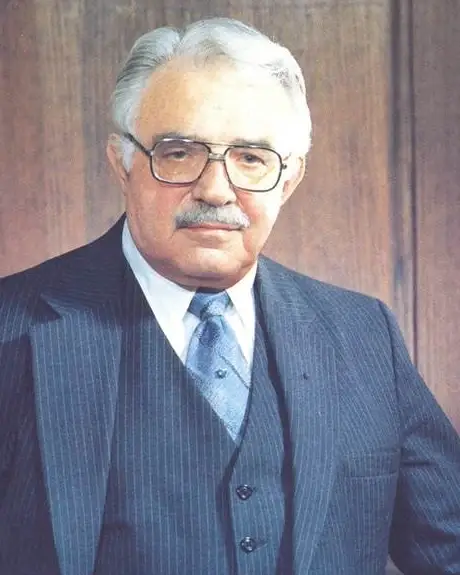
- Portrait: photograph of Dr. Joseph Janse from the cover of the biography by Reed Phillips, DC, PhD, via Wikimedia Commons, licensed CC BY-SA 3.0.
This page is education and history, not medical advice. Dates and publications are taken from indexed scholarship in Spine, Chiropractic History and the Journal of Chiropractic Humanities, from Joseph C. Keating Jr.'s archival chronologies, and from the institution's own record, with each source named in the references.