
Our Approach · The Legends · Era III
Era III · 1907 to 1989 · Brussels
Henri Gillet
The Diagnostician
Henri Gillet (1907 to 1989) was the Belgian chiropractor who taught the profession to examine the spine while it moves. Belgian law barred him from taking radiographs, so from 1936 he tested every available method of finding a subluxation by hand. In 1952 Gillet settled on fixation, a joint that has lost part of its normal movement, as the more accurate name for what chiropractors treat. Leonard J. Faye carried the method to North America. The Unified Model of Tone reads a fixation as a collapse of available range.
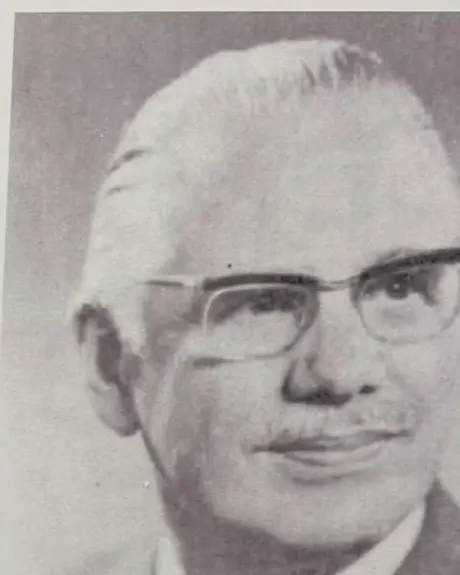
Born
May 23, 1907 · Winnipeg, Canada
Died
1989 · Belgium
Graduated
Palmer School of Chiropractic, 1928
Practiced
Brussels · 48 years
Named
Fixation · 1952
Winnipeg to Brussels
Gillet came into a family practice and brought an engineer's questions to it
Henri Gillet was born on May 23, 1907 in Winnipeg, Canada, and made his career in Belgium. His father, Jules Gillet, carried chiropractic into the country in 1923 and opened a Brussels practice that his sons Marcel and Henri would join. Henri Gillet graduated from the Palmer School of Chiropractic in 1928, took postgraduate study at Lincoln Chiropractic College, and returned to Brussels for a working life that lasted 48 years in one city. He founded the Belgian Chiropractic Research Association and served for years as secretary of the European Chiropractors Union and editor of its bulletin.
Gillet described himself as an inventor before a doctor
Ronald Fohlmann, a Danish chiropractor, met Gillet in 1962 and corresponded with him for the rest of his life. Fohlmann wrote that Gillet believed himself more of an inventor, in his own way, than a doctor. The description fits the output. Gillet built his own thermographic instrument, drew his own line systems on film, and kept revising a classification of joint restriction for half a century. What he chased was the clinical phenomenon of a subluxation, which for Gillet was an articulation with restricted motion.
The law that made Gillet's hands the instrument
Belgian law barred chiropractors from taking their own radiographs. That constraint set the question Gillet spent a career on: what can the hands alone establish about a spinal joint. Clarence Gonstead was building listings from film in Wisconsin across the same decades, which is why one method reads position and the other reads movement. Gillet had no film to fall back on, so every finding he kept had to be one a second examiner could feel.
The 1936 project
The Belgian group began in 1936 by assuming they could not yet find a subluxation
In 1936 a small group of Belgian chiropractors started a study of the subluxation with an unusual opening rule. They would treat every existing method of detecting one as unproven until it had been tested. Henri Gillet, his brother Marcel, and Marcel Liekens became the core of the group. They had no funding beyond their own and no facilities beyond their own offices, and the work ran across more than half a century of clinical days.
Every candidate method got months on the table before it was kept
Each detection method was practiced for at least six months while the men cross-checked one another's hands and findings. They studied thermography and eventually built a single probe heat reading instrument of their own. They drew lines across radiographic films, examined the instrumentation coming out of Davenport, and traced skin and vasomotor reactions. Methods that two examiners could not reproduce on the same patient were discarded.
Mobility was the one variable they could measure every day
The group narrowed the work to one quantity available in a working clinic without equipment: the mobility of the articulations of the spine and pelvis. Gillet found that the instruments he had been using all read the spine as a still object. None of them measured muscle, ligament, stiffness, or movement. So the group began feeling the spine as the patient bent, twisted, and breathed, and the most common finding was that a troubled segment had lost a movement it should have had.
The word
In 1952 Gillet settled on fixation, and the profession's unit of analysis changed
Chiropractic through its first half century described the lesion as a position, a vertebra sitting where it should not sit. Gillet described it as a loss of motion at an articulation, and in 1952 he settled on fixation as the more accurate term for what chiropractors actually treat. The definition is precise. A fixation is any physical, functional, or psychic mechanism that produces a loss of segmental mobility inside the joint's own normal physiologic range.
Ankylosis is the complete case, and most fixations are partial
Ankylosis counts as a fixation in its purest form, a complete one. Schafer and Faye's manual places the fixations found clinically between 20 and 80 percent of normal segmental mobility. That range is what makes the finding a clinical target. A joint at 40 percent of its movement is doing something every day that a fused joint no longer does, and it is the doing that the examiner reads.
A fixation can exist while the vertebra sits in a perfect position
This consequence separates Gillet's model from every listing based system. Because a fixation describes movement, a joint can be held hypomobile while its articular surfaces rest in ideal relationship, and a still picture shows nothing. Gillet's group concluded the reverse as well. A segment that looks displaced on film has usually not slipped anywhere. It is resting in the position its restricted motion allows, which is the account Gillet gave of why post-adjustment films so often show no change in a patient who has improved.
Gillet showed that the dynamic chiropractic adjustment does not replace a vertebra or realign a bone; rather, it tends to eliminate the reason for its so called abnormal position.
R.C. Schafer and Leonard J. Faye, Motion Palpation and Chiropractic Technic, second editionThe classification
Gillet sorted fixations by what is holding the joint, because that decides the order of correction
Gillet held that abnormal spinal muscle tone, and the changes it drives in periarticular ligaments and intra-articular tissues, are the primary factors in the subluxation complex and the ones an adjustment actually influences. From that he built a working classification with three adjustable classes and a fourth category outside them. What holds a joint decides how it is corrected, in what order, and whether it should be corrected at all.
Muscular fixations release fast and return fast
Class I fixations present as taut tender fibers under hyperesthetic skin, restricted from the start of the challenge, with a rubbery end block that still gives a little. Gillet found them the most numerous type and usually secondary to something else. They release immediately and become non-tender, and they recur within a short time if the primary fixation is left alone. Their unilaterality is often a sign of an acute state, visible where hypertonicity of one obliquus capitis inferior pulls the spinous process of the axis to a side.
Ligaments shorten around the ranges a person stops using
Class II fixations are shortened ligaments, and Gillet's reasoning is mechanical. Ligaments adapt to the range of motion actually used and shorten to the degree needed to take up their own slack. They palpate as an abrupt hard block inside the normal range with no end play at all. Videman showed the cost of the same process in the laboratory. Repeated immobilization of a rabbit knee beyond 30 days produced progressive osteoarthritis, and even four day immobilization periods had a cumulative effect (PMID 7090758).
Articular fixation is the one Gillet corrected first
Class III is intra-articular adhesion, a total fixation. It is immobile in every direction, silent to the patient, and painful when the palpator challenges it, and Gillet treated these as always primary. Bony restriction from osteophyte and frank ankylosis sits outside the adjustable set. Judging the class is the point of a motion palpation examination, since it sets the minimum force worth using and identifies the cases where breaking the restriction would be wrong.
Joint play
Joint play is motion a patient cannot produce, so an examiner has to supply it
Beyond active and passive range of motion there is a third quantity, and motion palpation is built on it. Joint play is the small accessory movement inside a synovial joint, the give and distraction that exist because articular surfaces do not appose tightly and their radii vary. Total joint motion is the voluntary range plus or minus the joint play present. Faye states the rule in one sentence: the presence or absence of joint play can only be demonstrated by an examiner, passively.
The elastic barrier, and the space beyond it
Carried passively, a joint meets an increasing end resistance called the elastic barrier. Past that point the motion becomes uncomfortable, and further still lies the anatomical barrier, the limit short of injury. The slight range between the two is the paraphysiologic space, the area of passive joint play, determined by ligamentous plasticity, elasticity, and viscoelasticity. Sandoz named and mapped it for the profession in the Annals of the Swiss Chiropractors Association in 1976. Voluntary exercise works the active range, mobilization works the passive range, and the adjustment works the paraphysiologic space.
Panjabi measured the same idea from the other side
Panjabi described the neutral zone, the region of intervertebral motion around neutral posture where the passive column offers little resistance, in the Journal of Spinal Disorders in 1992 (PMID 1490035). The neutral zone increases with injury, decreases with muscle force across the level, and decreases with instrumented fixation. In most of the studies he reviewed, change in the neutral zone was more sensitive than change in range of motion. Gillet's hands were reading a quantity that later turned out to be the more sensitive one.
The reading and the correction are one act at two amplitudes
Instrumented posteroanterior stiffness testing is the mechanical counterpart of the manual spring, and it loads a lumbar segment at roughly 15 to 60 newtons. A corrective thrust runs an order of magnitude higher. Herzog and colleagues measured thrust forces directly on patients with a pressure mat, in Spine in 1993 (PMID 8362328). Peak and preload forces at the cervical spine came out considerably smaller than at the thoracic spine and the sacroiliac joint. Same contact, same barrier, same line. The smaller input decides whether the larger one is warranted.
The evidence on the hands
Motion palpation studied its own examination harder than any other chiropractic analysis
The discipline built a research program on the reliability of its own procedure, and the study designs matter because they show a field trying to catch itself out. The most elegant used a natural gold standard. Humphreys, Delahaye, and Peterson recruited three subjects with single level congenital block vertebrae, a fused segment that genuinely cannot move, two fused at C2-3 and one at C5-6.
A fused segment as the gold standard
Twenty fourth year chiropractic students, blinded to the anomaly, examined those cervical spines with two standard motion palpation tests and named the most hypomobile segment. Agreement on the segment of greatest hypomobility reached a kappa of 0.65, running 0.76 at C2-3 and 0.46 at C5-6. Sensitivity ranged from 55 percent at the C5-6 block to 78 percent at C2-3, and specificity ran 91 to 98 percent. The paper appeared in BMC Musculoskeletal Disorders in 2004 (PMID 15198806).
Confidence changes the answer, and the field measured that too
Cooperstein, Haneline, and Young examined 52 asymptomatic volunteers at T3 through T10 with two examiners of more than 20 years experience each, and asked every examiner how confident he was before any comparison was made. Across all subjects the interexaminer agreement was poor, at an intraclass correlation of .31. Where both examiners were very confident it reached .83. Their study ran in the Journal of Chiropractic Medicine in 2010 (PMID 22027031).
Locating the stiffest site beats grading level by level
Cooperstein and Young pooled three trials covering the cervical, thoracic, and lumbar spine and analyzed the located stiffest site as a continuous measure, in Chiropractic and Manual Therapies in 2016 (PMID 28031786). The median absolute difference between examiners was 0.7 of one vertebral level. It fell to 0.6 levels when both examiners were confident, rose to 1.0 when one was not, and rose to 1.8 when neither was. Real palpation data beat simulated data by a factor of 1.8 to 4.7 depending on the region.
Faye and the Institute
Leonard Faye carried Gillet's fixation model to North America and built a teaching body on it
Leonard J. Faye graduated from the Canadian Memorial Chiropractic College in 1960 and practiced across three countries. He studied Gillet's work in Europe, taught at the Anglo-European Chiropractic College, and began lecturing in 1967. In 1981 Faye and Donald Maxwell Petersen Sr. founded the Motion Palpation Institute as a nonprofit teaching body. The canonical textbook, written with R.C. Schafer, followed in 1989 and remains the reference statement of Gillet's classification.
The five part subluxation complex came out of a student lecture
Faye assembled the vertebral subluxation complex in 1967 for lectures at the Anglo-European Chiropractic College. The model treats a dysfunctional segment as a simultaneous involvement of nerve, muscle, ligament, vascular, and connective tissue. Two ideas folded into the examination came from outside chiropractic. James Cyriax distinguished soft and hard end-feel, and John Mennell described joint play, both between the 1930s and the 1960s. Motion palpation is where those concepts met Gillet's fixation classification.
Gillet's Notes traveled before the man did
The Belgian findings were published as the Belgium Chiropractic Research Notes out of Brussels, revised edition after edition, with the seventh in 1968, the eighth in 1970, and the tenth in 1973. Gillet and Liekens reissued them through the Motion Palpation Institute in Huntington Beach, California in 1984. Motion palpation is now standard curriculum in chiropractic colleges internationally, and Diversified adopted it as its primary analysis.
The dated record
Nine dated facts about Henri Gillet, with the source for each
1907. Gillet was born on May 23 in Winnipeg, Canada. He would spend his working life in a single Belgian city.
1923. Jules Gillet carried chiropractic into Belgium and opened the Brussels practice his sons Marcel and Henri later joined.
1928. Gillet graduated from the Palmer School of Chiropractic, then took postgraduate study at Lincoln Chiropractic College before returning to Brussels.
1936. Gillet, his brother Marcel, and Marcel Liekens began the Belgian research project, self funded and run out of their own offices.
1952. Gillet settled on fixation as the name for the clinical entity chiropractors treat, defining it as a loss of segmental mobility inside the normal physiologic range.
1968 to 1973. The Belgium Chiropractic Research Notes ran through a seventh edition in 1968, an eighth in 1970, and a tenth in 1973.
1981. Leonard J. Faye and Donald Maxwell Petersen Sr. founded the Motion Palpation Institute, which carried Gillet's classification into North American practice.
1984. Gillet and Liekens reissued the Belgium Chiropractic Research Notes through the Motion Palpation Institute in Huntington Beach, California.
1989. Gillet died in Belgium after 48 years of practice. Ronald Fohlmann published his homage in Dynamic Chiropractic in April 1991, with the schematic of fixation characteristics Gillet had reviewed and amended himself.
Gillet and the model
Gillet named the hardest discipline in the model, and the model states why it is hard
The Unified Model of Tone separates a leverage point from a compensation. A leverage point is a focal, high influence location where a small, well matched input can initiate system wide change. A compensation is the region of aggregate tension that has accumulated downstream, where tissue already sits at the limit of what it can dissipate. Force applied to the compensation deepens the defense, because to tissue at its limit any added input reads as further demand. Gillet reached that distinction from the table decades earlier, working only with his hands.
A fixation and its compensation present the same way, and only one is the root
This is the hardest problem in the model, and it belongs to Gillet. Motion palpation is excellent at finding restrictions, and a restriction can be a brace. Whenever an articulation loses its normal motion, at least one other articulation takes on compensatory excess motion, so the fixated site is often asymptomatic while the compensating joint is the loud one. Gillet's rule follows directly: adjusting the already hypermobile segment is contraindicated even where it is the focal site of the symptoms. An examiner who works from restriction alone will sometimes adjust the compensation.
Gillet gave rules for telling primary from secondary
Gillet held that only primary fixations, and possibly minor non-secondary ones, require adjustment. Primary fixations feel the most blocked and are restricted in more than one direction. They are not particularly tender, except when the examiner stresses them into the direction of restriction, which inverts the usual assumption that the sore level is the culprit. Adjusting a secondary fixation buys short lived benefit at best. The confirmation comes at the next visit, when correctly chosen primaries show increased mobility and the secondary findings have improved on their own.
Fixation changes what a thrust can reach, and the effect has been measured
Reed and Pickar fixed cat lumbar facet joints with screws and recorded muscle spindle discharge during simulated manipulation, in Spine in 2015 (PMID 25856263). Fixation raised spinal stiffness at P less than 0.001 and lowered the spindle response to a thrust at the fixated level. A thrust delivered two segments away still produced 60 to 80 percent of the at-level response. Their 2013 study found the same direction at a single fixated level, with facetectomy raising the response (PMID 24161386). Target accuracy raises the signal, and a non-target contact still reaches the segment.
Gillet's ranking rule and the model's no lynchpin position both hold
Gillet observed repeatedly that lesser fixations freed themselves once the most fixated segment was released. He also held that any correction anywhere in the spine helps the whole spine correct itself, in proportion to the importance of the local correction. The model holds that there is rarely a single lynchpin, and that a body carries several points of critical tension at once whose relative leverage shifts week to week. Both positions hold together. Because the segments are coupled, releasing the largest constraint changes the conditions for every other one, and the account of that interdependence sits at coupling. A ranking is real inside a coupled system without any one rung governing the rest.
A fixation is collapsed available range, and the model calls that constraint
Gillet defined a fixation as a loss of mobility inside the normal physiologic range, most often leaving 20 to 80 percent of it. The model reads a narrowed range as constraint. Excessive tone is excessive constraint: over-protective stabilization, reduced variability, few available transitions, and resistance to updating. A fixated segment is one whose set of available next states has collapsed. Tone inside its healthy range is health, because that range keeps the ability to adapt to load. Tone that drifts or distorts outside it is what shows up as illness and disease. The mechanics sit at constraint, and the case for keeping a joint moving sits at movement.
Gillet reached the neurological version himself
Gillet proposed that the palpable spasm at a fixation is an involuntary abnormal hypertonus rather than a phasic cord reflex, which explains why those muscles are tender to pressure and otherwise unpainful. He suggested that once a contraction passes a limit in force or duration, the autonomic fibers controlling muscle tonicity are driven abnormally and the pattern locks into a self perpetuating cycle. Gillet also proposed a threshold of dysfunction, an individual health index past which accumulated insults overwhelm the body's reserves. The model states the same events as a segment whose commands have stopped updating against what the rest of the body reports.
Where Gillet sits in this library
Motion Palpation carries the examination, the scan sequence, and the mechanics in full. Diversified supplies the thrust a fixation finding calls for and shares the Gillet and Faye lineage. Gonstead uses motion palpation as one of five criteria and works from the disc and the film Gillet was barred from taking. J. Clay Thompson selects a segment through a leg check instead of the hands, and William Blair selects one through imaging of the joint margin. D.D. Palmer named tone as the variable in 1910, and tone is what every technique in this library is working on.
Questions people ask
Common questions about Henri Gillet
What did Henri Gillet contribute to the understanding of tone?
Gillet changed the object of the examination from a position to a movement. He defined fixation as a loss of segmental mobility inside the joint's own normal range, and he classified fixations by the tissue holding the joint. The Unified Model of Tone reads a narrowed range as constraint, and reads a fixated segment as one whose set of available next states has collapsed. Gillet also gave the model its hardest working problem: telling a root from a compensation.
Who was Henri Gillet?
Henri Gillet was a Belgian chiropractor, born May 23, 1907 in Winnipeg, Canada and died in 1989. He graduated from the Palmer School of Chiropractic in 1928 and practiced in Brussels for 48 years. Gillet founded the Belgian Chiropractic Research Association, served as secretary and bulletin editor of the European Chiropractors Union, developed motion palpation, and published the Belgium Chiropractic Research Notes through ten editions.
When did Henri Gillet die?
Gillet died in 1989, at the end of 48 years of practice in Brussels, and the European Journal of Chiropractic carried the notice that September. Ronald Fohlmann published a homage to him in Dynamic Chiropractic in April 1991, printing the schematic of fixation characteristics that Gillet had reviewed and amended himself. Gillet was born on May 23, 1907 in Winnipeg, Canada, and graduated from the Palmer School of Chiropractic in 1928.
What is a fixation, and how is it different from a bone out of place?
A fixation is a loss of movement at a joint rather than a change in its position. Gillet defined it in 1952 as any mechanism restricting a segment inside its own normal physiologic range. A fixated joint can sit in perfect alignment on a film and still fail to move. Gillet's group found the reverse too. A vertebra that looks displaced has usually not slipped anywhere, and rests where its restricted motion permits.
What are Gillet's three classes of fixation?
Class I is muscular, felt as taut tender fibers with a rubbery end block, the most numerous type and usually secondary. Class II is ligamentous, an abrupt hard block with no end play, produced as ligaments shorten around the ranges a person stops using. Class III is articular, an intra-articular adhesion that is immobile in every direction and which Gillet treated as always primary. Bony restriction is a fourth category outside the adjustable set.
Who was Leonard Faye, and what did he add to Gillet's work?
Leonard J. Faye graduated from the Canadian Memorial Chiropractic College in 1960, studied Gillet's work in Europe, and carried motion palpation into North American practice. He assembled the five part vertebral subluxation complex in 1967, folded in Cyriax on end-feel and Mennell on joint play, and founded the Motion Palpation Institute with Donald Maxwell Petersen Sr. in 1981. The textbook with R.C. Schafer followed in 1989.
Sources
Sources for this page
- Schafer RC, Faye LJ. Motion Palpation and Chiropractic Technic: Principles of Dynamic Chiropractic. 2nd ed. Motion Palpation Institute and ACAPress. Chapter 1 full text. The fixation definition and the 20 to 80 percent range, the three classes, the compensatory factor, the primary and secondary rules, joint play, and the paraphysiologic space.
- Gillet H, Liekens M. Belgium Chiropractic Research Notes. Brussels, seventh edition 1968, eighth 1970, tenth 1973; reissued by the Motion Palpation Institute, Huntington Beach, California, 1984.
- Fohlmann R. My homage to the late Dr. Henry Gillet: spinal fixations, general clinical considerations. Dynamic Chiropractic 1991;9(8), April 12, 1991. Full text. The inventor description, the 1962 meeting, the European Chiropractors Union roles, and the fixation characteristics table Gillet amended.
- Gillet J. A brief history of the Gillet family: three generations of chiropractors in Belgium. Chiropr Hist. 1999;19(1):17-19. PMID 11624035.
- Gillet J. History of chiropractic in Belgium: a personal narrative. Chiropr Hist. 2007;27(1):43-55. Wiese G. The Gillet family: Belgian chiropractic pioneers. Chiropr Hist. 2004;24(2):55-58.
- Senzon SA. The chiropractic vertebral subluxation part 7: technics and models from 1962 to 1980. J Chiropr Humanit. 2018;25:99-113. PMID 31019423. The 1936 project, the 1952 naming, and the edition history of the Notes.
- Chirobituaries. Chiro.org. Collected obituaries. Birth on May 23, 1907 in Winnipeg, the 1928 Palmer graduation, 48 years of Belgian practice, the Belgian Chiropractic Research Association, and the 1989 death.
- Humphreys BK, Delahaye M, Peterson CK. An investigation into the validity of cervical spine motion palpation using subjects with congenital block vertebrae as a gold standard. BMC Musculoskelet Disord. 2004;5:19. PMID 15198806.
- Cooperstein R, Haneline M, Young M. Interexaminer reliability of thoracic motion palpation using confidence ratings and continuous analysis. J Chiropr Med. 2010;9(3):99-106. PMID 22027031.
- Cooperstein R, Young M. The reliability of spinal motion palpation determination of the location of the stiffest spinal site is influenced by confidence ratings. Chiropr Man Therap. 2016;24:50. PMID 28031786.
- Reed WR, Pickar JG. Paraspinal muscle spindle response to intervertebral fixation and segmental thrust level during spinal manipulation in an animal model. Spine. 2015;40(13):E752-E759. PMID 25856263.
- Reed WR, Long CR, Pickar JG. Effects of unilateral facet fixation and facetectomy on muscle spindle responsiveness during simulated spinal manipulation in an animal model. J Manipulative Physiol Ther. 2013;36(9):585-594. PMID 24161386.
- Panjabi MM. The stabilizing system of the spine. Part II. Neutral zone and instability hypothesis. J Spinal Disord. 1992;5(4):390-396. PMID 1490035.
- Herzog W, Conway PJ, Kawchuk GN, Zhang Y, Hasler EM. Forces exerted during spinal manipulative therapy. Spine. 1993;18(9):1206-1212. PMID 8362328.
- Videman T. Experimental osteoarthritis in the rabbit: comparison of different periods of repeated immobilization. Acta Orthop Scand. 1982;53(3):339-347. PMID 7090758.
- Sandoz R. Some physical mechanisms and effects of spinal adjustments. Ann Swiss Chiropr Assoc. 1976;6:91-141. The paraphysiologic space between the elastic barrier and the anatomical limit.
- Mennell JM. Joint Pain. Boston: Little Brown; 1964. Cyriax J. Textbook of Orthopaedic Medicine, vol. I. London: Bailliere Tindall; 1982. Joint play and end-feel, the two concepts Faye folded into the examination.
- King SW. The Motion Palpation Institute: 25 years and counting. Dynamic Chiropractic. Full text. The 1981 founding, Faye's 1967 subluxation complex, and the Institute's teaching lineage.
This page is history and education. It is not medical advice, and nothing here is a promise of outcome. Consult a licensed practitioner about your own condition.
