
Our Approach · The Legends · Era IV
Era IV · 1925 to 2012
Reggie Gold
The Philosopher
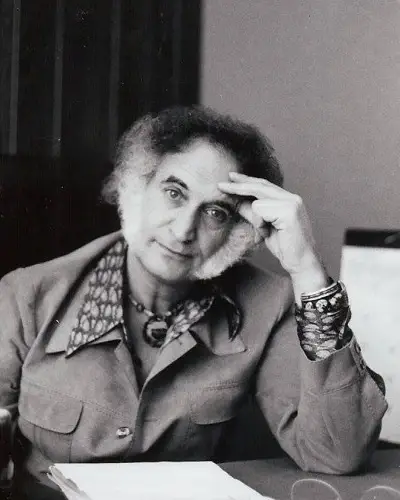
Reggie Gold (1925 to 2012) taught chiropractic philosophy at three colleges and was one of the two principal spokesmen for objective straight chiropractic. Born in London, Gold graduated summa cum laude from the Palmer School of Chiropractic in 1957. He helped start Sherman College in 1973, led the ADIO Institute from 1977, and founded Spinology in 1979. Gold held that a vertebral subluxation alters function whether or not a person is sick. The Unified Model of Tone gives that claim a measurable variable.
Born
Dec 16, 1925 · London, England
Died
Mar 24, 2012 · Bala Cynwyd, Pennsylvania
Palmer
Class of 1957, summa cum laude
Founding text
The Triune of Life, 1963
School
ADIO Institute, 1977
Discipline
Spinology, 1979
The record, 1925 to 2012
Reggie Gold argued one claim about the subluxation for fifty-five years
Gold graduated from the Palmer School of Chiropractic in 1957 and was still lecturing on chiropractic philosophy two years before his death in 2012. The claim he defended across that span never changed. A vertebral subluxation is a change in the structure of the body. A change in structure produces a change in function. A person is therefore better off without one, sick or well.
That argument is set out in his article The Third Paradigm, and it is why his name appears in the scholarly literature on straight chiropractic. Ed Owens named Gold and Joseph Strauss as the principal spokesmen for objective straight chiropractic in the Chiropractic Research Journal in 1999.
From London to Davenport, 1925 to 1957
Reggie Gold was born in London on December 16, 1925. He crossed to the United States, enrolled at the Palmer School of Chiropractic in Davenport, Iowa, and graduated summa cum laude in 1957. Sherman College records that Gold was class president and valedictorian of that class. Gold died at his home in Bala Cynwyd, Pennsylvania, on March 24, 2012. He was eighty-six.
The Spring Valley practice and the move to teaching
Gold practiced in Spring Valley, New York, for many years, and Dynamic Chiropractic named that practice in its 2012 notice of his death. Teaching gradually replaced it. By 1973 Gold was teaching philosophy at a new college in South Carolina, and by 1977 he was running a college of his own in Pennsylvania. He lectured across the United States and in South Africa, Australia, and Peru.
The Triune of Life, 1963
Gold published The Triune of Life in 1963 and Sherman College still assigns it
The Triune of Life first appeared in 1963, six years after Gold left Palmer. Sherman College issued an edition in 1998 and uses the book as a reference text in its philosophy courses. A sixtieth anniversary edition appeared in 2022, edited by Simon Senzon.
The 2022 collection prints three further pieces beside the original text. They are the lecture The Valley of the Blind from 1972, The Lay Lecture from 1987, and the article The Third Paradigm from 2000. Those four documents are the written record of Gold's position.
Why the book stayed in use
Chiropractic philosophy texts date quickly, because most of them argue against the profession's condition at the time of writing. The Triune of Life stayed in use because Gold wrote about first principles rather than about the disputes of 1963. The Sherman edition of 1998 put it back into student hands thirty-five years after it first appeared.
The lectures that traveled with the book
Gold delivered his set-piece lectures for decades before any of them reached print. The Lay Lecture of 1987 was the talk he gave to patients and the public rather than to practitioners. The Valley of the Blind, delivered in 1972, is the older of the two. Both are printed in the 2022 edition alongside the book they came from.
Sherman College, 1973 to 1976
Gold helped start Sherman College in 1973 and ran its philosophy teaching
Sherman College of Straight Chiropractic opened in Spartanburg, South Carolina, in 1973 under Thom Gelardi, and was named for Lyle Sherman. Dynamic Chiropractic records that Gold helped found the school and served as its first academic dean, its vice president, and its dean of philosophy. Sherman College records that he taught philosophy there from 1973 to 1976.
Simon Senzon, writing in the Journal of Chiropractic Humanities in 2014, places Gold at the center of the movement Sherman's founding began. Senzon describes a program built to focus only on the correction of vertebral subluxation, using the words analyze and adjust in place of diagnose and manipulate.
What the vocabulary change was for
The substitution of analyze and adjust for diagnose and manipulate settles the object of the work. Diagnosis assigns a disease name and licenses a treatment aimed at that name. Analysis, in Gold's use, locates a vertebral subluxation and nothing else. Every later argument Gold made follows from that one decision about what the chiropractor is looking for.
The estate and the 2007 gift
Gold named Sherman College the primary beneficiary and executor of his estate in 1999. Dynamic Chiropractic estimated that estate at more than six million dollars. In 2007 Gold and his wife Irene Gold, a chiropractor herself, gave the college a one million dollar charitable gift annuity, and Sherman unveiled a bronze bust of him the same year.
The ADIO Institute, 1977
Gold founded the ADIO Institute in 1977 and served as its first president
The Above-Down, Inside-Out Institute of Straight Chiropractic was founded in 1977, while Gold was vice president of Sherman College. It opened to students on January 4, 1978. Senzon's 2014 history of chiropractic accreditation records the founding date and Gold's leadership. The school later took the name Pennsylvania College of Straight Chiropractic.
ADIO is the old straight abbreviation for above-down, inside-out, the direction in which the traditional account holds that the body's own intelligence expresses itself. Gold put that phrase on the door of a college.
The 1979 testimony against the Council on Chiropractic Education
Gold testified against renewal of federal recognition for the Council on Chiropractic Education in 1979. Senzon records that the CCE attorney Orval Hidde published a detailed reply to the testimony. The dispute was over whether a chiropractic college must teach diagnosis, and Gold's schools were built on the position that it must not.
The Federation of Straight Chiropractors and Organizations
Gold was among the founders of the Federation of Straight Chiropractors and Organizations, chartered in Kansas in 1979 to represent straight practitioners. The membership voted in May 2011 to rename it the International Federation of Chiropractors and Organizations. Sherman College names Gold as instrumental in founding it.
What became of the college
Pennsylvania College of Straight Chiropractic received candidate status through the Straight Chiropractic Academic Standards Association and later closed. Senzon's 2014 account records the closure. The straight accrediting route the school used never displaced the Council on Chiropractic Education, which remains the recognized accreditor for chiropractic programs in the United States.
The Third Paradigm
The Third Paradigm sets out Gold's position in his own words
Gold's clearest single statement is the article The Third Paradigm, dated 2000 in the 2022 collection. It divides chiropractic thinking into three positions and rejects two of them. Gold wrote that a chiropractor who chooses none of the three lives in a fuzzy world of half truth.
Gold's first paradigm is the claim that chiropractic cures all disease. He traced it to a 1902 advertisement in the Davenport Times and dismissed it in one line, writing that some people are beyond healing. His second paradigm holds that some sick people improve when vertebral subluxations are corrected and that others need medical care or adjunctive therapy. Gold wrote that the second position is held by the majority of chiropractors and by both large national organizations.
Gold's objection to diagnosis
The second paradigm requires a decision about which patients to treat and which to refer, and Gold argued that every such decision rests on diagnosis. He called diagnosis the one great area of weakness in that practice model. His reasons were specific. Chiropractors are barred by law from diagnostic methods that invade the body, often learn diagnosis from textbooks without ever seeing the diseases described, and are frequently taught by people who learned it the same way.
Gold put the risk in a single sentence, writing that nothing is more dangerous than incompetent diagnosis. He then named the failure he had in mind. A backache read as a subluxation might be prostate cancer, kidney stones, or referred angina from an impending heart attack, and a headache might be an aneurysm at the circle of Willis.
What the third paradigm claims
Gold's own position removes disease from the question. He wrote that the third paradigm has no disease treatment at all and is totally non-therapeutic in its intent and practice. The reasoning is short. A vertebral subluxation is a change in the body's structure, a change in structure produces a change in function, and a person is better off without one.
The consequence Gold drew from that is what separated him from most of the profession. He wrote that the presence or absence of disease is irrelevant, and that every human being is better off without vertebral subluxation regardless of age, occupation, or state of health. Gold also wrote that symptoms are the last stages of malfunction rather than the first, and that waiting for them wastes years of repair time.
Paradigms one and two are about backaches; paradigm three is about life.
Reggie Gold, The Third Paradigm, 2000Spinology, 1979
Gold founded Spinology in 1979 as a discipline separate from chiropractic
Late in 1979 Gold announced a discipline he called Spinology and opened the Philadelphia Spinal Tutorium, which taught its first classes in 1980. His stated reason was that chiropractic had taken on the language and the aims of medicine. Spinology was built to do one thing and to be unable to do anything else.
That separation is the most contested decision of Gold's career. It moved the work outside the licensed health professions and outside the diagnostic framework those professions share. Gold made the argument openly and in print for more than thirty years. The position is his, stated in his terms.
What Spinology states that it does not do
The Spinology bodies that carry Gold's discipline state its boundaries plainly. A spinologist does not diagnose, does not treat disease, and does not give advice or referrals about disease. The European Spinology Tutorium describes the practice as neither a therapy nor a healing art, and states that its resemblance to chiropractic or osteopathy is a surface resemblance only.
How the discipline spread
The Philadelphia Spinal Tutorium drew students from outside the United States within a few years of opening. Enrique Borreda graduated from the Philadelphia program and opened the European Spinology Tutorium in Valencia, Spain, in 1985. Gold handed the leadership of Spinology to Borreda at a Spinology convention in 2003. Spinology's own histories record that Borreda has led its world council since then.
What the decision cost
Gold gave up the standing of a licensed profession to keep the object of the work single. He had already built two colleges inside chiropractic by 1979. He spent the last three decades of his life on the discipline he founded instead.
Debate and the lecture circuit
Gold argued the position in public debate with physicians
Sherman College published a recording of a televised debate in which Gold and Terry Rondberg faced two physicians, Jerome Williams and John Grant. Gold refused the framing that chiropractors treat illness. He told the panel that chiropractors address the damaging effects of the subluxation as an entity of itself instead of a diagnosis.
The physicians argued that chiropractic lacked scientific support. Gold answered that patient response cannot be explained by belief alone, pointing to patients who arrive as a last resort and to results reported in animals. Grant allowed that patients improve for several reasons, including the body's own capacity to heal.
The lecture circuit
Gold lectured at chiropractic colleges across the United States for decades. Sherman College records guest lectures at medical schools including Mount Sinai and Stanford, and lecture tours in South Africa, Australia, and Peru. Dynamic Chiropractic wrote in 2012 that he was responsible for inspiring hundreds and likely thousands of people to enter the profession.
The line Gold is most often quoted saying
The sentence attached to Gold more often than any other is the one Sherman College printed in its 2012 memorial notice. If you are not out to change the world, everything else is Mickey Mouse. Sherman recorded a second line from him in the same notice: everything I have, everything I hope to have, everything I am or ever hope to be, I owe to chiropractic.
Gold and tone
What Reggie Gold contributed to the understanding of tone
Reggie Gold made the purest statement in the chiropractic record that the adjustment is not a treatment for anything. The Unified Model of Tone takes that claim and supplies what Gold did not have, which is a measurable variable the correction is aimed at.
That variable is tone, the organizing state of the nervous system, expressed at every scale from the single neuron to the whole organism. In the model a vertebral subluxation is a persistent distortion of that organization: a region whose tone no longer updates against what the rest of the body reports. It is a dynamical lesion rather than a structural one, so nothing an image measures needs to be abnormal for it to be present.
A state that exists before symptoms
Gold wrote in The Third Paradigm, dated 2000, that symptoms are the last stages of malfunction. He held that the presence or absence of disease is irrelevant to whether a subluxation should be corrected. The model states the same structure with instruments attached. Tone shows itself in the variability of a signal rather than its mean, in the coupling between two rhythms, and in how quickly a system returns to baseline after a demand. Each of those can be recorded before any clinical outcome is known, which is what heart rate variability measures in practice.
Analyze and adjust, restated as correspondence
Gold's replacement of diagnose and manipulate with analyze and adjust maps onto the model's central clinical claim. The active ingredient of any input is correspondence to the place where the system is most ready to reorganize, rather than force applied at the site that hurts. Force delivered into a compensating region deepens the defense, because tissue already at the limit of its capacity reads added load as further demand. That is the argument the page on input quality sets out in full.
Where the model claims more than Gold did
Gold rested his case on a structural argument and did not take it further. Structure changes, function follows, and a person is better off without the change. The model makes a claim that can be checked against data. Cortical excitability, autonomic regulation, cortical map organization, and tissue compliance are readings of one underlying variable. When those measures are recorded in the same people and load on one common factor, the unification claim is established.
Health and disease in the model's terms
Tone held inside its healthy range is health, because a system in that range keeps the flexibility to adapt to whatever arrives. Tone that drifts or distorts outside that range is what shows up as illness and disease. Gold's claim that a person is better off without a subluxation is, in these terms, a claim about how much of that range remains available. The library page on quality of life collects what has been measured on that question.
The neurophysiology behind the claim
The research record behind Gold's claim that changed structure changes function
Reggie Gold asserted one physiological premise and cited nothing for it: a vertebral subluxation includes some alteration of nerve function. Work published in the decades since supplies the mechanism he did not have. It runs through tension and excitability rather than through a nerve pinched between two bones.
Korr and the facilitated segment
Irvin Korr described a cord level at which sustained input from a dysfunctional joint or muscle lowers the firing thresholds of its neurons. He published the account in the Journal of the American Osteopathic Association in 1975. Motor and autonomic neurons at a facilitated segment fire to smaller inputs and produce larger outputs. That segment keeps delivering sympathetic amplification to the tissues it serves long after the original insult has resolved.
What manipulation does to the nervous system
Joel Pickar reviewed the neurophysiological effects of spinal manipulation in The Spine Journal in 2002 and found evidence that manipulation alters primary afferent discharge from paraspinal tissues, motoneuron excitability, and reflex output. Heidi Haavik and Bernadette Murphy reviewed the sensorimotor evidence in the Journal of Electromyography and Kinesiology in 2012 and reported altered central sensorimotor integration after cervical adjustment. Both describe an input reaching regulation rather than a joint being put back.
Cord tension as the mechanical variable
Alf Breig established that the spinal cord is a tensioned structure held in shape by the dentate ligaments, and argued that raised tension rather than compression carries the primary neurophysiological consequence. Even a compressive lesion generates axial tension. The model builds on that finding and holds that any input capable of changing cord tension can change cord function, which is the physical basis of the neurophysiology pillar.
The autonomic route out of the segment
Brian Budgell set out the reflex route from spinal segments to autonomic outflow in the Journal of Manipulative and Physiological Therapeutics in 2000. Charles Henderson reviewed the indications and theory behind spinal manipulation in the Journal of Electromyography and Kinesiology in 2012. Together those papers give a mechanism for the part of Gold's claim that reaches past the joint, which the autonomic nervous system page covers in detail.
Gold among the Legends
How Reggie Gold connects to the rest of the Legends
Gold's position descends from the Palmer line and runs beside several figures in this hall. D.D. Palmer named tone as the basic principle of chiropractic in 1910 and defined it as the normal degree of nerve tension. B.J. Palmer put the input at the upper cervical spine and built the research program that tried to decide when not to adjust. Lyle Sherman ran that program, and the college Gold helped found carries his name.
Fred Barge held the traditional position from inside the International Chiropractors Association during the same years Gold held it from outside the licensed profession. Sid Williams carried the same philosophy to scale through a college. Tedd Koren built a method around asking the nervous system a question at no cost, which is the analysis-first instinct Gold argued for. Tonal Chiropractic, the amalgamation this practice teaches, sits downstream of all of them.
The Unified Model of Tone states what the whole line was pointing at, and the tone pillar sets out the primary record behind it.
Questions people ask
Questions about Reggie Gold
What did Reggie Gold contribute to the understanding of tone?
Gold made the clearest statement in the profession's record that the adjustment is not a treatment for anything. He held that a vertebral subluxation alters function whether or not a person is sick, so correcting it needs no disease to justify it. The Unified Model of Tone supplies the variable that claim was reaching for. Tone is measurable before any outcome is known, through heart rate variability, cortical excitability, and tissue compliance.
Who was Reggie Gold?
Reginald Gold was a chiropractor and lecturer, born in London on December 16, 1925. He died at eighty-six in Bala Cynwyd, Pennsylvania, on March 24, 2012. He graduated summa cum laude from the Palmer School of Chiropractic in 1957, practiced in Spring Valley, New York, and taught philosophy at three chiropractic colleges. Gold helped start Sherman College in 1973, founded the ADIO Institute in 1977, and founded Spinology in 1979.
What is objective straight chiropractic?
Objective straight chiropractic locates and corrects vertebral subluxations and does nothing else. It treats no disease and makes no claim to. Ed Owens described the position in the Chiropractic Research Journal in 1999 and named Gold and Joseph Strauss as its principal spokesmen. The reasoning is that a subluxation is a deterrent to function whether or not a person has symptoms, so anyone alive is a candidate for a check.
What is Spinology and why did Reggie Gold create it?
Spinology is a discipline Gold announced late in 1979, taught first at the Philadelphia Spinal Tutorium from 1980. He created it because he judged that chiropractic had absorbed the language and aims of medicine. A spinologist locates and corrects vertebral subluxations and does not diagnose, treat disease, or advise on disease. The separation from licensed practice is the most contested decision of his career, and he argued for it in print for three decades.
Did Reggie Gold found Sherman College?
Sherman College of Straight Chiropractic was started by Thom Gelardi in Spartanburg, South Carolina, in 1973 and named for Lyle Sherman. Dynamic Chiropractic records that Gold helped found the school and served as its first academic dean, vice president, and dean of philosophy. Sherman College records that he taught philosophy there from 1973 to 1976. In 1999 he named the college the primary beneficiary of his estate.
What did Reggie Gold mean by the third paradigm?
In his article The Third Paradigm, Gold rejected two positions and argued a third. The first claims chiropractic cures all disease. The second treats some diseases and refers the rest, which requires diagnosis. Gold called that model dangerous because it rests on diagnostic decisions chiropractors are not equipped to make. His third position has no disease treatment at all, because the presence or absence of disease is irrelevant to whether a subluxation should be corrected.
Sources
Sources for this page
- Gold R. The Triune of Life. 1963. Sixtieth anniversary edition, Senzon SA, ed. Integral Altitude, 2022. Contains The Valley of the Blind (1972), The Lay Lecture (1987), and The Third Paradigm (2000). Record
- Gold R. Third Paradigm Chiropractic. Full text
- Sherman College of Chiropractic. Devoted to Chiropractic: In Memory of Reggie Gold. 2012. Memorial notice
- Remembering Dr. Reggie Gold. Dynamic Chiropractic, 2012. Obituary
- Senzon SA. Chiropractic professionalization and accreditation: an exploration of the history of conflict between worldviews through the lens of developmental structuralism. J Chiropr Humanit. 2014;21(1):25-48. PMC4245701
- Owens EF. Vertebral subluxation-centered straight chiropractic research. Chiropractic Research Journal. 1999;6(1):12-13. Full text
- Sherman College of Chiropractic. The Great Debate: Reggie Gold. Recording and summary
- European Spinology Tutorium. Introduction to Spinology. Statement of scope
- Spinology Centre. About Spinology: the founding of the discipline and the Philadelphia Spinal Tutorium. History
- Korr IM. Proprioceptors and somatic dysfunction. J Am Osteopath Assoc. 1975;74(7):638-50. PMID 124754
- Pickar JG. Neurophysiological effects of spinal manipulation. Spine J. 2002;2(5):357-71. PMID 14589467
- Haavik H, Murphy B. The role of spinal manipulation in addressing disordered sensorimotor integration and altered motor control. J Electromyogr Kinesiol. 2012;22(5):768-76. PMID 22483612
- Budgell BS. Reflex effects of subluxation: the autonomic nervous system. J Manipulative Physiol Ther. 2000;23(2):104-6. PMID 10714536
- Henderson CNR. The basis for spinal manipulation: chiropractic perspective of indications and theory. J Electromyogr Kinesiol. 2012;22(5):632-42. PMID 22513367
- Breig A. Adverse Mechanical Tension in the Central Nervous System. Almqvist and Wiksell, 1978. Catalog record
Education, not medical advice. Dates, offices, and publications on this page are drawn from the sources listed above. Positions attributed to Reggie Gold are his own, stated as he stated them.