
Our Approach · The Legends · Era IV
Era IV · 1928 to 2012
Sid E. Williams
The Builder
Sid E. Williams (1928 to 2012) founded Life Chiropractic College in Marietta, Georgia in 1974 and led it, as Life University, until 2002. Life grew into the largest chiropractic program in the world. Williams started the Dynamic Essentials seminars in 1964 and taught a philosophy he called Lasting Purpose, which holds that the doctor supplies conditions and the body does the healing. The Unified Model of Tone states that claim in physiological terms.
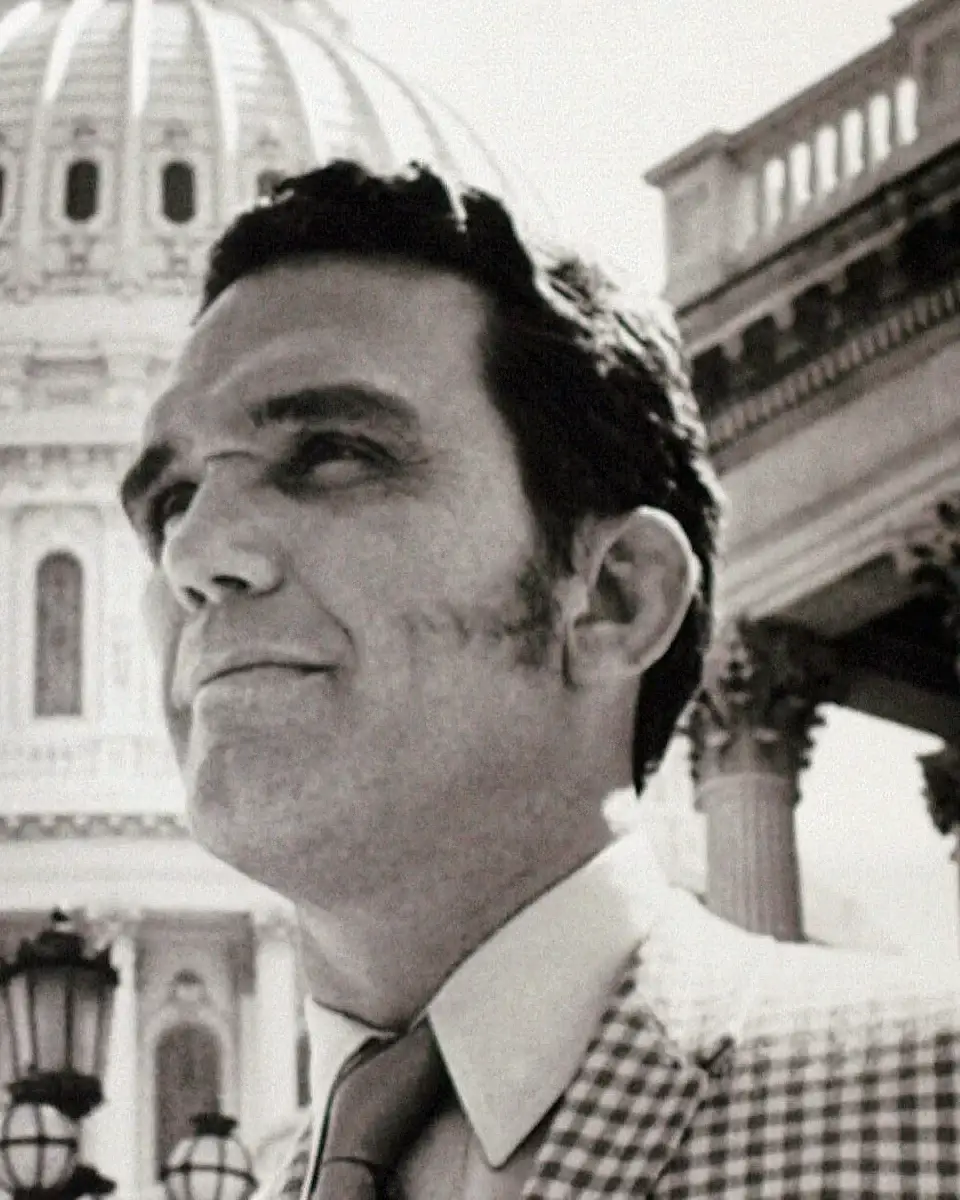
Born
March 18, 1928 · Rome, Georgia
Died
December 27, 2012 · Powder Springs, Georgia
Founded
Life Chiropractic College, 1974
Led
President of Life, 1974 to 2002
Started
Dynamic Essentials, 1964
Trained
Palmer School of Chiropractic, 1956
Georgia Tech and the first adjustment
Sid Williams came to chiropractic through a football injury at Georgia Tech
Sid E. Williams was born in Rome, Georgia on March 18, 1928 and grew up in Atlanta. He played end at Georgia Tech under coach Bobby Dodd, and a football injury sent him to a chiropractor. That visit decided his career. Williams took a Bachelor of Science in industrial management from Georgia Tech in 1951 and enrolled at the Palmer School of Chiropractic two years later.
The Atlanta Journal called Williams the best end for his size in America
Williams played on the Georgia Tech B team in 1948, moved to the varsity squad in 1949, and started at defensive end in 1950 and 1951. Dodd's assessment of him ran in the sports section of the Atlanta Journal on September 28, 1951. Williams played on the undefeated 1951 Georgia Tech team and in the 1952 Orange Bowl. Georgia Tech inducted him into its athletic hall of fame in 1999.
The injuries were catalogued and severe
Williams broke his right wrist and splintered a clavicle in the Georgia State All Star game. He later fractured his right hand and three vertebrae during the 1951 season. A further injury in the Georgia Tech game against Vanderbilt cost him speed and strength. Georgia Tech sent him to medical specialists in several states without result.
One upper cervical adjustment redirected the career
Williams's father recommended an Atlanta chiropractor. Gerard Clum, writing in Dynamic Chiropractic in 2013, names that chiropractor as T.O. Humber, a practitioner of the upper cervical method developed by Gregory Grostic. Williams reported dramatic change after his first upper cervical adjustment. He stopped preparing for a career in labor relations and started preparing for chiropractic school.
Sid Williams is the best end for his size in America. He is one of those rare boys who improve every year.
Bobby Dodd, Georgia Tech head coach, quoted in the Atlanta Journal, September 28, 1951Palmer, 1953 to 1956
Sid and Nell Williams enrolled at Palmer together and graduated in 1956
Williams married Nell Kimbrough on March 21, 1953. The couple moved to Davenport, Iowa and enrolled at the Palmer School of Chiropractic together. Both earned the Doctor of Chiropractic degree in 1956. Their practice, their publishing company, their foundation and their college were joint work from that point forward.
Palmer set the technique emphasis Williams carried home
Williams studied at Palmer while B.J. Palmer still ran the school, and read the Palmer literature closely. He took away the upper cervical emphasis and the philosophical position D.D. Palmer had stated in 1910. Life University's own history records that the Williamses held to the Palmer principles of upper cervical adjusting and open access to care.
Eighteen clinics across metropolitan Atlanta
The Williamses opened their first office in Austell, Georgia in 1956. Within a few years they were running more than eighteen clinics around Atlanta, and Life University counts nineteen practices across the Southeast. They accepted patients regardless of condition or ability to pay. Life University records that the couple met professional opposition for that policy.
Si-Nel Publishing, 1957
Sid and Nell Williams founded Si-Nel Publishing in 1957 to produce chiropractic educational material. Publishing stayed part of his method for the rest of his life. Today's Chiropractic followed in 1970 and reached a circulation above 65,000. Every institution he built afterward carried a printed voice alongside it.
Dynamic Essentials, 1964
Dynamic Essentials turned a Tuesday night office meeting into a national gathering
Williams started Dynamic Essentials in 1964. The meetings began in his own Atlanta office on Tuesday nights, where he taught other chiropractors the practice methods that had built his clinics. They grew into national and then international assemblies. The seminars still run, and Life University dates them to 1964.
The DE meetings taught practice mechanics and philosophy together
Williams paired instruction in office procedure and patient management with instruction in chiropractic philosophy. His textbook The Dynamic Essential of Office Procedures and Patient Management became a standard text in the seminars. Gerard Clum first attended a DE meeting in July 1968 at the age of sixteen. Clum joined the founding faculty of Life Chiropractic College in January 1975 and later led Life Chiropractic College West for thirty years.
Life Foundation International, 1965
Williams chartered Life Foundation International as a 501(c)(3) organization to fund chiropractic service, education and research. Life University dates the foundation to 1965. It raised money toward a chiropractic college in Georgia for nearly a decade before any college existed. Early renderings of a campus Williams called the City of Life were drawn in 1966.
Medicare and the last licensure fights
Williams campaigned in the early 1970s to have chiropractic care included in Medicare, and organized patient petition drives aimed at Wilbur Mills, chairman of the House Ways and Means Committee. Congress added chiropractors to the Medicare definition of physician in the Social Security Amendments of 1972, effective July 1, 1973. Williams also worked the remaining state licensure campaigns. The antitrust ground under all of it was secured later by Chester Wilk.
Lasting Purpose
Lasting Purpose holds that the doctor creates conditions and the body does the healing
Williams named his philosophy Lasting Purpose and stated it as loving, giving and serving out of one's own abundance, without expectation of return. Life University still describes it in those terms. Underneath the ethic sits a clinical claim. The chiropractor supplies an input, and the body's own regulation produces the result.
Williams published the philosophy in 1996
Lasting Purpose appeared in December 1996 as part autobiography and part statement of the philosophy. Williams also wrote Looking Back to See Ahead in 1994 and The Road to Success Starts in the Heart in 2009. Life University names Lasting Purpose in its institutional history and teaches it today.
Innate awareness in Williams's own account
Williams described a lifelong reliance on what he called an Innate awareness, a wisdom inside the body he consulted moment by moment. That vocabulary comes directly from the Palmer tradition he trained in. Reggie Gold argued the same position in a sharper register, holding that the adjustment is not a treatment for anything. Williams stated it as an ethic of service instead.
Founding Life, 1974
Williams announced Life Chiropractic College in 1974 and opened it in January 1975
Clum records that the U.S. Secretary of Education recognized the Commission on Accreditation of the Council on Chiropractic Education in 1973, which opened a new era in chiropractic education. Williams announced Life Chiropractic College in Marietta, Georgia in 1974. The school opened on January 20, 1975 with three faculty, three staff and twenty two students. Its first campus was a leased building formerly occupied by Lockheed.
A single DE meeting raised more than $500,000
Dynamic Essentials doctors funded the college directly. Clum records that a DE meeting in the summer of 1974 raised more than $500,000, which he put at roughly $2.5 million in 2013 terms. The money moved through Life Foundation International and the DE network Williams had spent a decade assembling. Life University credits hundreds of DE doctors and friends with opening the school.
The CCE granted Life its first recognition in November 1977
Life Chiropractic College received correspondence status, the first level of CCE recognition, in November 1977. The letter came from CCE commission chair Orvil Hidde, weeks before the pioneer class graduated. Life University College of Chiropractic held programmatic accredited status with the CCE from 1985 onward. Life and the CCE stated that 1985 date jointly in their 2003 settlement announcement.
Life Chiropractic College grew from twenty two students to more than 1,500 in six years
Life enrolled 22 students in January 1975 and more than 1,500 by January 1981. Williams served as president throughout that growth and for two decades after it. Life College added undergraduate degrees during the 1980s. Chiropractic education in the American South had no comparable institution before Life.
The largest chiropractic college in the world
Life became the largest chiropractic program in the world while Williams led the ICA
Life's chiropractic enrollment reached nearly 3,200 students by the spring of 2002, and total university enrollment passed 4,000 in the 1990s. Life University still describes its College of Chiropractic as having become the largest in the world. Williams served as the seventh president of the International Chiropractors Association from 1982 to 1985. The ICA named him Chiropractor of the Year in 1985.
Life Chiropractic College West, 1981
Williams founded Life Chiropractic College West in California in 1981, building it from the former Pacific States Chiropractic College. He was named chancellor of the western campus while remaining president in Marietta. Life West operates today in Hayward, California as an independent institution. Two campuses on opposite coasts carried the same curriculum and the same philosophy.
Life College became Life University in March 1997
The institution added undergraduate and graduate degrees through the 1980s and 1990s. Life College became Life University in March 1997. The chiropractic program stayed at the center of the institution while the other schools grew around it. Williams also built the Sid E. Williams Chiropractic Research Center, which published subluxation research and worked with the World Health Organization.
The 1996 Olympics came to the Marietta campus
No Olympic events were scheduled for Cobb County ahead of the 1996 Centennial Olympic Games in Atlanta. Williams built a replica of the Olympic track on the Life campus and drew national teams to Marietta to train. Life acquired one of seven commissioned Olympic sculptures afterward and installed it in the D.D. Humber Garden of Life. The university later ran sports chiropractic clinics for elite and Olympic athletes.
Probation and revocation, 2001 to 2002
The CCE placed Life on probation in 2001 and revoked its chiropractic accreditation in 2002
The Commission on Accreditation of the Council on Chiropractic Education imposed a public sanction of probation on Life University College of Chiropractic on June 13, 2001. It deferred its decision on reaffirmation at the same time. One year later, on June 7, 2002, the commission voted to deny reaffirmation of accreditation. That denial constituted revocation of accredited status. Williams resigned from Life on July 8, 2002.
What the commission said it was reviewing
The COA recorded its concern as the degree to which Life graduates were trained to serve as primary care chiropractic physicians and clinicians. That standard is set out in the CCE Standards for Doctor of Chiropractic Programs and Institutions. The commission reviewed Life's submissions in January 2002 and continued the probation, holding that further inquiry and inspection were needed. The June 2002 decision came at the end of the maximum one year deferral the process allows.
The public statement of June 10, 2002
COA chair Joseph Brimhall released the decision publicly on June 10, 2002. The statement recorded that revocation is an adverse action, that it would not take effect until any appeal concluded, and that reinstatement would require Life to apply through the process for initial accreditation. Brimhall added the following day that revocation is the most serious adverse action the commission can take. Life told its students the same week that the program remained accredited during the appeal.
The regional accreditor acted separately in December 2001
The Southern Association of Colleges and Schools placed Life's regional accreditation on warning status for one year in December 2001. The cited criteria covered planning and evaluation of educational programs and support services, academic preparation at the baccalaureate level, governing board organization, and financial resources. The two accreditation actions ran in parallel and were decided by different bodies.
Williams resigned in July 2002
Williams announced on June 13, 2002 that he would retire in March 2003 on his seventy fifth birthday. On July 8, 2002 he resigned from every part of Life's operations, effective immediately. Nell Williams, then senior vice president and dean of student affairs, and their daughter Kim Williams resigned the same day. Michael Schmidt was installed as interim president that month.
The appeal failed on October 20, 2002
Life appealed the revocation and kept its accreditation while the appeal ran. The appeal was rejected on October 20, 2002 and the revocation took effect. Chiropractic enrollment fell from roughly 2,600 in the spring of 2002 to fewer than 300 by early January 2003. Graduation from a CCE accredited program is a licensure requirement in most states, which is why the enrollment collapsed that fast.
The COA decision is to deny reaffirmation of accreditation for LUCC. This decision constitutes revocation of accredited status with the COA.
Joseph Brimhall, chair, CCE Commission on Accreditation, public statement, June 10, 2002The courts, 2002 to 2005
A federal judge restored Life's accreditation in February 2003, retroactive to June 7, 2002
Life University sued the Council on Chiropractic Education in the U.S. District Court in Atlanta in January 2003. On February 10, 2003 Judge Charles E. Moye Jr. granted a preliminary injunction restoring the chiropractic program's accreditation, retroactive to June 7, 2002. Moye held that Life would suffer irreparable harm without the injunction. The program held accredited status from that ruling forward.
What Life alleged against the accrediting body
Life's complaint charged that the CCE sent representatives of competing chiropractic schools to review Life, and that a representative of Logan College of Chiropractic sat on the appeal panel that upheld the revocation. It alleged that review team members solicited transfer students from Life. It further alleged that the standards favored a different philosophical approach from the one Life taught. The court reached no final judgment on those allegations.
Students sued Life University and Williams
Students began filing suit against Life University, Williams and members of the board of trustees on October 31, 2002. Fulton County Judge Diane Bessen granted class action status on March 3, 2003 to a suit brought for 470 current and former students. Counsel estimated the class could reach 2,000 plaintiffs. Ten further suits were pending in Cobb and Fulton county courts at that point.
The severance terms became public in February 2003
Life released the terms of the Williams severance agreements on February 20, 2003, after Williams sued the university over transfer of the B.J. Palmer historic home. The Marietta Daily Journal reported that Sid and Nell Williams stood to receive close to $4.98 million in total. Board chairman Chuck Ribley put that sum at six months of the university's operating expenses. Ownership of the Palmer home passed to a Williams family foundation in 2003.
Both accreditation cases ended without a trial
Life and the CCE announced a settlement on August 21, 2003 that dismissed Life's lawsuit and the CCE's appeal and set a special accreditation process. The Southern Association reaffirmed Life's regional accreditation on December 7, 2004. CCE accreditation was finalized in July 2005 after a site visit that spring. Life lost roughly $19 million in 2003 and returned to a surplus the following year.
The last decade
Williams spent his final decade with Dynamic Essentials and died in 2012
Williams left the presidency of Life University in 2002 at the age of 74. He continued hosting Dynamic Essentials meetings and working through Life Foundation International, with a role that narrowed over time. He suffered a middle cerebral artery stroke on December 24, 2011. Williams died on December 27, 2012 in Powder Springs, Georgia at the age of 84.
What Life University says about Williams now
Life University's institutional history credits Williams with founding the college, with building the largest chiropractic program in the world, and with Lasting Purpose. It states that the CCE and the Southern Association questioned Life's accreditation in June 2002, that CCE accreditation was restored by a federal injunction, and that Williams retired as president during that period. The university's chiropractic research center carries his name.
The program he built is accredited today
Life University's Doctor of Chiropractic program holds programmatic accreditation from the Council on Chiropractic Education. The CCE placed the program on probation again on July 18, 2024 over a program completion rate policy, and the program stayed accredited throughout. The council removed that probation, and Life students passed the NBCE Part IV examination at 93.3% in November 2025 against a national average of 86.2%.
Life graduates carry the technique curriculum this library catalogs
Life University's chiropractic curriculum teaches the technique systems set out across the technique library. Diversified work, the drop table systems, upper cervical analysis and instrument adjusting all sit in the Life course sequence. The school Williams opened in 1975 became one of the main channels through which those methods reached practicing chiropractors. Tens of thousands of doctors learned their hands there.
Transmission and the tone through-line
Williams built the transmission system that carried an idea about the nervous system to a generation
Williams added no analytical method to chiropractic. He built the machinery that moves an idea. A seminar series came in 1964, a foundation in 1965, a magazine in 1970, a college in 1974 and a second college in 1981, with a Medicare campaign running through them. An idea about the nervous system reaches patients only through practitioners, and practitioners are made in schools. That is the contribution.
Lasting Purpose is a claim about who does the healing
Lasting Purpose says the doctor loves, gives and serves out of abundance and expects no return. Read clinically, it says the practitioner supplies an input and the body produces the outcome. The Unified Model of Tone states the same position in physiological terms. An input does not create an outcome. An input meeting a body's existing tone creates an outcome.
Tone is the variable the input meets
Tone is the organized regulatory state of the nervous system and the tissues it governs. It is readable in heart rate variability, in reflex responsiveness, and in how long a system takes to return to baseline after a demand. The same adjustment delivered to two people produces two different results because the two bodies hold different tone. Tone is the hidden variable standing between cause and outcome.
Correspondence decides whether an input lands
Williams's own turning point was one upper cervical adjustment, delivered after specialists in several states had produced nothing. The model's account of that result is correspondence. The active ingredient is the match between the input and the point of leverage, and force is a secondary consideration. Input quality decides whether a signal reorganizes a system or simply loads it further.
Transmission at scale is a statement about time course
A chiropractic college changes a field slowly and then permanently, because every graduate practices for decades afterward. Life enrolled thousands of students between January 1975 and 2002, and its graduates are still in practice. Time course names the same property inside a body. The change that counts is the one that holds after the input stops.
Williams among the legends
How Sid Williams relates to the rest of the library
Sid Williams sits downstream of D.D. Palmer, who named tone as the variable in 1910, and downstream of B.J. Palmer, whose writing and upper cervical work shaped the school he trained in. Gregory Grostic developed the method his first chiropractor used. Reggie Gold argued the same non therapeutic position in blunter language. C.S. Cleveland built institutions on the same reasoning a generation earlier. Chester Wilk secured the legal ground the colleges stand on. Life University stands in that line, and the full hall of legends traces it whole.
Common questions
Questions about Sid Williams and Life University
Who was Sid E. Williams?
Sid E. Williams (March 18, 1928 to December 27, 2012) was an American chiropractor who founded Life Chiropractic College in Marietta, Georgia in 1974 and served as its president until 2002. He played football at Georgia Tech, graduated from the Palmer School of Chiropractic in 1956, started the Dynamic Essentials seminars in 1964, and taught a philosophy of practice he called Lasting Purpose. Life became the largest chiropractic program in the world under his leadership.
When was Life Chiropractic College founded?
Williams announced Life Chiropractic College in 1974, and the school opened on January 20, 1975 in Marietta, Georgia with three faculty members, three staff and twenty two students. Its first campus was a leased building formerly occupied by Lockheed. Life received its first level of recognition from the Council on Chiropractic Education in November 1977 and held programmatic accredited status from 1985. Life College became Life University in March 1997.
Why did Life University lose its accreditation in 2002?
The Commission on Accreditation of the Council on Chiropractic Education placed Life University College of Chiropractic on probation on June 13, 2001. It voted on June 7, 2002 to deny reaffirmation, which revoked the program's accredited status. The commission's stated concern was the degree to which Life graduates were trained to serve as primary care chiropractic physicians and clinicians under the CCE Standards. Life's appeal was rejected on October 20, 2002.
Did Life University get its accreditation back?
Yes. Life sued the Council on Chiropractic Education in January 2003, and on February 10, 2003 Judge Charles E. Moye Jr. granted a preliminary injunction restoring the program's accreditation retroactive to June 7, 2002. Life and the CCE settled on August 21, 2003 and both cases were dismissed. The Southern Association reaffirmed Life on December 7, 2004, and CCE accreditation was finalized in July 2005.
What is Lasting Purpose?
Lasting Purpose is the philosophy Sid Williams taught and published in a 1996 book of that name. It states that a person loves, gives and serves out of their own abundance, without expectation of return. Life University still describes the philosophy in those terms. Its clinical meaning is that the chiropractor supplies conditions and the body's own regulation does the healing, which is the position the Unified Model of Tone states physiologically.
What did Sid Williams contribute to the understanding of tone?
Williams contributed transmission rather than analysis. He built the seminar network, the foundation, the magazine and the two colleges that carried the nervous system argument to tens of thousands of practitioners between 1964 and 2002. Lasting Purpose carries the substantive claim: the practitioner supplies an input and the body produces the result. The Unified Model of Tone states that an input does not create an outcome, and an input meeting a body's tone does.
Sources
References
- Clum G. Remembering Dr. Sid Williams. Dynamic Chiropractic, February 2013.
- Dynamic Essentials. Dr. Sidney E. Williams, B.S., D.C., 1928 to 2012. Official biography, including the Atlanta Journal quotation of September 28, 1951.
- Life University. History of Life University. Institutional history.
- Life University. Accreditation. Current SACSCOC and CCE status.
- Dynamic Chiropractic Staff. Life University's Accreditation Denied. Dynamic Chiropractic, July 15, 2002. Full text of the CCE Commission on Accreditation statements of June 10 and 11, 2002 and the probation action of June 13, 2001.
- Dynamic Chiropractic Staff. Life Files Suit Against CCE. Dynamic Chiropractic, February 10, 2003.
- Dynamic Chiropractic Staff. Life Gets Preliminary Injunction. Dynamic Chiropractic, March 10, 2003.
- Dynamic Chiropractic Staff. Judge Grants Class-Action Status to Life Students' Lawsuit. Dynamic Chiropractic, April 7, 2003.
- Dynamic Chiropractic Staff. Sid Williams, Wife to Receive Nearly $5 Million From Life. Dynamic Chiropractic, March 10, 2003.
- Dynamic Chiropractic Staff. Life University Reaches Agreement With Council on Chiropractic Education. Dynamic Chiropractic, July 2003.
- Dynamic Chiropractic Staff. Life, CCE Agree to Settle Legal Differences Out of Court. Dynamic Chiropractic, September 2003. Joint announcement of August 21, 2003.
- Planet Chiropractic. Life Chiropractic University Receives Re-Affirmation of Accreditation. December 22, 2004.
- Council on Chiropractic Education. Public Disclosure Notice: Life University College of Chiropractic, Probation. November 1, 2024.
- Chiropractic Economics Staff. Life University DC program demonstrates compliance with CCE standards. Chiropractic Economics, January 23, 2026.
- American Chiropractic Association. Chiropractic's Quest for Full Physician Status in Medicare: A Brief History. On the Social Security Amendments of 1972.
- U.S. Social Security Administration. Public Law 92-603, Social Security Amendments of 1972. Statutory text.
This page is education and history, not medical advice. Accreditation dates and language are taken from the Council on Chiropractic Education's own published statements and from contemporaneous reporting, with each source named in the references.