
Our Approach · The Legends · Era III
Era III · 1909 to 1990
Irving N. Toftness
The Synthesist
Irving N. Toftness (1909 to 1990) was the Wisconsin chiropractor who deliberately combined two established chiropractic techniques into one, the first such combination on the documentary record. He graduated from Palmer in 1928, practiced Hole In One, studied with Hugh Logan in 1933, and kept both, settling on C1 through C4 and the sacrum. He held that the subluxation migrates around the body's tension frame. The Unified Model of Tone reads that migration as plural leverage inside one tension network.
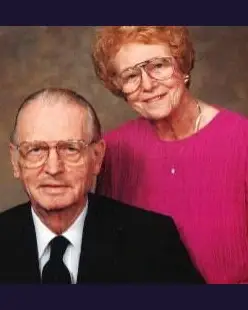
Born
1909
Died
1990
Graduated
Palmer School of Chiropractic, 1928
Patented
U.S. Patent 3,626,930 · 1971
Cumberland, Wisconsin
Toftness graduated from Palmer in 1928 and spent his whole career in one Wisconsin town
Irving N. Toftness graduated from the Palmer School of Chiropractic in 1928 (Senzon, J Chiropr Humanit 2018). He was born in 1909 and died in 1990. On October 10, 1932 he bought a retiring chiropractor's practice in Cumberland, Wisconsin, a lake town of a few thousand people in the northwest corner of the state. He never moved it. The method that carries his name was built inside that one clinic from the 1930s onward, and it is still taught from Cumberland today.
Toftness started as a Hole In One practitioner
Toftness began where Palmer graduates of the 1920s began. He practiced Hole In One on B.J. Palmer's model, which corrects the atlas and the axis and leaves every other level alone (H.I.O. Knee Chest). The premise is single site. One vertebra governs the nervous system, the doctor finds it on film, and nothing below the second cervical segment is touched. That was the training Toftness carried out of Davenport, and it named one site for every case.
The profession traveled to Cumberland because Toftness would not leave it
Toftness stayed in Cumberland and the doctors came to him. Licensed chiropractors traveled to the course he ran there from across the country, and the terms they signed are on the record in the federal case (731 F.2d 1253). The practice worked as a teaching clinic, a manufacturing shop, and a records office at once. Two generations of the family have practiced in the same town.
The first synthesis
Toftness combined two rival chiropractic techniques on purpose, and that had not been done before
Toftness ran a Palmer upper cervical method and a Logan sacral method inside one practice, by choice, from 1933. Simon Senzon's history of subluxation models records the sequence plainly: Toftness "started as a hole-in-one practitioner as proposed by B. J. Palmer and then embraced Logan Basic technique," and "eventually integrated the 2" (Senzon, J Chiropr Humanit 2018). That integration is the first known case in chiropractic of a practitioner deliberately fusing two established named techniques into a third.
Palmer named the atlas, Logan named the sacrum, and each method excluded the other's site
The two systems Toftness inherited disagreed about everything that matters. Hole In One names the atlas as the governing site and adjusts nothing else. Logan Basic names the sacrum as the foundation the whole column stands on, and contacts it through the sacrotuberous ligament with a sustained pressure of a few ounces. One is a high velocity thrust at the top of the spine. The other is a held contact at the bottom. A doctor trained in one was trained against the other.
Toftness went to study with Hugh Logan in 1933 and refused to choose
Toftness traveled to Hugh B. Logan in 1933, two years before Logan opened the Logan Basic College of Chiropractic in St. Louis. Studying a second system usually meant leaving the first. Toftness kept both and spent the following decades merging them into one analysis and one correction. He settled on five contacts, and no single teacher of his taught that list.
The five contacts split by lineage: C1 through C4 and the sacrum
Senzon records that Toftness came to focus his correction on C1, C2, C3, C4, and the sacrum (Senzon, J Chiropr Humanit 2018). The first two contacts are Hole In One. The last is Logan. C3 and C4 belong to neither teacher and extend the cervical contact down to the levels that contribute to the phrenic nerve. C1 and C2 came from Davenport, the sacrum came from St. Louis, and C3 and C4 came from Toftness.
The nearest comparison arrived two years later and crossed a different border
Raymond Nimmo, a 1926 Palmer graduate, studied Logan Basic in 1935 and later built his own method from fascial release and Janet Travell's trigger point work (Senzon, J Chiropr Humanit 2018). Nimmo went outside chiropractic for his second ingredient. Toftness crossed between two chiropractic techniques, two years earlier, and kept both of them intact and identifiable inside the result. Toftness got there two years earlier, and both parent methods stayed identifiable in his result.
Toftness set the precedent that a chiropractor may hold two competing systems at once
Combining named systems is ordinary practice now. Dozens of methods pool analyses, force scales, and listings that began somewhere else, and the thirty three techniques gathered here are the pool our own work draws on. Toftness did it first, in a country practice in Wisconsin, in 1933. He established that a chiropractor may hold two competing systems at once and answer to the patient instead of to either school, and this library reads every later amalgamation as standing on that precedent.
Toftness believed that the chiropractic vertebral subluxation moved around the tension frame as a type of adaptation to stressors. Until the stress was gone, the body would shift the stress from one articulation to another.
Simon A. Senzon, The Chiropractic Vertebral Subluxation Part 7, Journal of Chiropractic Humanities, 2018The stress theory
The subluxation migrates, and Toftness built his whole method on that
Toftness held that the subluxation travels around the body's tension frame as an adaptation to stress. The body keeps shifting that stress from one articulation to the next until the stress itself resolves (Senzon, J Chiropr Humanit 2018). A listing recorded in January is a position the body took in January. By March the body may have moved it.
The neuroskeleton gave Toftness the thing that carries the tension
Toftness built the idea on D.D. Palmer's neuroskeleton, the skeleton read as a regulator of tension and not as a frame (D.D. Palmer). Palmer had defined tone in 1910 as the normal degree of nerve tension and named nerve tone, muscle tone, and arterial tone in a single line. Toftness read tension as the property under examination, so his analysis covered the whole column instead of one segment.
Excitation reaches the brain as nerve stress
On the Toftness account the excitation caused by a subluxation reaches the brain as nerve stress or nerve energy. That transmission is what leads to disease (Senzon, J Chiropr Humanit 2018). The subluxation is the body's own adaptation to a stressor, and not a mechanical accident that befell it. Toftness set the reasoning out in his own book, Philosophy of Chiropractic Correction, published in 1977, forty five years into practice.
A migrating finding forces a whole spine examination on every visit
A migrating finding means the whole spine gets read at every visit. If the disturbance can sit at C2 on Monday and at the sacrum three weeks later, then no fixed protocol will find it, and a listing taken once cannot be trusted twice. Toftness therefore read the entire spine at every visit instead of returning to a segment named at the outset. Migration also explains why he kept both teachers, because a frame that redistributes stress has more than one place worth contacting.
The detector
The Toftness Radiation Detector was patented in 1971 and read with a fingertip
Toftness held that a subluxation gives off detectable radiation, and he built an instrument to find it. U.S. Patent 3,626,930, titled Lens radiation collecting and sensing device, was filed on December 15, 1969 and granted on December 14, 1971. The patent describes a cylindrical plastic housing holding a stack of concave convex plastic lenses that gather radiation across a wide spherical angle and focus it onto a detection plate. The patent puts the radiation emitted from the spinal column on the order of 69.5 GHz.
The reading is a drag under the finger
The instrument has no dial, no needle, and no display. The operator passes a finger across the detection plate and feels for resistance, and the site is wherever the finger catches. That design puts the whole discriminating power of the method in the examiner's own skin. It also explains the training requirement, because a reading nobody else can see has to be taught hand to hand.
A first detector was built decades before the patent
Toftness built his first detector thirty five years before the patent. He called it the neurometer, built it in 1936, and worked from the radionics apparatus of Albert Abrams. It read by rubbing a plate, with no lenses and nothing to focus. The neurometer, the lens stack, and the sensometer are three answers to one question, and Toftness Technique sets out all three.
A second patent followed in 1985
U.S. Patent 4,545,383, titled Antenna structure for collection and detection of radiation, was filed on May 23, 1983 and granted on October 8, 1985. It claims a tapered cylindrical housing with a reflective liner that collects radiation emitted by the human body onto a sensing plate. The patent is assigned to the Toftness Post-Graduate School of Chiropractic. Both patents and the federal case caption spell his given name Irwing, while the chiropractic literature and his own school spell it Irving.
What is detected or sensed by the operator is a friction or dragging sensation which retards the passage of a finger or fingers over the surface of the deflection plate.
Irving N. Toftness, U.S. Patent 3,626,930, granted December 14, 1971The school
Toftness leased the instrument instead of selling it and required a course and research records
Nobody could buy a Toftness Radiation Detector. Only licensed chiropractors who finished the training course at the Toftness Post-Graduate School of Chiropractic could use one. The terms are on the record in the federal case (731 F.2d 1253). The course ran several weeks and cost $400. The instrument then came on a fifteen year lease at $700 for the first year and $100 for each of the next fourteen.
The leases required research records sent back to the school
The lease terms provided that use of the instrument should be limited to research purposes, that the user should keep careful research records, and that those records should be forwarded to the school. Toftness ran a distributed data collection program out of a town of a few thousand people. Practitioners logged their adjustments on daily research cards and mailed the cards back to Cumberland.
Roughly 700 chiropractors had signed leases by the time of trial
At the time of the trial approximately 700 chiropractors had attended the course and signed leases for the instrument (731 F.2d 1253). One man taught all of them, in one building, with no college and no national association behind him.
The lease terms then became evidence
The arrangement that built the school also supplied the government's proof in court. The Seventh Circuit listed three items. There were the instructions Toftness prepared, the financial arrangements through which chiropractors were trained and permitted to use the device, and his own witnesses' testimony that they had adjusted patients from instrument readings. Those three items settled the legal question of what the device was intended for.
The federal case
A jury found the detector misbranded, and the Seventh Circuit affirmed on April 4, 1984
The United States sued under the Food, Drug, and Cosmetic Act to condemn the Toftness Radiation Detector as misbranded and to enjoin its production, distribution, and use. The action began in the District of Oregon and moved by stipulation to the Eastern and then the Western District of Wisconsin. Judge Robert W. Warren presided at trial and a jury returned a verdict for the government. The district court entered a permanent injunction in January 1982.
The first question was whether a research instrument is a device at all
Toftness argued that the detector fell outside the statute because its intended use was research. The court rejected the reading. The Act's definition of a device covers instruments used in research so long as their intended uses include the diagnosis or treatment of disease. The panel held that the research here could not be separated from the diagnosis and treatment it ran through. An instrument also need not be the only agent in a process to count as a device.
The exemption that decided the case put the burden on Toftness
A device is misbranded unless its labeling carries adequate directions for use, which the regulations define as directions a layman could follow. The parties stipulated that no layman could use the detector, so the instrument depended on the prescription device exemption at 21 C.F.R. 801.109. The panel held that a party claiming an exemption bears the burden of proving it, which put the question of whether the device works on Toftness rather than on the government.
Three issues on appeal, all affirmed
Toftness, his school, and the device appealed on three grounds. Those were the directed verdict that the detector was a device, the allocation of the burden of proof, and a jury instruction against piling one inference on another. The case was argued on December 7, 1983 before Circuit Judges Cudahy, Eschbach, and Coffey, and decided on April 4, 1984 (731 F.2d 1253, No. 83-1404). Judge Cudahy wrote for the panel and the judgment was affirmed.
The Supreme Court denied certiorari on October 9, 1984
The Supreme Court denied review at 469 U.S. 882 on October 9, 1984, which closed the matter. The injunction bars manufacturing, distributing, and using the detector, and it is the reason no Toftness Radiation Detector is in service in the United States. The instrument in current use is a different object, described below, and the low force adjusting method continued to be taught without interruption.
The exemption framework requires the makers of prescription devices to be able to prove that their devices do in fact work safely for their intended purposes when they are put on the market.
Judge Cudahy, United States v. An Article of Device ... Toftness Radiation Detector, 731 F.2d 1253 (7th Cir. 1984)Logan College, 1992 to 2007
The formal study of the Toftness method moved to Logan College and ran for fifteen years
Two generations after Cumberland, the research on the technique was housed at Logan College of Chiropractic in Chesterfield, Missouri, where Brian J. Snyder and John Zhang held associate professorships. The program produced reliability work, instrument comparisons, and a multicenter clinical pilot between 1992 and 2007. The papers ran in Chiropractic Technique, the Journal of the Canadian Chiropractic Association, the Journal of Manipulative and Physiological Therapeutics, and the Journal of Chiropractic Medicine.
The sensometer replaced the lens stack
Current practice uses an instrument called the sensometer, an open cone fitted with a Mylar membrane. The tension in that film changes as the cone passes over the body, and the examiner locates the site by feeling the change under the fingertips. The reading still arrives through the operator's skin. Only the object under the finger changed.
The 2004 comparison set the sensometer against a magnetometer
Zhang, David Toftness, Snyder and colleagues placed a triaxial fluxgate magnetometer beside the Toftness sensometer in a laboratory coil and then in a clinic (Zhang et al, JCCA 2004). Four Toftness practitioners carrying 5, 10, 15, and 20 years of experience each read five volunteers, rating the cervical, thoracic, lumbar, and sacral regions on a scale of 1 to 5. The design asks whether a reading that lives in an examiner's fingertips lands where an independent physical measure does.
The 2005 study measured body surface fields across four weeks
Thirty five chiropractic students were assigned to control and experimental groups and followed for four weeks of Toftness low force adjusting at cervical, thoracic, lumbar, and sacral contacts (Zhang and Snyder, JMPT 2005). Body surface electromagnetic field was recorded before and after each of six visits with a triaxial fluxgate magnetometer, and heart rate variability was recorded weekly. Body surface field fell after adjusting at every region and trended down across the month. An earlier single session study used the same measure (Zhang, Snyder and Vernor, JCCA 2004).
The 2007 multicenter pilot recruited 42 subjects across 13 clinics
The widest study of the method recruited 42 patients through 13 doctors' offices, with an average age of 53 (Snyder and Zhang, J Chiropr Med 2007). Every subject was tracked with a visual analog scale at each visit and an Oswestry questionnaire at the start and the end of care. It remains the largest data set carrying the technique's name.
The dated record
Eight dated facts about Irving N. Toftness, with the source for each
1909. Toftness was born. He would graduate from the Palmer School of Chiropractic nineteen years later and practice for close to six decades (Senzon, J Chiropr Humanit 2018).
1928. Toftness graduated from the Palmer School of Chiropractic and began as a Hole In One practitioner on B.J. Palmer's model, correcting the atlas and the axis and nothing else.
1932. Toftness bought a retiring chiropractor's practice in Cumberland, Wisconsin and opened his own doors on October 10. He stayed in that town for the rest of his career.
1933. Toftness went to study with Hugh B. Logan and kept both methods, which is the first known deliberate combination of two established chiropractic techniques.
1936. Toftness built his first detection instrument, the neurometer, modeled on the radionics apparatus of Albert Abrams. It read by rubbing a plate rather than by focusing lenses.
1971. U.S. Patent 3,626,930 was granted on December 14 for the lens radiation collecting and sensing device, filed December 15, 1969.
1977. Toftness published Philosophy of Chiropractic Correction, which sets out the stress theory and the migrating subluxation in his own words (Senzon, J Chiropr Humanit 2018).
1984. The Seventh Circuit affirmed the judgment against the Toftness Radiation Detector on April 4, and the Supreme Court denied certiorari on October 9 (731 F.2d 1253). Toftness died in 1990.
Toftness and the model
Toftness made two contributions, and the Unified Model of Tone builds on both
Toftness reached plural, moving tension from the table, decades before the Unified Model of Tone argued for it from the anatomy. The two accounts meet on one question: whether a subluxation has a fixed address. Toftness answered no from what his own hands kept finding in different places. The model answers no from the structure of the tissue. Both name the same property, tension, and neither needs a fixed address.
A body holds several points of critical tension at once
The model holds that there is rarely a single lynchpin. A body ordinarily carries several points of critical tension at the same moment, each with a different capacity to reorganize the whole. That capacity shifts with the system's state from one week to the next. Toftness said the site moves over time. The model says several real sites coexist and trade priority.
The tension frame Toftness described is one continuous network
Toftness used the word frame and meant something specific. The model states the architecture behind it. Bones float inside one continuous tension network built from every soft tissue in the body: muscle, tendon, ligament, joint capsule, fascia, dura, and the connective tissue investments of the organs. That network is how the body knows its own shape, so a change in tension anywhere becomes information everywhere (coupling). A frame that redistributes tension will present its most disturbed junction somewhere new.
The stress he chased is what the model reads as accumulated load
Toftness held that the shifting continues until the stress resolves, which makes the stressor the driver and the spinal finding the readout. The model reads that accumulated demand as load, and it separates a leverage point, the place where a small input moves the whole system, from a compensation. A guarded, hypomobile region may be the body's own defense splinting a problem set elsewhere, and contacting it is force applied to the brace. The research on load producing bodily findings sits at stress and physical symptoms.
The synthesis is the second contribution, and it is the larger one
Holding an atlas method and a sacrum method at once from 1933 says something about the body, and not only about Toftness. He treated a technique's boundary as a teaching convenience instead of a fact about the body, and forty years of practice did not force him back. The model states the same thing as a rule about input. The active ingredient is correspondence to the leverage point rather than force at the symptomatic site, and correspondence does not care which school named the contact (input quality).
Where the model goes past what Toftness held
Toftness located the moving disturbance and built an instrument to chase it. The model names what is moving. Tone is the organizing state the nervous system holds across mechanical tension, neural excitability, autonomic regulation, and sensory gain, expressed at every scale and able to deviate in two directions. Tone held inside its healthy range is health, because that range preserves the ability to adapt to load. Tone that drifts or distorts outside it is what shows up as illness.
Where Toftness sits in this library
Toftness Technique reads with a sensometer and corrects in ounces along a set line of drive. H.I.O. Knee Chest is one of the two methods he combined and holds the opposite position on leverage. Logan Basic is the other and gave him the sacral contact. B.J. Palmer and Hugh Logan are the two teachers he refused to choose between. Directional Non-Force Technique reaches a comparable force scale from a leg check rather than an instrument.
Questions people ask
Common questions about Irving N. Toftness
What did Irving N. Toftness contribute to the understanding of tone?
Toftness contributed two things, the synthesis and the migrating subluxation. He held that the disturbance moves around the body's tension frame as an adaptation to stress, shifting from one articulation to the next until the stress resolves. The Unified Model of Tone holds that a body carries several points of critical tension at once and that their leverage shifts week to week. Toftness supplies the time half of that position from the table, and the model supplies the space half from the anatomy.
Who was Irving N. Toftness?
Irving N. Toftness was an American chiropractor, born in 1909 and died in 1990, who practiced in Cumberland, Wisconsin from 1932. He graduated from the Palmer School of Chiropractic in 1928, practiced Hole In One, studied with Hugh B. Logan in 1933, and combined the two methods into the technique that carries his name. He patented the Toftness Radiation Detector in 1971 and taught the system through his own post-graduate school.
Was Toftness the first chiropractor to combine two techniques?
Yes, on the documentary record. Toftness practiced Hole In One, studied Logan Basic in 1933, and kept both, settling on C1 through C4 and the sacrum. The nearest comparison is Raymond Nimmo, who studied Logan Basic in 1935 and built his later method from fascial release and trigger point work rather than from a second chiropractic technique. Toftness did it first, and combining named systems is ordinary practice now.
What was the Toftness Radiation Detector?
It was a handheld chiropractic instrument patented in 1971 as U.S. Patent 3,626,930. A cylindrical plastic housing held a stack of concave convex plastic lenses that gathered radiation and focused it onto a detection plate, and the patent put that radiation on the order of 69.5 GHz. The operator passed a finger across the plate and located the site by feeling a drag. Toftness leased the instrument to trained chiropractors rather than selling it.
What happened to the Toftness Radiation Detector in court?
The United States sued under the Food, Drug, and Cosmetic Act to condemn the detector as misbranded. A jury returned a verdict for the government and the district court entered a permanent injunction in January 1982, barring manufacture, distribution, and use. The Seventh Circuit affirmed on April 4, 1984 at 731 F.2d 1253, and the Supreme Court denied certiorari on October 9, 1984. The low force adjusting method continued to be taught.
Is Toftness Technique still practiced?
Yes. The method is still taught and practiced from Cumberland, Wisconsin, and the current instrument is the sensometer, an open cone fitted with a Mylar membrane that the examiner reads by fingertip. Research on the technique ran out of Logan College of Chiropractic in Missouri from 1992 to 2007, including a multicenter pilot across thirteen private clinics in 2007. The correction is still delivered in ounces along a set line of drive.
Sources
Sources for this page
- Senzon SA. The Chiropractic Vertebral Subluxation Part 7: Technics and Models From 1962 to 1980. J Chiropr Humanit. 2018;25:99-113. PMID 31019423. The 1928 Palmer graduation, the move from Hole In One to Logan Basic, the C1 to C4 and sacrum contacts, the neuroskeleton, and the migrating subluxation.
- Toftness IN. Philosophy of Chiropractic Correction. I.N. Toftness, DC, PhC; 1977. The stress theory in the founder's own words.
- United States v. An Article of Device ... "Toftness Radiation Detector," 731 F.2d 1253 (7th Cir. 1984), No. 83-1404. Full opinion. Argued December 7, 1983, decided April 4, 1984, before Circuit Judges Cudahy, Eschbach, and Coffey.
- An Article of Device: "Toftness Radiation Detector" v. United States, 469 U.S. 882 (1984), No. 84-162. Certiorari denied October 9, 1984.
- Toftness IN. Lens radiation collecting and sensing device. U.S. Patent 3,626,930, filed December 15, 1969, granted December 14, 1971.
- Toftness IN. Antenna structure for collection and detection of radiation. U.S. Patent 4,545,383, filed May 23, 1983, granted October 8, 1985, assigned to the Toftness Post-Graduate School of Chiropractic.
- Snyder BJ, Zhang J. Toftness system of chiropractic adjusting on pain syndromes: a pilot study in a multicenter setting. J Chiropr Med. 2007;6(1):15-9. PMID 19674689. 42 subjects recruited through 13 offices.
- Zhang J, Toftness D, Snyder B, Nosco D, Balcavage W, Nindl G. Comparison of a triaxial fluxgate magnetometer and Toftness sensometer for body surface EMF measurement. J Can Chiropr Assoc. 2004;48(4):273-81. PMID 17549105. Four practitioners, five volunteers, four spinal regions.
- Zhang J, Snyder BJ. The effect of low force chiropractic adjustments for 4 weeks on body surface electromagnetic field. J Manipulative Physiol Ther. 2005;28(3):159-63. PMID 15855902. 35 students, six visits, heart rate variability recorded weekly.
- Zhang J, Snyder BJ, Vernor L. The effect of low force chiropractic adjustments on body surface electromagnetic field. J Can Chiropr Assoc. 2004;48(1):29-35. PMID 17549217.
- Snyder BJ. Thermographic evaluation for the role of the sensometer: evidence in the Toftness system of chiropractic adjusting. Chiropractic Technique. 1999;11(2):57-61. 30 subjects in three groups of ten.
- Snyder BJ, Sanders GE. Evaluation of the Toftness system of chiropractic adjusting for subjects with chronic back pain, chronic tension headaches, or primary dysmenorrhea. Chiropractic Technique. 1996;8(1):3-9. Toftness adjusting compared against a sham intervention.
- Portrait: Dr. I.N. and Louise Toftness, Logan College Benefactors. Cover of The Tower, Logan College of Chiropractic, June 1998.
This page is history and education. It is not medical advice, and nothing here is a promise of outcome. Consult a licensed practitioner about your own condition.