
Our Approach · The Legends · Era V
Era V · 1933 to 2003
Fred Barge
The Conscience
Fred H. Barge (1933 to 2003) practiced in La Crosse, Wisconsin, for forty-six years and wrote nine books on chiropractic. He was elected the ninth president of the International Chiropractors Association in 1988. Barge named one cause of disease: the body's inability to comprehend itself or its environment. The one cure, he wrote, is the body's own ability to heal. Barge defended the vertebral subluxation as a physical entity, and the Unified Model of Tone restates it as a measurable tension state.
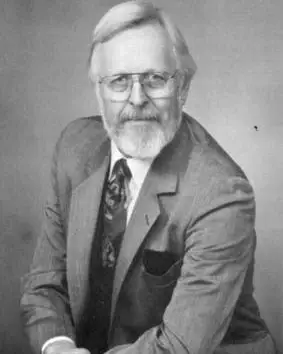
Born
Jan 13, 1933 · La Crosse, Wisconsin
Died
Jul 2, 2003 · La Crosse, Wisconsin
Palmer
DC 1954 · PhC 1965
Practice
Barge Chiropractic Clinic, 1957
Office
Ninth president, ICA, 1988
Books
Nine volumes, 1978 to 1998
The La Crosse record, 1933 to 2003
Fred Barge practiced in one Wisconsin town for forty-six years
Fred H. Barge opened his practice in downtown La Crosse, Wisconsin, in 1957 and was still working there when he died on July 2, 2003 at the age of seventy. He kept the same address and argued the same position for the whole of it. Barge led a national association and taught at Palmer College without leaving La Crosse.
Chiropractic was the family trade. Barge was born in La Crosse on January 13, 1933 to Henry A. Barge, a 1923 Palmer graduate, and to Pauline Ruprecht Barge. Palmer College counted nineteen chiropractors in the extended family at the time of his death.
Henry Barge and the clinic
Henry A. Barge was born in Henderson, Minnesota, on October 23, 1887 and graduated from the Palmer School of Chiropractic in 1923. He was among the first chiropractors licensed in Wisconsin when the state began licensing in 1925. A stroke around that same year paralyzed his left side and stopped his practice for two years. Henry returned and adjusted with one hand for the rest of his career. Father and son established the Barge Chiropractic Clinic in La Crosse in 1957.
The residency program
The Barge Chiropractic Clinic started a graduate resident program in 1964, run with Palmer College and sanctioned by the Wisconsin State Board of Examiners in Chiropractic. Digest of Chiropractic Economics reported it that autumn. A 1975 Palmer alumni profile of Henry Barge called the clinic the first in the country to institute a residency.
The campaigns of the 1960s
Fred Barge and his father spent the late 1950s and early 1960s opposing the use of unproven diagnostic devices by chiropractors. Their letters of December 7, 1964 to Leonard Rutherford, then president of the International Chiropractors Association, argued that voluntary regulation would not stop the practice. One of them counted fifty-four of Wisconsin's one hundred and sixty-seven ICA members as users of such devices and called on both national associations to act. Joseph Keating's chronology of the family reproduces the correspondence in full. Keating also records Fred Barge as active through the 1960s and 1970s in opposing fluoridation of the La Crosse water supply.
Palmer 1954, Logan 1955, PhC 1965
Barge trained at Palmer in 1954 and took the philosophy degree in 1965
Barge graduated from the Palmer School of Chiropractic in 1954. He spent 1955 in postgraduate study at the Logan Basic College of Chiropractic in St. Louis and was given academic credit for seven months of work in the Logan Basic method.
Palmer College awarded Barge the Philosopher of Chiropractic degree in 1965 for a thesis titled Tortipelvis and the Intervertebral Disc Syndrome. That degree is why the letters after his name always read DC, PhC. It marked him from the start as a chiropractor who worked on the reasoning and not only on the hands.
Why his father sent him to Logan
Barge explained the Logan year himself in a letter of May 15, 2002 to the historian Joseph Keating. His father was dissatisfied with the technique teaching at Palmer, though not with the philosophy, and insisted on a Logan postgraduate course. Barge wrote that he always used Basic in his own practice, as his father had after the stroke. Hugh Logan built that method on sustained light contact at the sacrotuberous ligament.
The men who taught him
Barge interned with B.J. Palmer, with Clarence Gonstead, and with his own father. In the 2002 letter he named the lecturers who marked him most. Apart from B.J. Palmer, the two chiropractic philosophy presenters who impressed him were Vinton Logan and Napolitano, and he wrote that he came to appreciate Joseph Janse later.
Nine volumes, 1978 to 1998
Barge wrote nine numbered volumes and published them himself
Barge produced nine numbered volumes between the late 1970s and 1998 and founded Barge Chiropractic Publishing in La Crosse to keep them in print. The set runs from radiographic clinical textbooks to philosophy, and it is the reason his argument survived him.
The clinical volumes came first. Torticollis appeared in 1979 and Scoliosis in 1981, both from Bawden Brothers in Davenport. Tortipelvis, the first numbered volume, is catalogued at 1978, and Simon Senzon's 2019 history of the subluxation concept cites the Bawden edition at 1982.
The philosophy volumes
Life Without Fear: Chiropractic's Major Philosophical Tenets came out as volume five from Bawden Brothers in 1987. One Cause, One Cure: The Health and Life Philosophy of Chiropractic followed as volume six, printed by LaCrosse Graphics in 1990. Are You the Doctor, Doctor?, volume four, reached a second edition in 1985 and taught young chiropractors how to run an honest practice.
The last three volumes
Volume seven, Chiropractic's Metaphysical Concepts: Giant vs. Pygmy and Thots, appeared in 1994 and carried B.J. Palmer's own text with Barge's commentary attached. Volume eight, Chiropractic Philosophy: It Is As Simple As That and More, came in 1996. Volume nine, Wry Neck, appeared in 1998. It returned to torticollis and covered analysis and correction from infancy through adulthood.
The inventions and the patents
Barge built equipment as well as books. Palmer's memorial notice of 2003 lists the Barge Tortipelvis Bench, a line of cervical technique chairs, a cervical adjustment pillow, and vertical film filing cabinets. It records two patents in his name, one on a reclining radiographic table and one on a full-spine adjusting apparatus.
The cause of disease is the body's inability to comprehend itself and/or its environment.
Fred H. Barge, One Cause One Cure, 1990One Cause, One Cure, 1990
One Cause, One Cure states Barge's whole position in two clauses
Barge named one cause of disease and one cure and titled his 1990 book after the pair. The cause, in his words, is the body's inability to comprehend itself and its environment. Christopher Kent quoted that sentence from the book in Dynamic Chiropractic in January 2011.
The cure, in Barge's account, is the body's own ability to heal. A doctor can remove an obstruction to healing and can do nothing else. Barge held that the obstruction a chiropractor removes is the vertebral subluxation.
What one cause means
Barge's cause is not a germ, a toxin, or a broken part. It is a failure of the body to register its own state or the state of what surrounds it. The claim puts disease in a breakdown of information rather than in damaged tissue. Barge argued that such comprehension depends on nerve supply reaching the body without interference.
What one cure means
Barge's cure removes the doctor from the causal chain. Healing is done by the body, and the practitioner's entire contribution is taking something out of the way. That is the tonal, non-therapeutic position stated without apology. Nothing is treated, and the correction is justified by the interference rather than by any named disease.
Where the position placed him
The position put Barge on the traditional side of the profession's long argument about its own identity. He made the case in nine books and in columns for Dynamic Chiropractic, Today's Chiropractic, The Beacon, and the ICA Review. He chaired the editorial board of Palmer's Streams From The Fountainhead and the ICA's The Chiropractic Choice, and sat on the editorial board of The American Chiropractor.
The subluxation defended
Barge defended the vertebral subluxation as a physical entity with four components
Barge kept B.J. Palmer's four-part account of the vertebral subluxation and defended it through the years when the profession was under the most pressure to abandon it. Senzon's 2019 review in the Journal of Chiropractic Humanities records Barge's position that the subluxation includes misalignment, occlusion, pressure, and interference.
Senzon records a second Barge claim alongside it. Barge considered the chiropractic vertebral subluxation the integrator of the science, the art, and the philosophy of chiropractic. That is a claim about what holds the profession together rather than a claim about anatomy.
The four components are a physical description
A vertebra out of alignment narrows an opening, the narrowing produces pressure, and the pressure interferes with nerve function. Each step in that chain names something with a size. Barge held that the chain is real, visible on film, and correctable by hand, and he wrote three radiographic textbooks on the strength of it.
The x-ray discipline behind the claim
Barge's clinical books are film books. Torticollis of 1979, Scoliosis of 1981 and the tortipelvis volume all pair radiographic analysis with specific correction. His PhC thesis of 1965 was on tortipelvis and the intervertebral disc syndrome. A practitioner who spends forty years measuring angles on radiographs is making a claim about a physical object.
The subluxation as integrator
Remove the subluxation from chiropractic and the research, the technique, and the reasoning lose the single object they all point at. That is what Barge meant by calling it the integrator, and it is why he treated its defense as an organizational duty rather than a theoretical preference. He spent his years at the International Chiropractors Association on exactly that.
The ICA presidency, 1988
Barge was elected ninth president of the International Chiropractors Association in 1988
Barge succeeded Michael Pedigo as president of the International Chiropractors Association in 1988, with Gerard Clum as his vice president. He had been named a Fellow of the association in 1976. At his death in 2003 he was a past president and a serving vice president of the same body.
Joseph Keating's 1997 note on Barge records the association work he is best remembered for. Barge was a significant influence in the campaign to prevent a merger of the International Chiropractors Association and the American Chiropractic Association.
Why the merger fight mattered
A merger would have folded the traditional association into the larger one. Keating, who disagreed with Barge about almost every philosophical premise, credits him with significant influence in preventing it. The International Chiropractors Association remained independent, and Barge held office in it until the week he died.
Interim president at Life Chiropractic College West
Gerard Clum, Barge's vice-presidential running mate and president of Life Chiropractic College West, took a leave of absence from the school for health reasons. Barge stepped in as acting president. Keating's chronology records him signing as acting president of Life West in March, June, and July of 1991.
The historian who argued with him
Barge's correspondence with Joseph Keating began around 1983 and ran for two decades, mostly on chiropractic philosophy, innate intelligence, and the subluxation. Keating catalogued the Barge family papers and rejected Barge's premises throughout. Keating's own summary of the relationship was that the two of them were opponents rather than enemies, and that their disagreement rested on different assumptions about science rather than on ignorance.
Palmer College, 1962 to 2003
Barge taught at Palmer College for four decades
Palmer hired Barge onto its continuing education faculty in 1962. He became a visiting professor in the Division of Chiropractic Sciences in 1989. In 1998 he joined the Philosophy Department and was named a special adviser to the President's Office, and he signed his letters with that title until his death.
Barge also held visiting faculty status at New York Chiropractic College, Life Chiropractic College West, Logan Chiropractic College, and Life University. He was a guest lecturer at the University of Wisconsin at La Crosse for fifteen years.
The alumni association and the board
Barge was president of the Wisconsin Palmer alumni in 1967 and president of the Palmer College of Chiropractic International Alumni Association from 1972 to 1974. He served as a Palmer trustee from 1973 to 1982. He was a founding member of the Palmer College of Chiropractic West Board of Trustees.
The awards
Barge received the Daniel David Palmer Chiropractic Scientific Award in 1977 and a fellowship in the Palmer Academy of Chiropractic in 1986, the year the alumni association also named him Alumnus of the Year. The International Chiropractors Association named him Chiropractor of the Year in 1991. The Palmer student body voted him Faculty of the Year in 2000, and the alumni association gave him its Faculty Achievement Award in March 2003.
In office at the end
Barge suffered a heart attack at his home in La Crosse on the morning of July 2, 2003 and died quickly. Palmer flew its campus flag at half mast and placed a floral tribute in the Hall of Philosophers in West Hall. He was survived by his wife Audrey, whom he married on February 16, 1957, and by two daughters and ten grandchildren.
Barge and tone
What Fred Barge contributed to the understanding of tone
Fred Barge's contribution to chiropractic is a refusal. He would not let the vertebral subluxation become a metaphor. Across the decades when the profession was pressed hardest to describe its object in softer language, Barge kept insisting that the thing is physical, present, and correctable.
The Unified Model of Tone keeps that insistence and changes the physics. The subluxation is a physical state, and the physical quantity is tension rather than compression. Tone is the organizing state of the nervous system, and a subluxation is a region whose tone has stopped updating against what the rest of the body reports.
From occlusion to tension
Barge listed four components: misalignment, occlusion, pressure, and interference. That chain puts the fault in a narrowed opening. Alf Breig established that the spinal cord is a tensioned structure held in shape by the dentate ligaments. He argued that raised tension rather than compression carries the primary neurophysiological consequence, since even a compressive lesion generates axial tension. The model takes tension as the decisive variable, which keeps Barge's physical claim and gives it a better mechanism.
One cause, restated
Barge's one cause is the body's inability to comprehend itself and its environment. That is a statement about prediction. The nervous system runs a working model of the body and its surroundings and acts on that model rather than on raw sensation. When the model stops being corrected by what the tissue reports, regulation goes out against an outdated account. The model names that a standing prediction error held in tone.
One cure, restated
Barge's one cure is the body's own healing, with the practitioner removing an obstruction and nothing more. In the model's terms an input does not create an outcome. An input meeting a tone creates the outcome, and the same input passing through a different tone becomes a different event. That is why one person is transformed by an intervention that does nothing for the next, which the page on why recovery differs sets out with the evidence attached.
What can be measured now that Barge could not measure
Barge measured angles on radiographs. The model measures the regulation those angles sit inside. Joel Pickar reviewed the neurophysiological effects of spinal manipulation in The Spine Journal in 2002 and found evidence that it alters afferent discharge from paraspinal tissues, motoneuron excitability and reflex output. Charles Henderson reviewed the indications and theory in the Journal of Electromyography and Kinesiology in 2012. Cortical excitability, autonomic regulation, cortical map organization, and tissue compliance are readings of one underlying variable. Heart rate variability is the best developed of them. Barge's four components describe a place. Tone describes a state, and a state can be recorded before the outcome is known.
Health and disease in the model's terms
Tone held inside its healthy range is health, because a system in that range keeps the flexibility to adapt to what arrives. Tone that drifts or distorts outside that range is what shows up as illness and disease. Barge's one cause and one cure are, in these terms, a claim about whether the system can still read itself accurately enough to correct itself.
The clinical books through the model
Barge's clinical books are constraint and load problems in the model's terms
Barge wrote three clinical textbooks: one on torticollis, one on scoliosis, one on tortipelvis. His final book of 1998 returned to torticollis. All three conditions hold tissue in a sustained distorted geometry. Structure of that kind is an input that never switches off, which is what the model calls constraint.
Torticollis
Congenital muscular torticollis presents in infancy as a fixed head tilt with rotation toward the opposite side. The 2018 evidence-based clinical practice guideline from the Academy of Pediatric Physical Therapy runs from page 240 to page 290 of Pediatric Physical Therapy and sets the current assessment and treatment standard. Barge's Torticollis of 1979 and Wry Neck of 1998 address the same presentation through chiropractic analysis. The library covers the adult case on the neck pain page and the infant case on the pediatrics page.
Scoliosis
Adolescent idiopathic scoliosis is the subject of Barge's 1981 volume. The BrAIST trial, published in the New England Journal of Medicine in 2013, analyzed 242 patients and was stopped early for efficacy. Treatment success reached 72 percent with bracing against 48 percent with observation, and longer daily wear produced better results. A brace works by holding a geometry for months, which makes the result a sustained-load result. The scoliosis page carries the full record.
Tortipelvis and the disc
Barge's 1965 thesis and his first numbered volume treated tortipelvis, the pelvic distortion he tied to the intervertebral disc syndrome. The presentation is a sustained asymmetric load at the base of the spine, where the column meets the pelvis. The low back pain page collects what has been measured in that region.
Why the model reads all three the same way
Torticollis, scoliosis, and tortipelvis differ in region and in age of onset. In the model they share a mechanism. Each holds tissue in a geometry that keeps sending the same afferent signal, and the nervous system shifts its set point toward that signal until the distorted state becomes the one it defends. Constraint and load are the two halves of that account.
Barge among the Legends
How Fred Barge connects to the rest of the Legends
Barge stands in the Palmer line and beside several figures in this hall. B.J. Palmer taught him during his internship and supplied the four-component account of the subluxation he defended for fifty years, and the upper cervical work is set out on the HIO knee chest page. D.D. Palmer named tone as the basic principle of chiropractic in 1910 and defined it as the normal degree of nerve tension.
Clarence Gonstead, the Wisconsin practitioner Barge also interned with, built the level-by-level analysis described on the Gonstead page. Hugh Logan's sustained light contact, which Barge's father used with one hand after his stroke and which Barge used for the rest of his own career, is on the Logan Basic page. Reggie Gold argued a stricter version of the same non-therapeutic position from outside the licensed profession during the same decades.
The Unified Model of Tone states what the whole line was pointing at, and the tone pillar sets out the primary record behind it.
Questions people ask
Questions about Fred Barge
What did Fred Barge contribute to the understanding of tone?
Barge refused to let the vertebral subluxation become a metaphor. He held it to be a physical entity with four components, defended that position for fifty years, and wrote three radiographic textbooks on the strength of it. The Unified Model of Tone keeps the physical claim and changes the physics from compression to tension. A subluxation is a region whose tone no longer updates against what the rest of the body reports.
Who was Fred Barge?
Fred H. Barge, DC, PhC, was a second-generation chiropractor. He was born in La Crosse, Wisconsin, on January 13, 1933. He died in the same town on July 2, 2003 at seventy. He graduated from the Palmer School of Chiropractic in 1954 and practiced in La Crosse from 1957. Barge wrote nine books and taught at Palmer for four decades. He was elected the ninth president of the International Chiropractors Association in 1988.
What does one cause, one cure mean?
It is the title of Barge's 1990 book and the compressed form of his position. The one cause of disease, in his words, is the body's inability to comprehend itself and its environment. The one cure is the body's own ability to heal. A doctor can only remove an obstruction to healing, and Barge held that the obstruction a chiropractor removes is the vertebral subluxation.
What books did Fred Barge write?
Nine numbered volumes. The clinical books are Tortipelvis, Torticollis of 1979, Scoliosis of 1981, and Wry Neck of 1998. The philosophy books are Are You the Doctor, Doctor? in its 1985 second edition, Life Without Fear of 1987, One Cause One Cure of 1990, Giant vs. Pygmy and Thots of 1994, and It Is As Simple As That and More of 1996. He founded Barge Chiropractic Publishing to keep them in print.
Was Fred Barge president of the ICA?
Yes. Barge succeeded Michael Pedigo as president of the International Chiropractors Association in 1988, with Gerard Clum as vice president, and he was the ninth person to hold the office. He had been named a Fellow of the association in 1976 and was named ICA Chiropractor of the Year in 1991. He was a past president and a serving vice president of the association when he died in 2003.
What was Barge's role in the ICA and ACA merger question?
Joseph Keating's 1997 note on Barge records that he was a significant influence in the campaign to prevent a merger of the International Chiropractors Association with the American Chiropractic Association. The two bodies represented different accounts of what chiropractic is. The International Chiropractors Association remained independent, and Barge kept office in it until his death in 2003.
Sources
Sources for this page
- Keating JC Jr. Notes on the Barge Family: a chronology. National Institute of Chiropractic Research. Full chronology, 9,341 words
- Keating JC Jr. Fred H. Barge: a biographical introduction, February 1997. Mini biography
- Palmer College of Chiropractic. In Memoriam: Dr. Fred Barge, July 3, 2003. Reproduced in Keating's Barge chronology. Notice
- Senzon SA. The chiropractic vertebral subluxation part 9: complexes, models, and consensus from 1979 to 1995. J Chiropr Humanit. 2019;25:130-145. PMC6472115
- Barge FH. One Cause, One Cure: The Health and Life Philosophy of Chiropractic. Vol. VI. La Crosse: LaCrosse Graphics, 1990. Catalog record
- Kent C. A four-dimensional model of vertebral subluxation. Dynamic Chiropractic, January 2011. Article
- In Memoriam: Dr. Fred Barge. Planet Chiropractic, July 2003. Notice
- Loss of an icon: Fred H. Barge, DC, PhC. Planet Chiropractic, July 2003. Tribute by the eleventh ICA president
- Barge made mark as chiropractor, writer, father. La Crosse Tribune, July 2003. Obituary
- Breig A. Adverse Mechanical Tension in the Central Nervous System. Almqvist and Wiksell, 1978. Catalog record
- Kaplan SL, Coulter C, Sargent B. Physical therapy management of congenital muscular torticollis: a 2018 evidence-based clinical practice guideline. Pediatr Phys Ther. 2018;30(4):240-290. PMID 30277962
- Weinstein SL, Dolan LA, Wright JG, Dobbs MB. Effects of bracing in adolescents with idiopathic scoliosis. N Engl J Med. 2013;369(16):1512-21. PMID 24047455
- Pickar JG. Neurophysiological effects of spinal manipulation. Spine J. 2002;2(5):357-71. PMID 14589467
- Henderson CNR. The basis for spinal manipulation: chiropractic perspective of indications and theory. J Electromyogr Kinesiol. 2012;22(5):632-42. PMID 22513367
Education, not medical advice. Dates, offices, publications, and awards on this page are drawn from the sources listed above. Positions attributed to Fred Barge are his own, stated as he stated them.